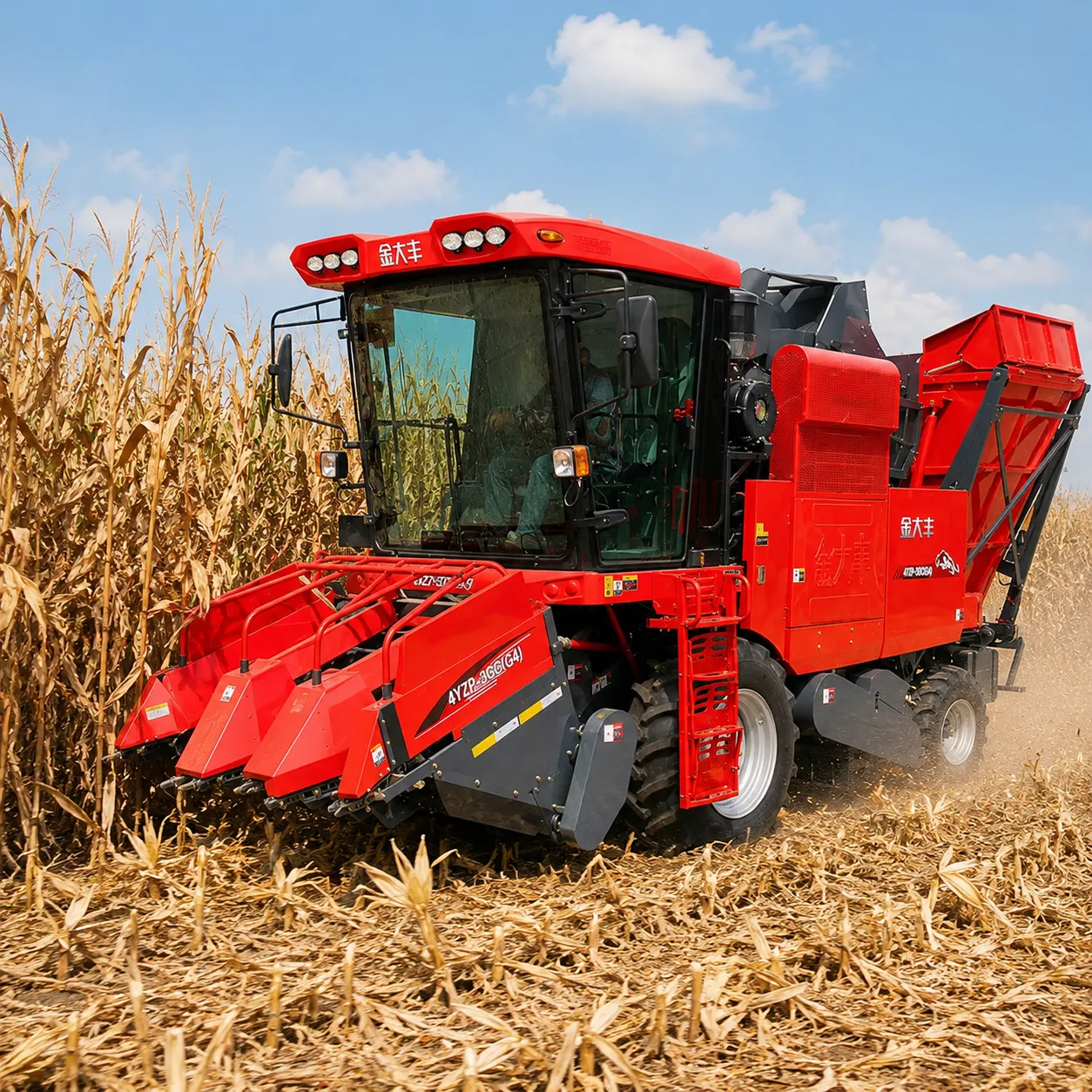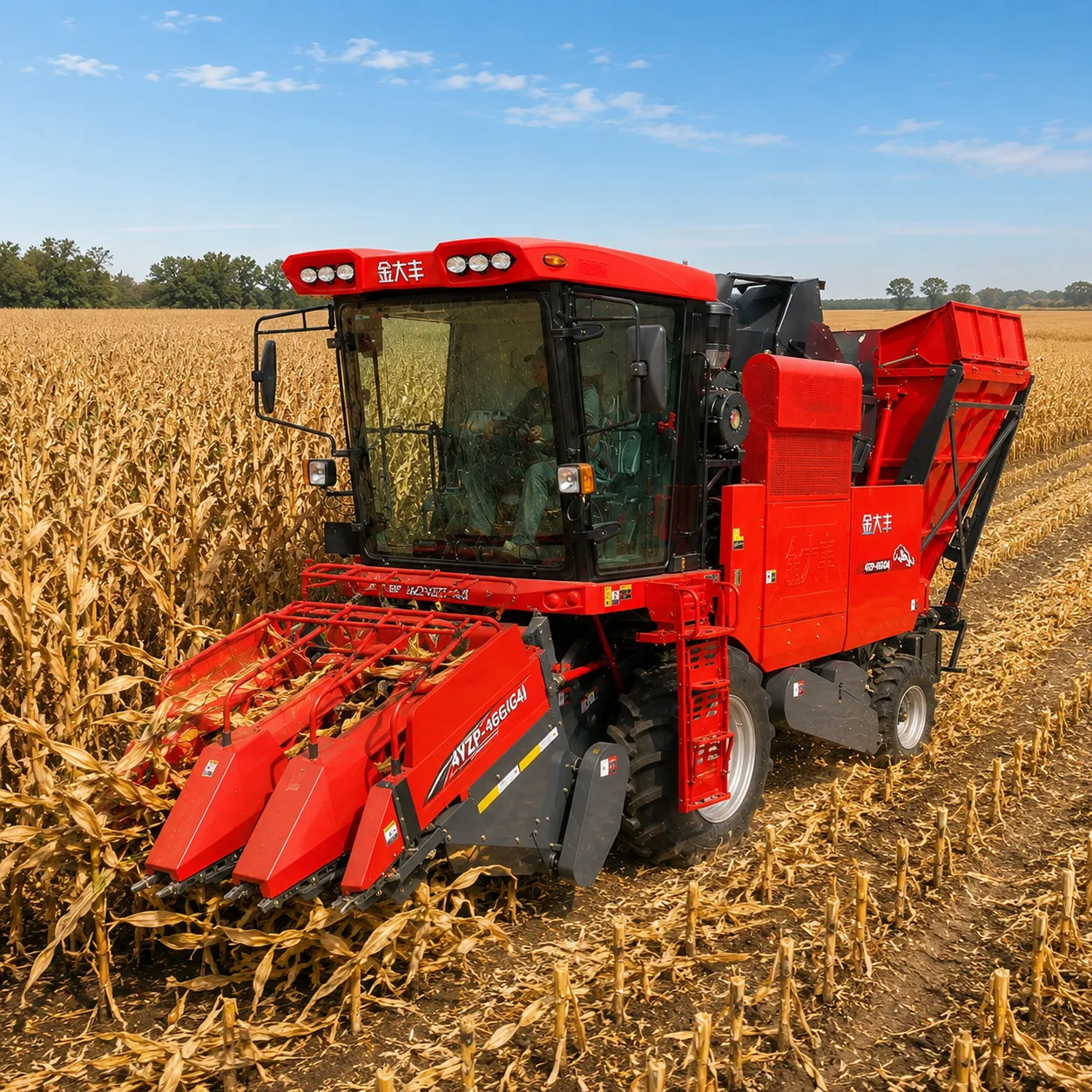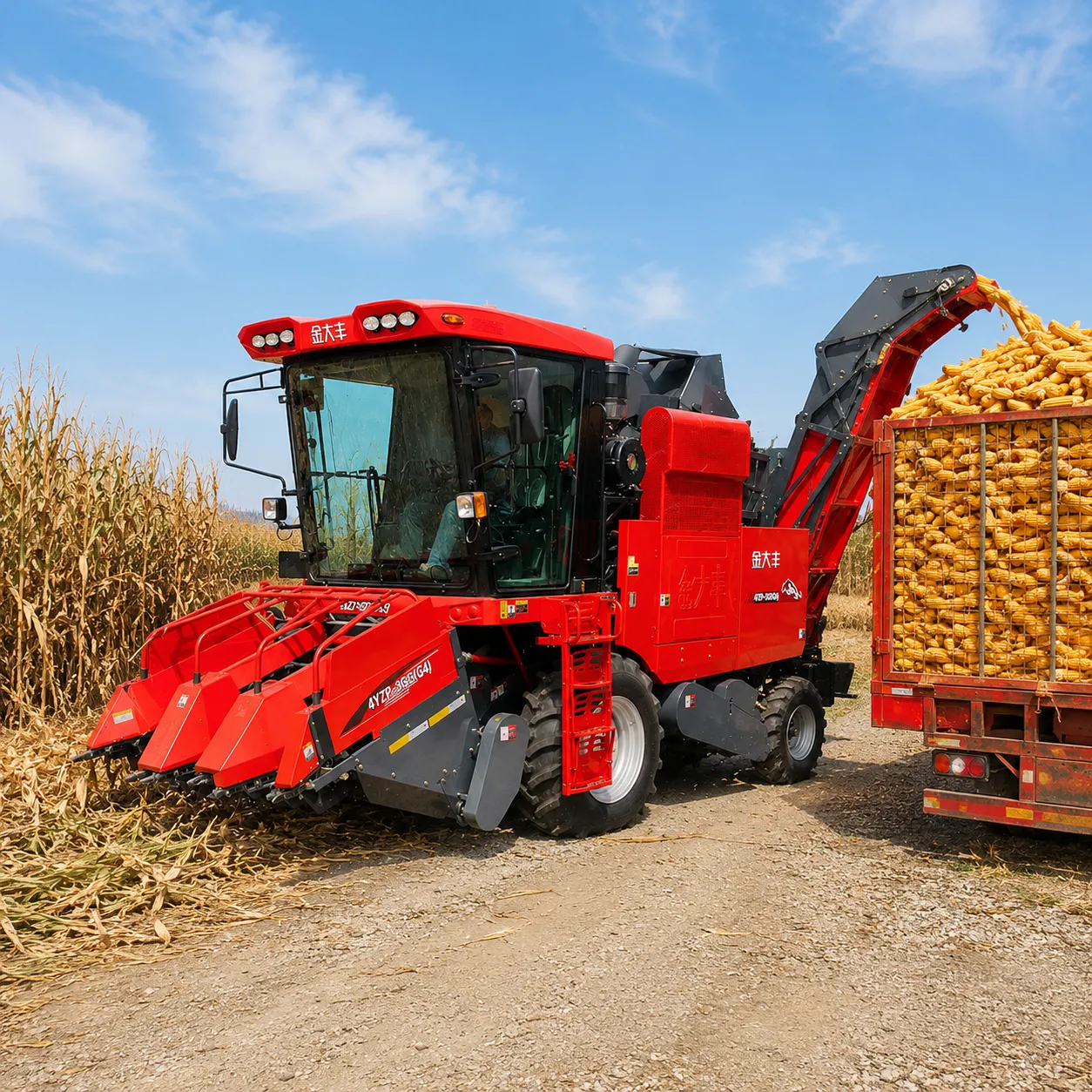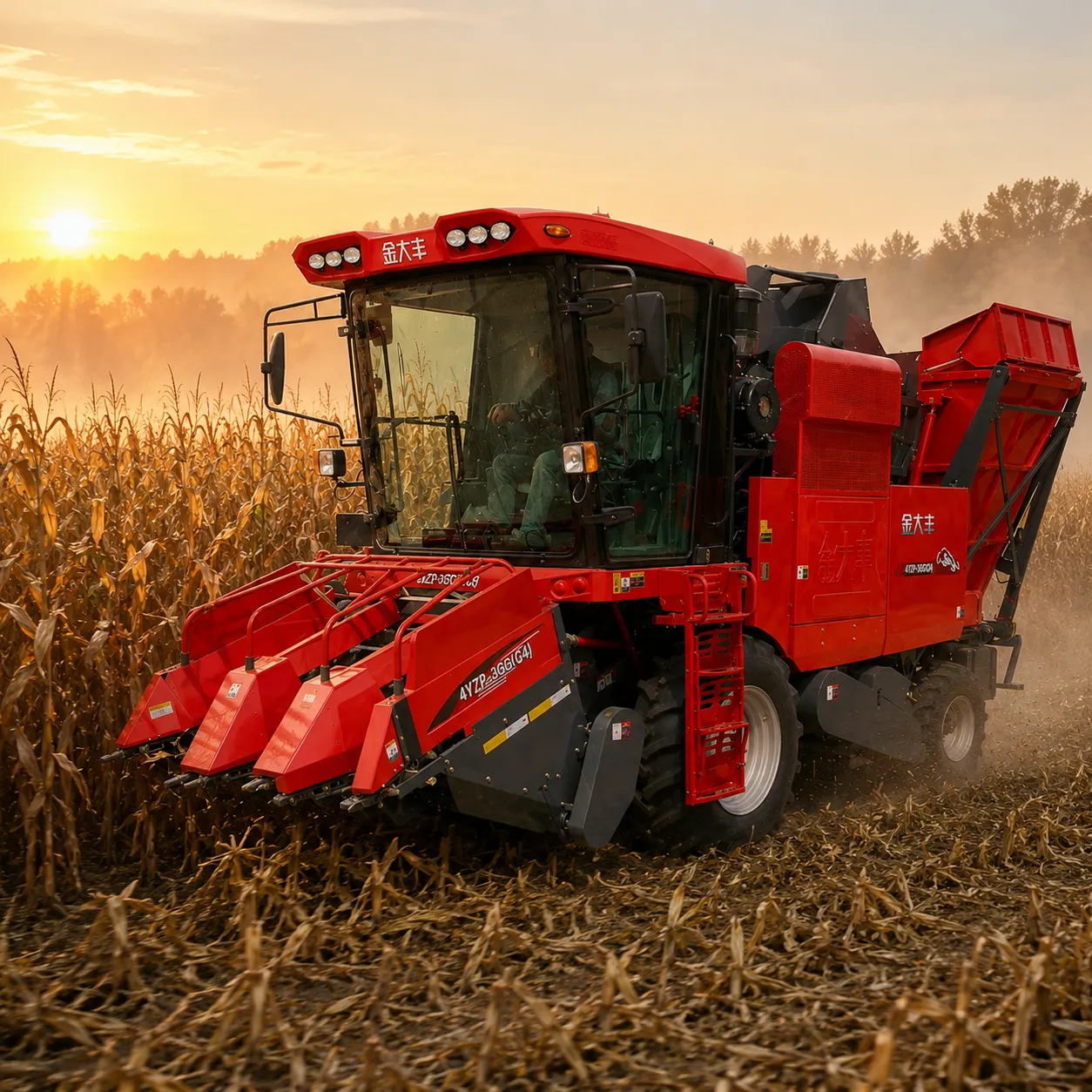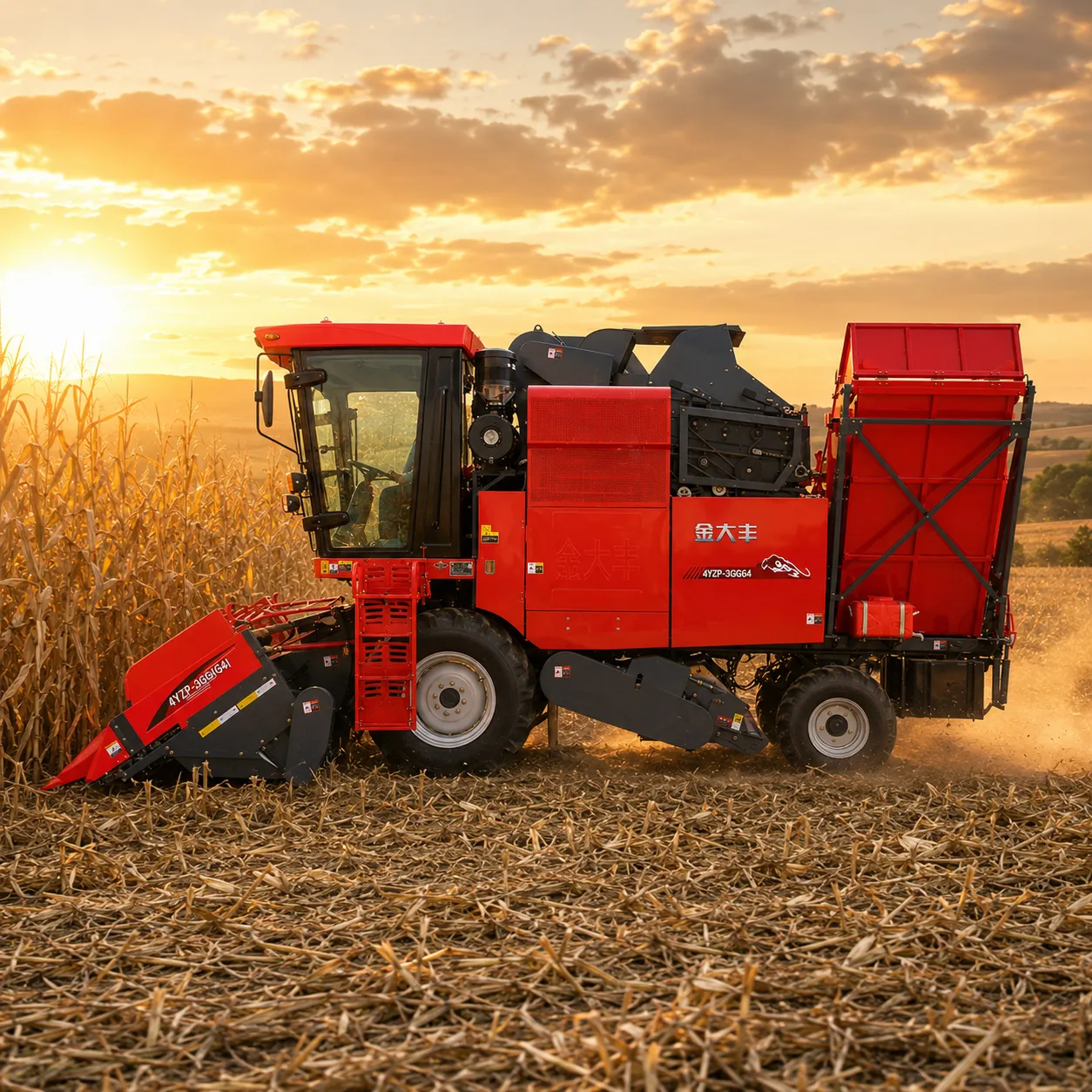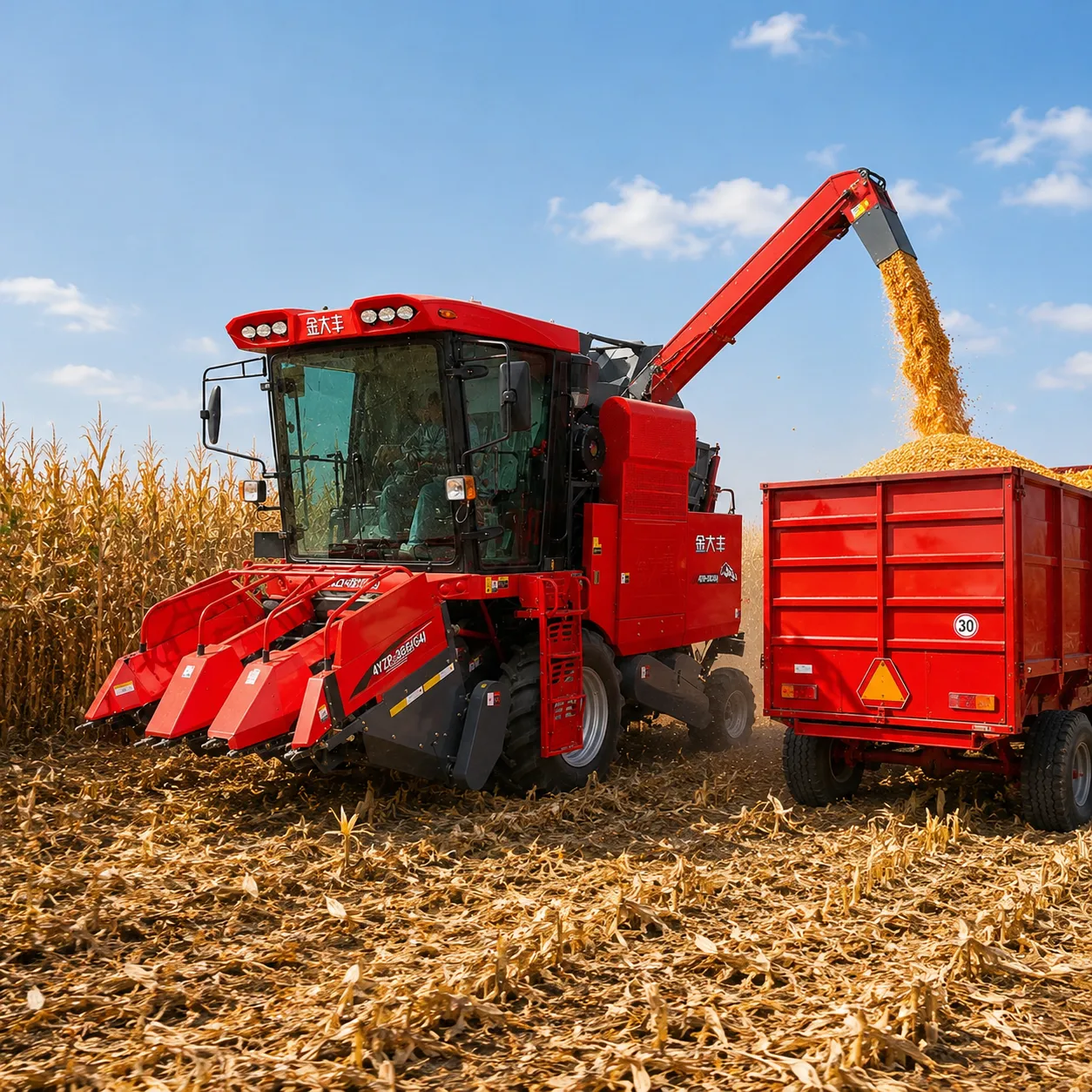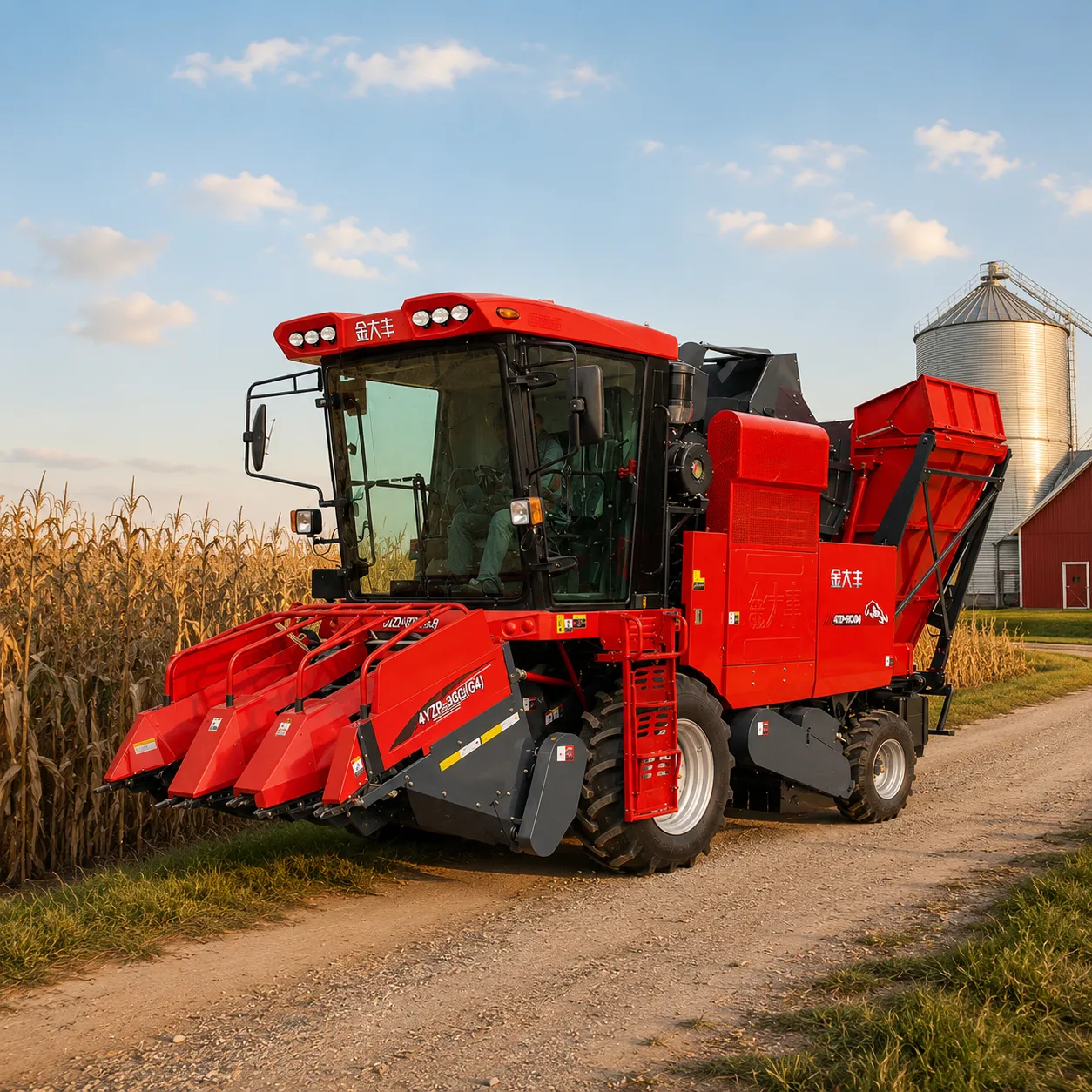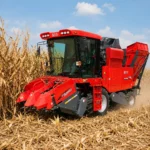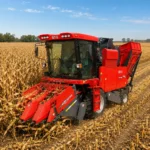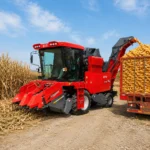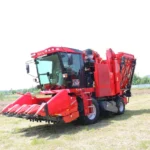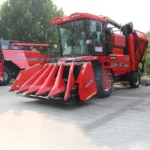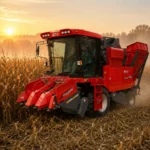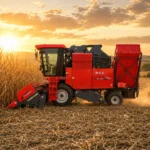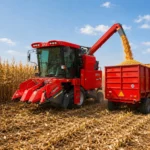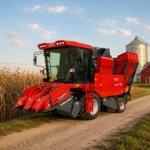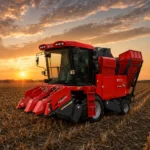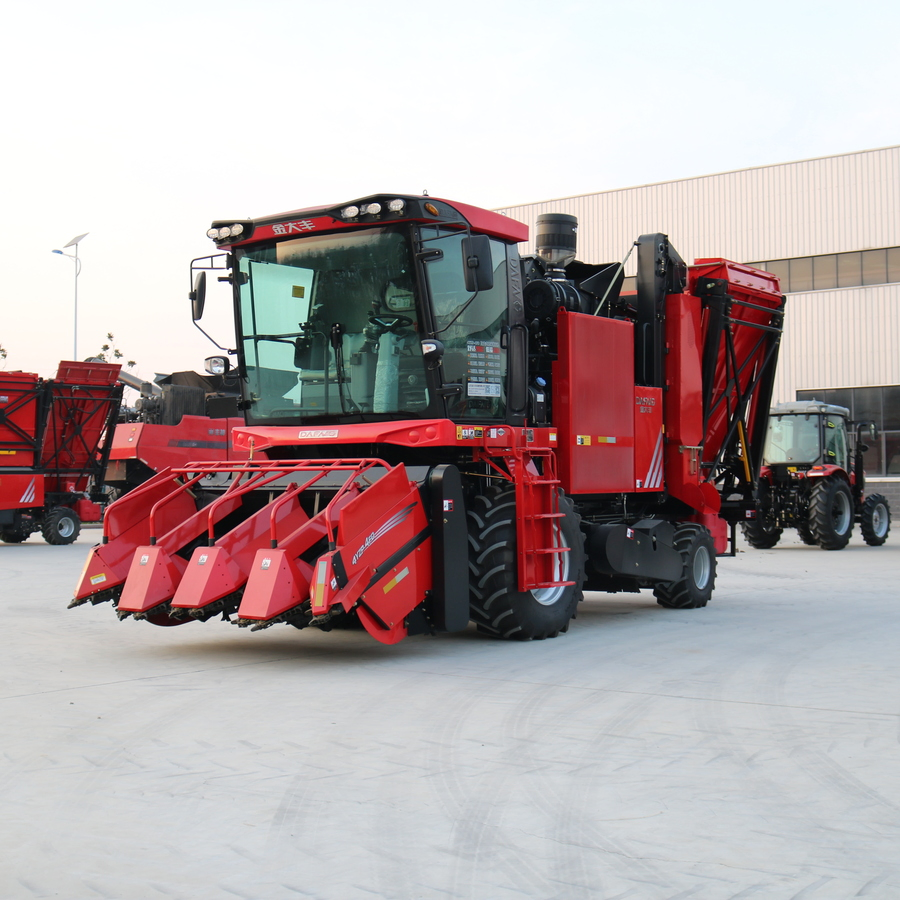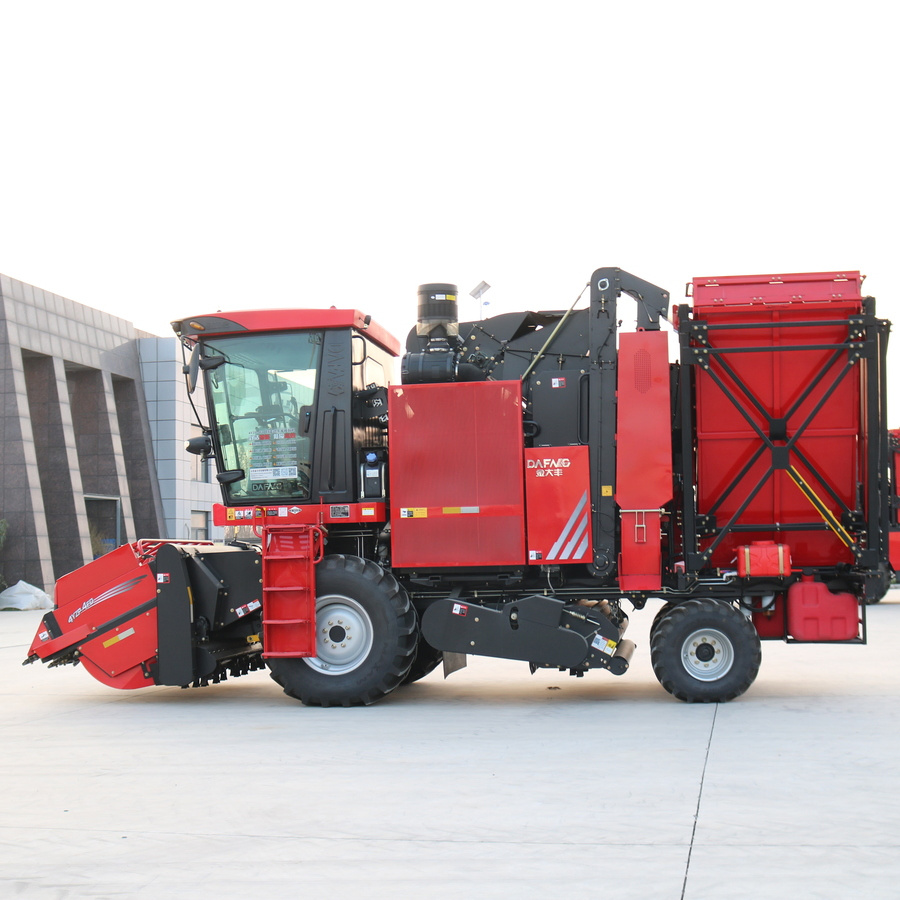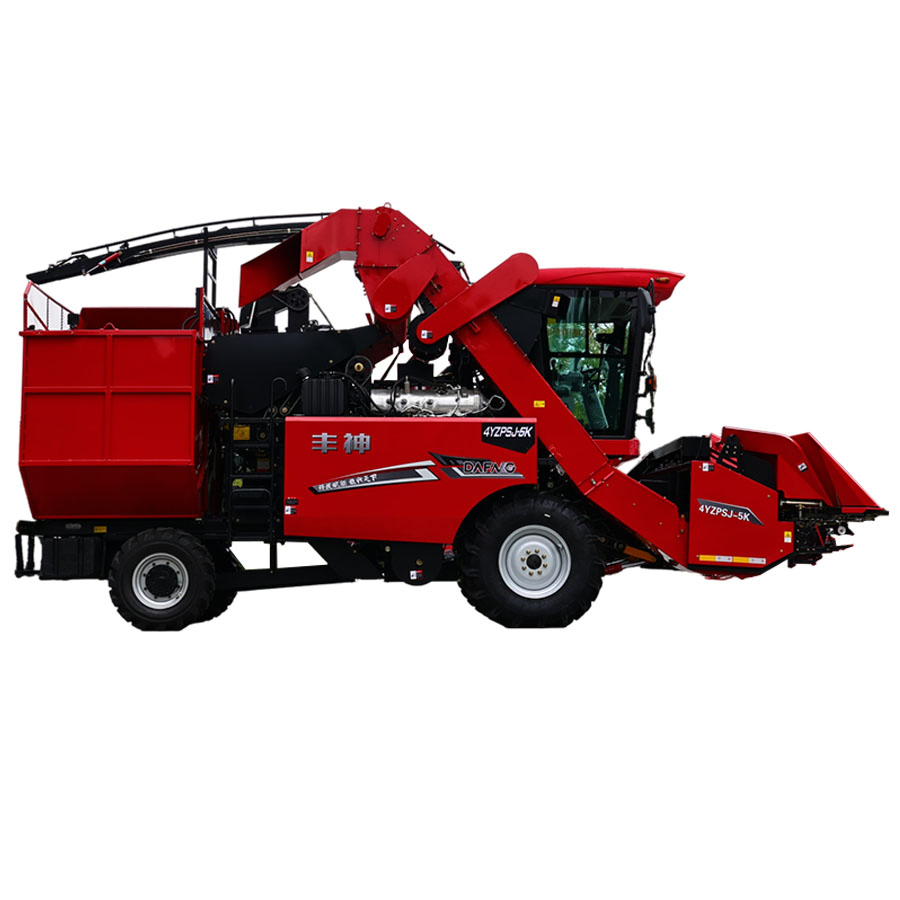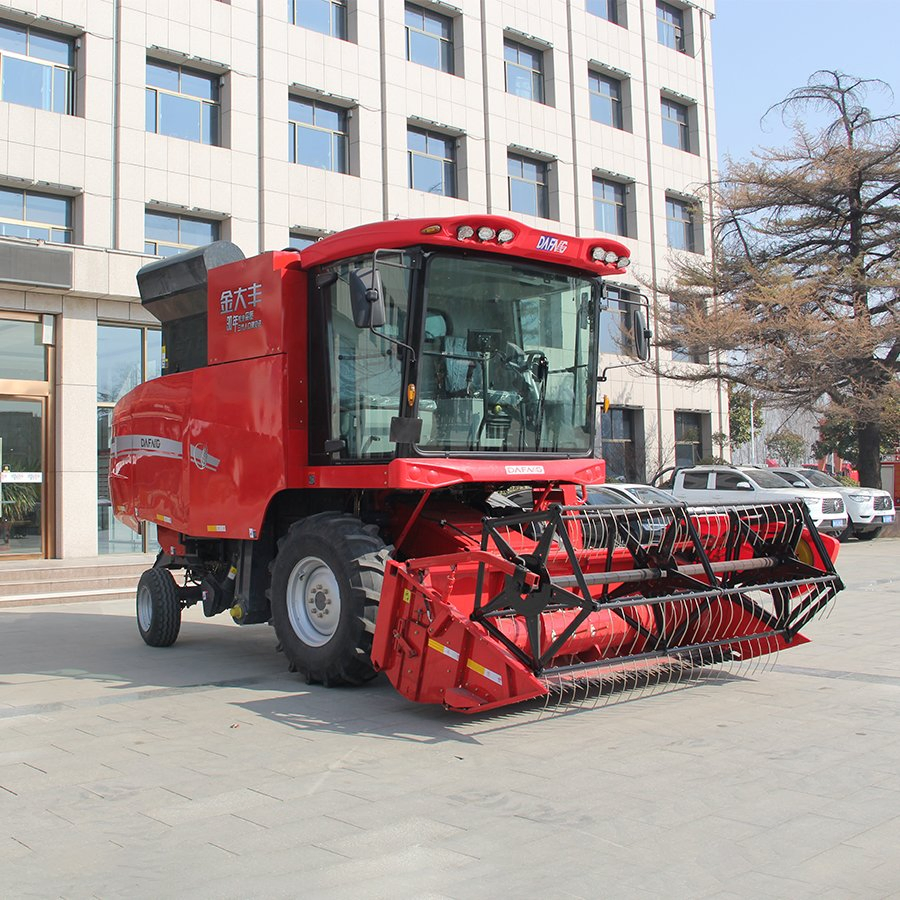
The corn header is the first part of a harvester to interact with the crop, and many harvesting problems begin before the ears ever enter the machine. Poor row matching, unsuitable header structure, excessive forward speed, or weak crop guidance can increase dropped ears, broken stalks, uneven feeding, and harvesting loss.
For this reason, choosing the right corn harvester header is not simply a question of selecting the widest option available. The header needs to match row spacing, field layout, crop condition, machine capacity, and the type of harvesting work the operator expects to perform.
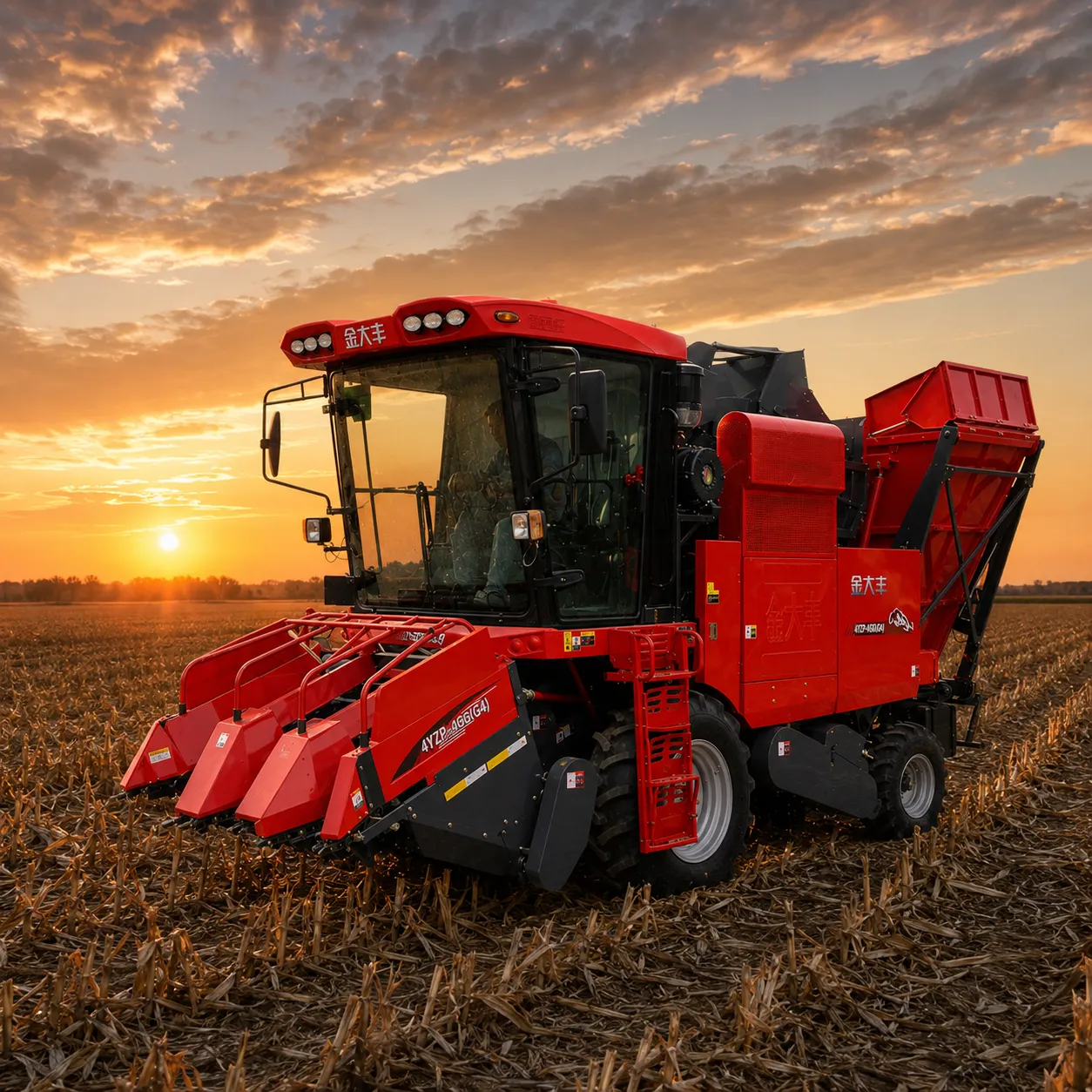
A four-row header may be more practical in smaller or irregular fields, while a five-row configuration can provide higher field coverage where rows are long and field conditions allow the machine to operate continuously. Header design also matters when crops are lodged, uneven, or planted with variable spacing.
This guide explains how corn harvester headers work, what differences buyers should look at, and how to select a configuration based on real field conditions rather than specification numbers alone.
What Does a Corn Harvester Header Actually Do?
The header performs several important tasks before the rest of the harvesting process can begin.
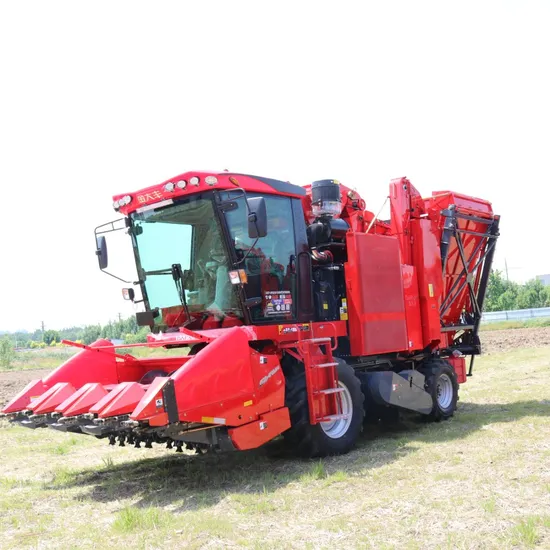
Its job is not simply to “cut” corn. In an ear-corn harvesting system, the header needs to guide standing stalks into the row units, separate the ears from the stalks, and deliver harvested material toward the conveying system with as little loss as practical.
A stable header should help achieve four things:
- Guide stalks into the machine consistently
- Separate ears without excessive impact
- Reduce dropped ears and unnecessary kernel loss
- Provide an even crop flow to the conveyor and peeling system
If the header cannot maintain stable crop entry, problems can continue through the rest of the machine.
For example, uneven feeding at the front can create surges in the conveyor. These surges may then overload the peeling system even though the peeling rollers themselves are operating correctly.
The header therefore influences much more than the first few seconds of the harvesting process.
Row Number Is the First Major Choice
One of the most visible differences between corn harvester headers is the number of rows they harvest in one pass.
Four-row and five-row configurations are common choices for self-propelled commercial corn harvesters, but neither option is automatically better.
| Header Configuration | Main Advantage | Usually Better Suited To |
|---|---|---|
| 4-row corn header | Better maneuverability and easier field control | Medium farms, shorter fields, irregular plots, moderate daily workload |
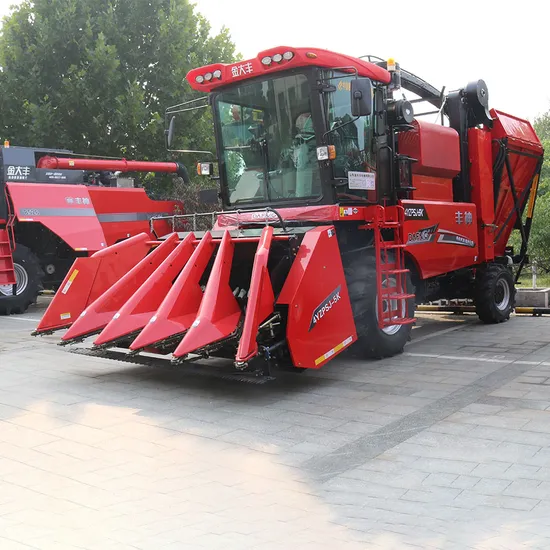
| 5-row corn header | Higher theoretical field coverage per pass | Large commercial farms, long rows, higher daily harvesting demand |
Quick answer: Choose the number of rows according to total field workload and field geometry. A wider header creates more value only when the machine can keep it fully supplied and operate efficiently without losing too much time turning, repositioning, or dealing with irregular row patterns.
When Does a 4-Row Corn Header Make More Sense?
A four-row configuration can be a strong practical choice even when a wider machine is available.
This is particularly true where fields are not extremely large or where maneuverability matters as much as maximum theoretical capacity.
Smaller and medium-sized commercial fields
In fields with shorter working distances, a wider header does not always create a large improvement in daily output because more time may be spent turning at field ends.
A four-row machine can often change direction more easily and may require less space for headland maneuvering.
Irregular field boundaries
Fields divided by roads, trees, irrigation systems, ditches, or uneven boundaries can make large harvesting widths difficult to use continuously.
In these environments, maneuverability becomes an important part of effective field capacity.
Operations prioritizing control
A narrower harvesting width can also make row alignment easier for some operators, particularly where planting accuracy varies.
This can be useful when corn rows are not perfectly straight or when older planting systems produce greater variation from one field section to another.
A properly matched four-row corn harvester header can therefore provide a strong balance between capacity, maneuverability, and operating cost.
When Is a 5-Row Corn Header the Better Choice?
A five-row header becomes more attractive when field size and daily harvesting requirements increase.
Each pass covers more rows, so fewer total passes are required to harvest the same field area.
However, higher header capacity also places greater demand on the rest of the machine.
More crop enters the harvester at the same forward speed. This means the engine, conveyor, peeling system, collection system, and straw crusher all need enough capacity to handle the increased crop flow.
Large commercial farms
In wide fields with long, regular rows, a five-row machine can spend more time harvesting and less time turning.
This allows the wider header to deliver more of its theoretical capacity advantage.
Agricultural contractors
Contractors often need to complete multiple farms within a limited harvest period. Daily field output therefore becomes especially important.
A larger header may help increase hectares harvested per day, provided transport, unloading, maintenance, and field logistics can support the higher output.
Heavy seasonal workload
Where large areas need to be completed quickly before weather or crop conditions deteriorate, increasing working width can reduce scheduling pressure.
The key is ensuring that the entire machine is designed around the larger header rather than simply attaching a wider front section to a system that cannot process the additional crop volume.
Row Spacing Can Matter More Than Header Width
The number of rows alone does not determine whether a header will match a farm.
Row spacing is equally important.
If the header row units do not align well with the planted rows, stalks can enter at poor angles. This may increase stalk bending, ear impact, missed plants, or crop loss before material reaches the machine.
Before choosing a corn harvester header, buyers should know the typical corn planting spacing used in their region.
Important questions include:
- What is the standard row spacing in local corn fields?
- Is row spacing consistent between farms?
- Will the harvester work only on one farm or provide contract services?
- Is the header spacing fixed or adjustable?
- How much variation can the row units tolerate?
Contractors need to pay particular attention to this because customers may use different planters or planting standards.
A header that performs well on one farm may require additional adjustment when moving to another.
Header Design Becomes Critical in Lodged Corn
Standing corn is the easiest condition for most headers because plants enter the machine in a relatively predictable position.
Lodged corn creates a different challenge.
Stalks may lean sideways, fall forward, overlap neighboring rows, or lie partially on the ground. This changes the angle at which the header must collect the crop.
In these conditions, good crop guidance becomes particularly important.
Low crop entry helps
If ears are positioned close to the ground, the header may need to operate lower than in normal standing corn. This requires careful height control to collect the crop without continuously contacting soil.
Forward speed usually needs to decrease
Driving too quickly through lodged corn can push plants forward instead of guiding them correctly into the row units.
A lower speed gives the header more time to separate tangled plants and feed material into the machine.
Row dividers need to guide rather than push
The shape and working position of crop dividers influence how effectively flattened plants are lifted and directed toward the harvesting units.
Important: No header can completely eliminate losses in severely lodged corn. The objective is to improve crop pickup and maintain stable feeding while operating at a speed that matches the field condition.
For farms regularly experiencing wind damage, uneven crop stands, or lodging, header performance in difficult crop conditions should be evaluated before purchasing a machine.
Header Width Must Match the Rest of the Harvester
It is easy to assume that increasing header size automatically increases harvesting capacity. In reality, the header is only one component in a much larger system.
Every additional row increases crop intake.
If the header feeds crop faster than the internal systems can process it, several problems can appear:
- Conveyor overload
- Irregular crop flow
- Reduced peeling quality
- More frequent blockage
- Higher engine load
- Poor straw crushing
- Reduced operating speed
This is why horsepower, row number, conveying capacity, peeling capacity, collection volume, and straw management should be considered together.
| Machine Area | What Changes with a Wider Header? |
|---|---|
| Engine | More crop flow can increase total working load |
| Conveyor | Must move a larger volume of ears and crop material |
| Peeling system | Receives more ears per minute at the same travel speed |
| Collection system | Fills more quickly as harvesting output increases |
| Straw crusher | Processes a greater volume of stalk material |
The best header is therefore the one that allows the entire machine to operate continuously and efficiently.
Use Field Conditions to Choose the Header, Not Just the Specification Sheet
A buyer comparing two corn harvesters may see one machine with a four-row header and another with five rows and immediately assume that the five-row option is superior.
A better selection process starts with the farm itself.
Choose a 4-row configuration when:
- Fields are medium-sized
- Plots are irregular or divided
- Headland space is limited
- Maneuverability is important
- Daily harvesting requirements are moderate
- The buyer wants a balance between productivity and machine investment
Consider a 5-row configuration when:
- Fields are large and relatively regular
- Rows are long
- Daily harvesting workload is high
- The machine will provide commercial harvesting services
- Higher field coverage is a priority
- Supporting transport and unloading capacity are sufficient
These are not absolute rules. A large farm may still prefer four rows because of local field geometry, while a contractor operating in medium-sized fields may choose five rows because total seasonal workload is very high.
The right choice depends on the complete operation.
What Should Buyers Check Before Ordering a Corn Header?
Before confirming a machine configuration, buyers should discuss the header in the same detail as the engine or transmission.
Useful questions include:
- How many rows does the header harvest?
- What row spacing does it support?
- Can row spacing be adjusted?
- What is the total working width?
- How low can the header operate?
- How does it perform in lodged corn?
- How are stalks guided into the picking units?
- Which parts are considered wear components?
- How easy are chains, rollers, bearings, and gathering components to service?
- Are replacement header parts included in the recommended spare-parts package?
Buyers should also ask for real field videos showing the machine entering standing crops, turning at headlands, working in uneven areas, and harvesting at normal operating speed.
A short video filmed only in ideal standing corn does not show how the header behaves across the range of conditions a commercial machine may encounter.
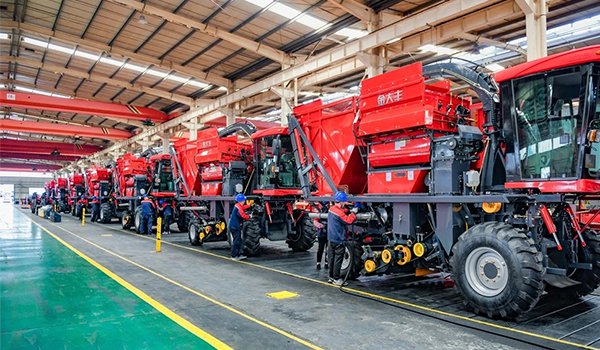
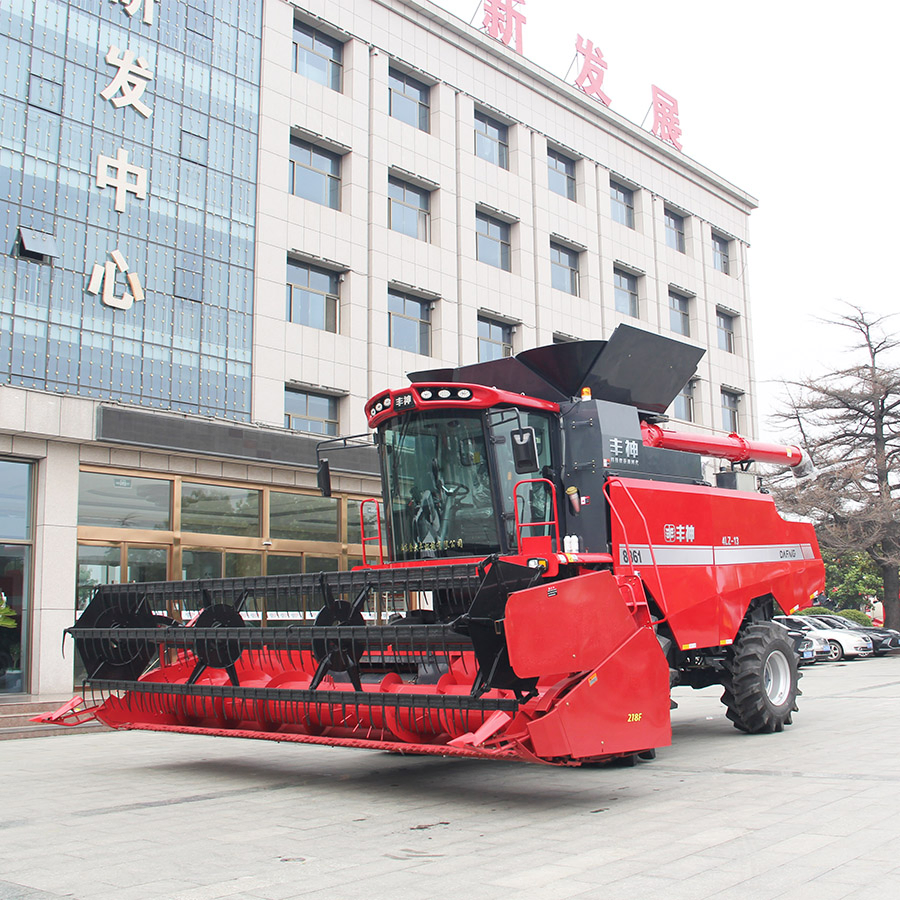
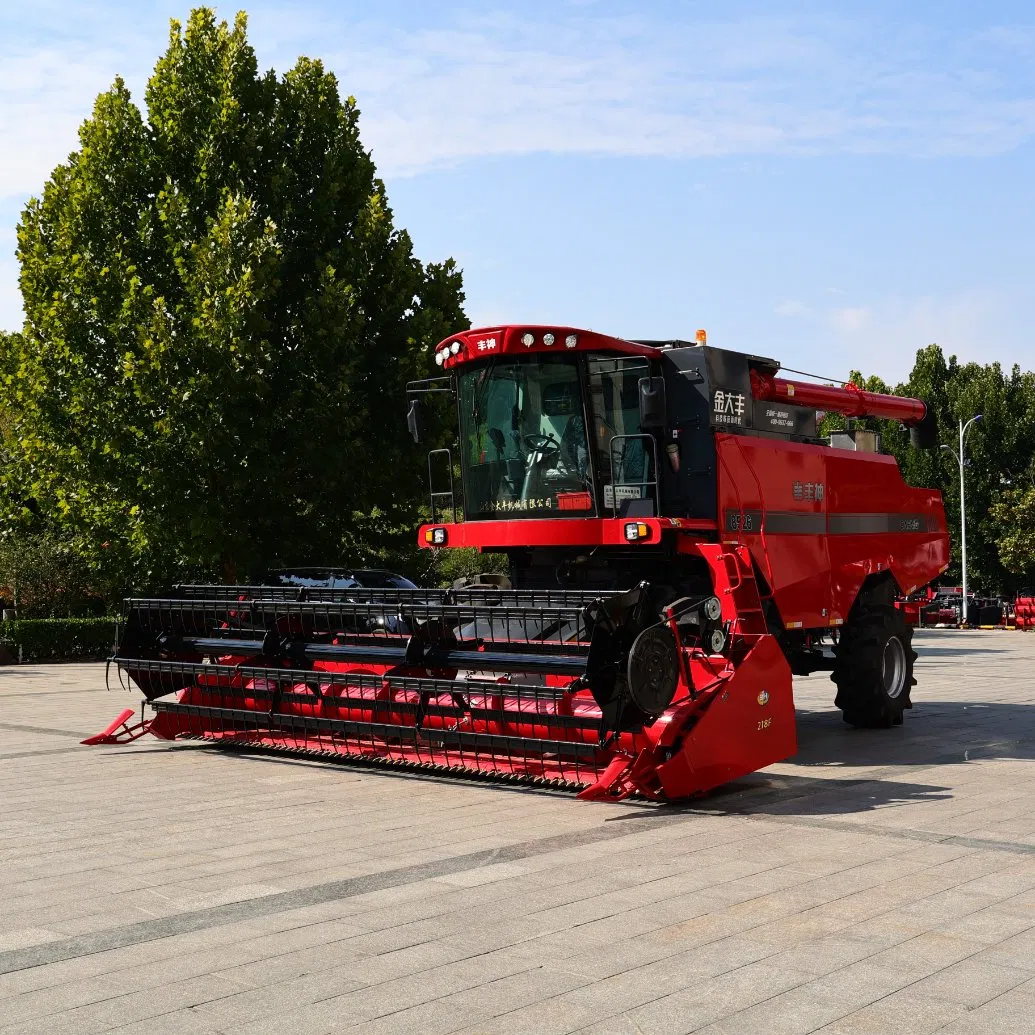
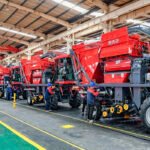
King-Gold Dafeng offers self-propelled corn harvesting configurations for different farm sizes and field workloads, including 4-row and 5-row machines. Buyers can compare available corn harvester models and header configurations according to local row spacing, field size, terrain, and expected daily harvesting capacity.
The best corn header is ultimately not the widest one. It is the configuration that stays aligned with the crop, feeds the machine consistently, matches the rest of the harvesting system, and delivers reliable performance in the fields where the machine will actually work.
You May Also Be Interested In
Header selection is closely connected with planting layout. For a deeper look at matching the machine to local planting patterns, read What Row Spacing Should a Corn Harvester Match?
If lodged plants are a regular concern in your harvesting area, continue with How to Harvest Lodged Corn with Less Loss for practical guidance on header height, working speed, and crop pickup.