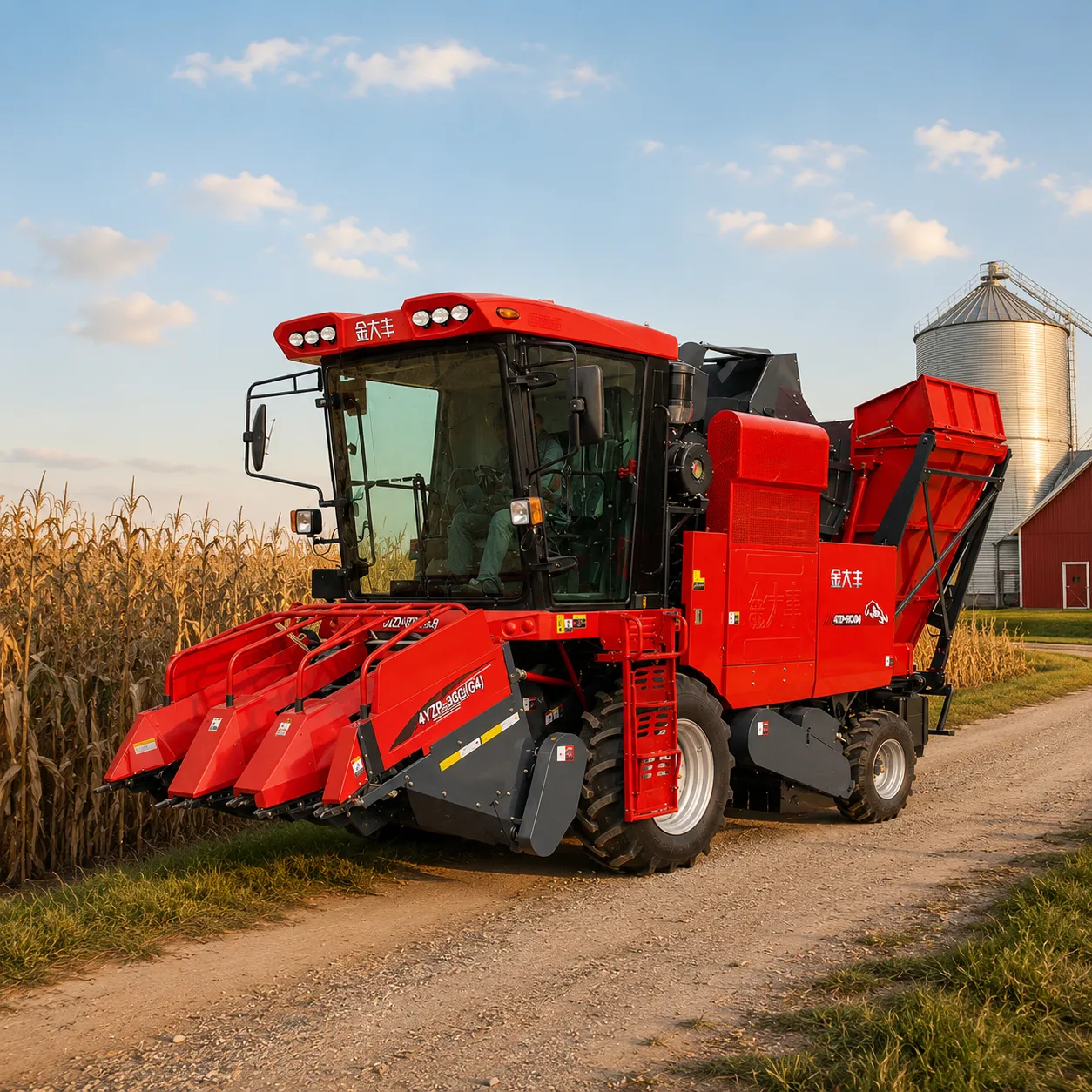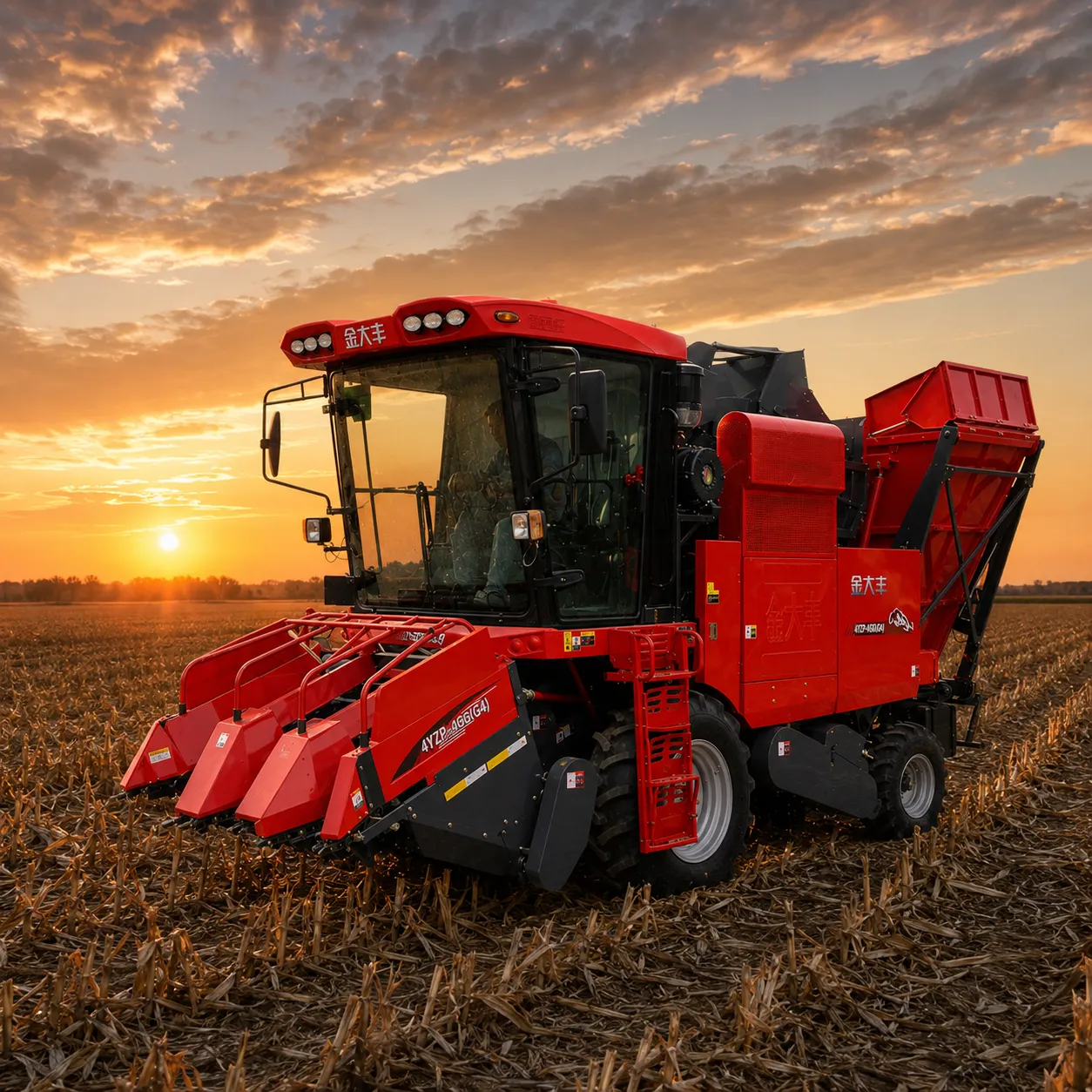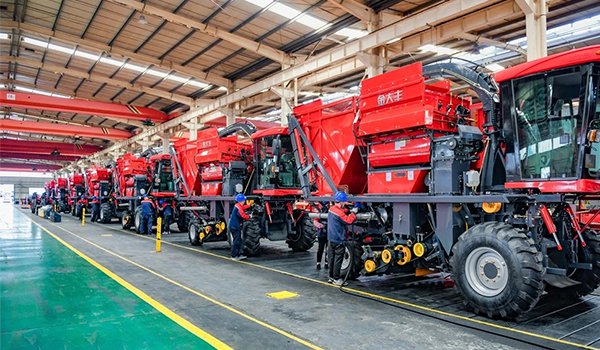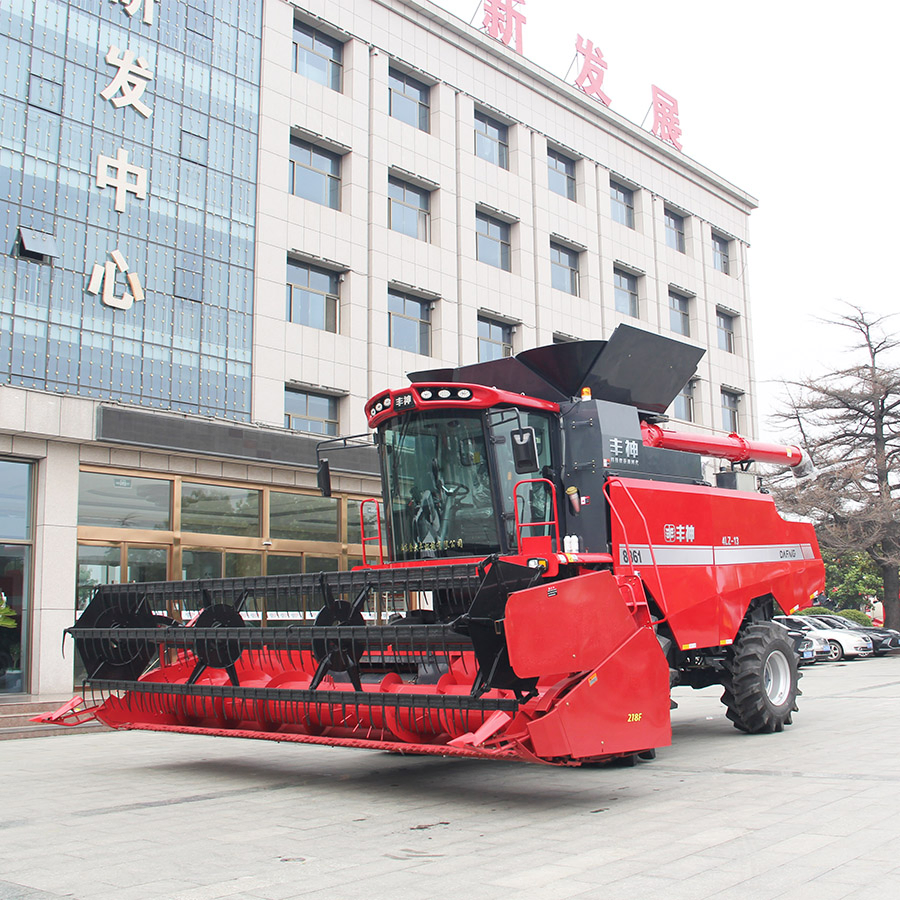
Not every corn farm consists of long, straight rows across hundreds of hectares. In many agricultural regions, fields are divided into smaller plots by roads, irrigation channels, trees, slopes, property boundaries, or villages. Some fields may be wide and regular, while the next field may be narrow, short, or difficult to enter.
In these conditions, choosing the largest machine is not always the most efficient decision. A corn harvester for small fields needs to balance harvesting capacity with maneuverability, turning space, header width, traction, machine dimensions, and the ability to move efficiently between separate plots.
The important question is not simply how many rows a machine can harvest at once. It is how much productive harvesting time the machine can achieve across the entire working day.
A slightly smaller harvester that spends more time actually harvesting may outperform a wider machine that repeatedly loses time turning, repositioning, entering narrow plots, or moving between fields.
Small Fields Create a Different Kind of Harvesting Challenge
Large commercial fields usually allow a harvester to travel long distances before turning. This favors wider headers and machines designed around maximum field coverage.
Small fields change the balance.
The machine may harvest for only a short distance before reaching the end of the row. It then needs to slow down, lift or reposition the header, turn, line up with another set of rows, and accelerate again.
If this cycle happens frequently, turning and repositioning become a meaningful part of the working day.
Other common challenges include:
- Short row lengths
- Narrow field entrances
- Limited headland space
- Irregular field boundaries
- Different row directions within the same plot
- Uneven terrain
- Fields separated by roads or villages
- Variable planting quality between plots
For these farms, practical efficiency depends heavily on how easily the machine can move, turn, align, and restart harvesting.
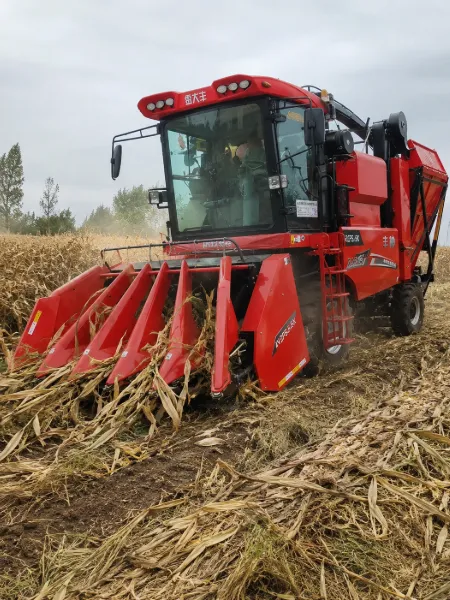
Maneuverability Can Matter More Than Maximum Working Width
Working width is one of the easiest specifications to compare because a wider header theoretically covers more crop in every pass.
But theoretical capacity assumes that the header remains fully engaged with the crop for most of the working time.
That assumption becomes weaker in small or irregular fields.
Imagine two harvesting situations
Field A: A large rectangular field with long straight rows. The harvester can travel continuously for several minutes before making a turn.
Field B: Several smaller plots with short rows, narrow boundaries, and frequent direction changes.
In Field A, a wider header can use most of its capacity advantage.
In Field B, the machine spends a greater percentage of time turning and repositioning. A wider machine may also need more space to complete each turn.
This is why a four-row machine can sometimes be more practical than a five-row machine even when the five-row model has greater theoretical capacity.
For a corn harvester for small fields, smooth maneuvering and easy row alignment can create more value than adding one extra row of harvesting width.
Start with Field Geometry Before Looking at Horsepower
Buyers often begin machine selection with horsepower. For irregular-field operations, it can be more useful to begin with the physical layout of the fields.
Walk through or map the areas where the harvester will normally work and consider several questions.
How long are the average rows?
Long rows favor wider machines because the time spent harvesting is much greater than the time spent turning.
Short rows reduce this advantage. If the machine reaches the field boundary every few minutes, turning efficiency becomes increasingly important.
How much headland space is available?
Some fields provide wide turning areas at both ends. Others have roads, drainage channels, fences, trees, or neighboring crops immediately beyond the final row.
A machine that requires a large turning radius may be inconvenient in these environments.
How wide are field entrances?
The route into the field matters just as much as the field itself. Gates, narrow roads, bridges, and roadside ditches can limit practical machine width.
Are plots connected?
If the harvester must travel regularly between separate fields, transport dimensions and road mobility deserve more attention.
Practical rule: Select the machine for the difficult fields in the operation, not only for the easiest field. A harvester that works perfectly in the largest plot but cannot move comfortably through smaller fields may reduce overall seasonal efficiency.
Why a 4-Row Configuration Often Fits Irregular Fields Well
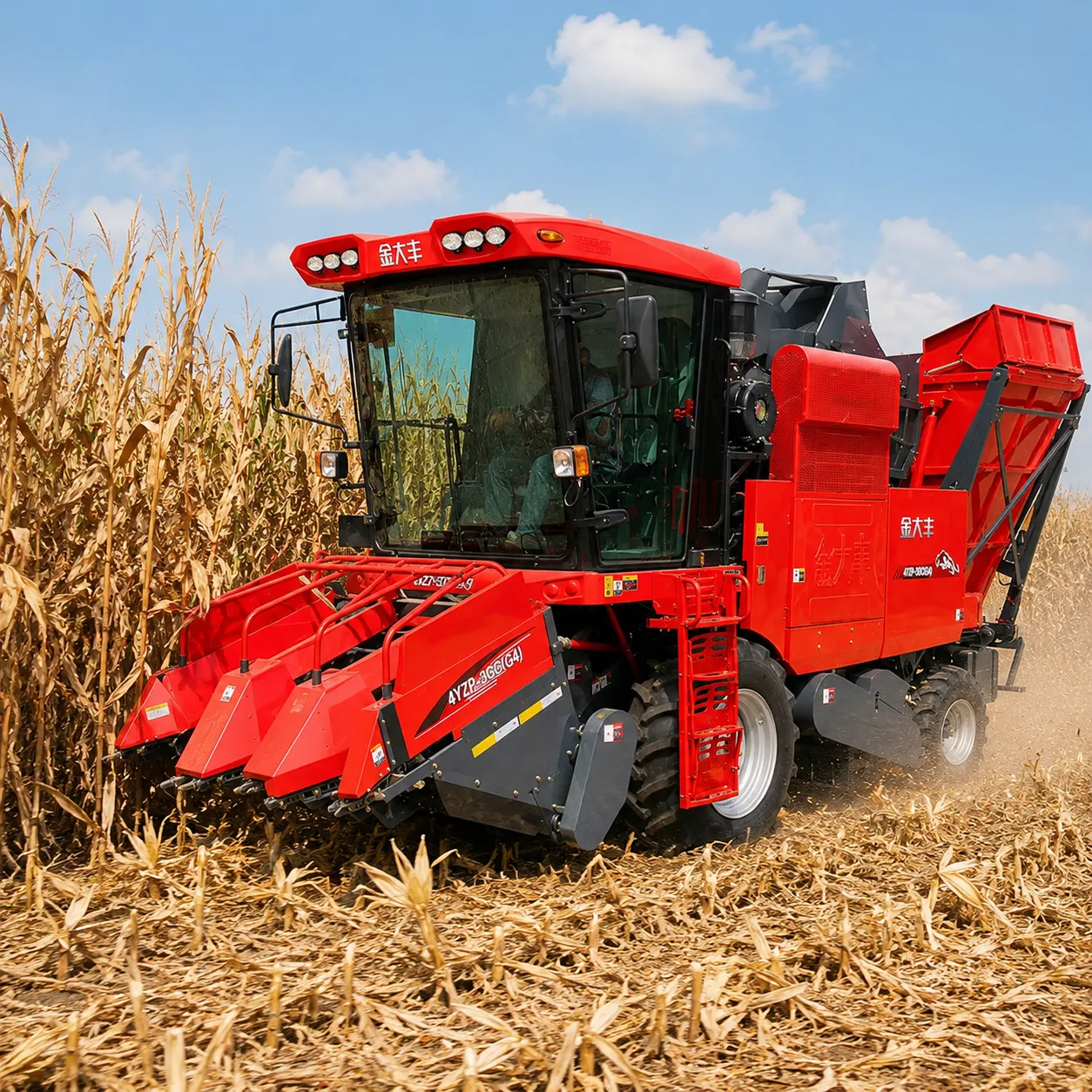
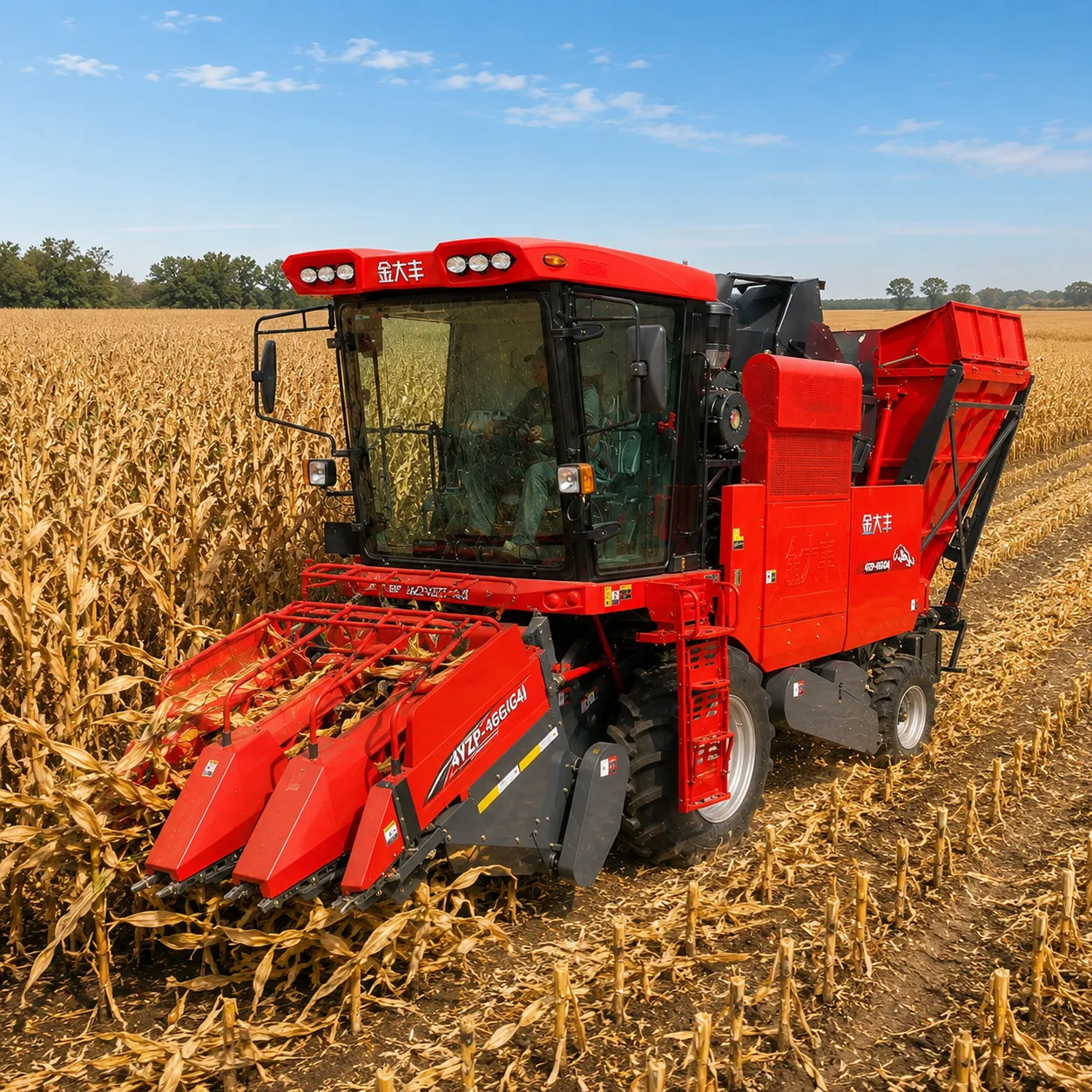
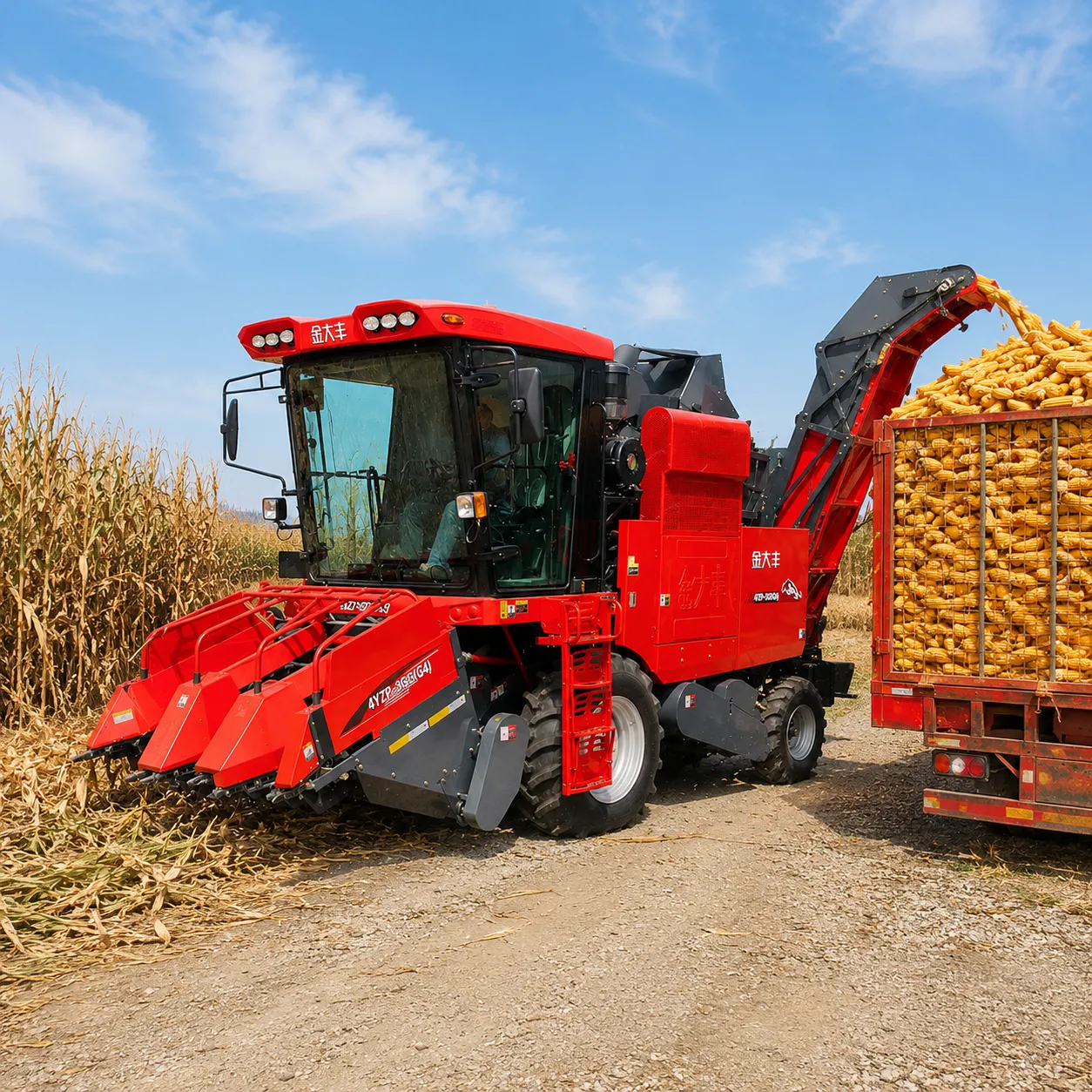
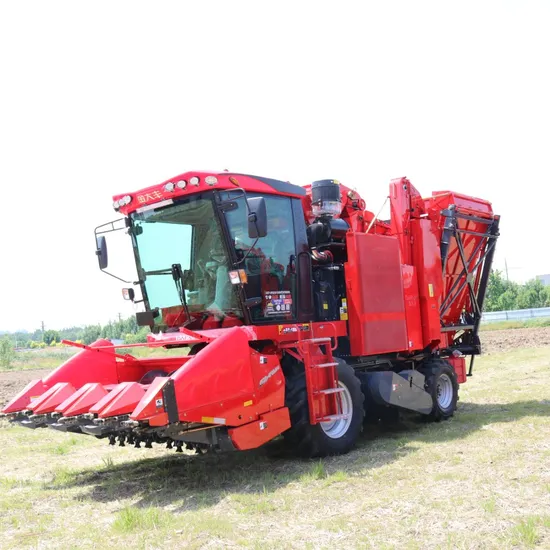
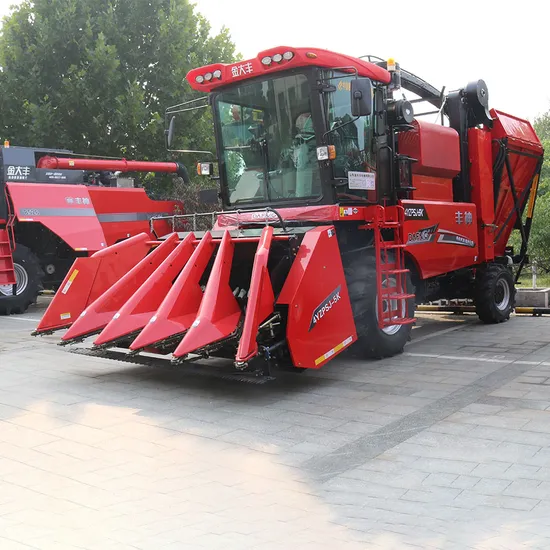
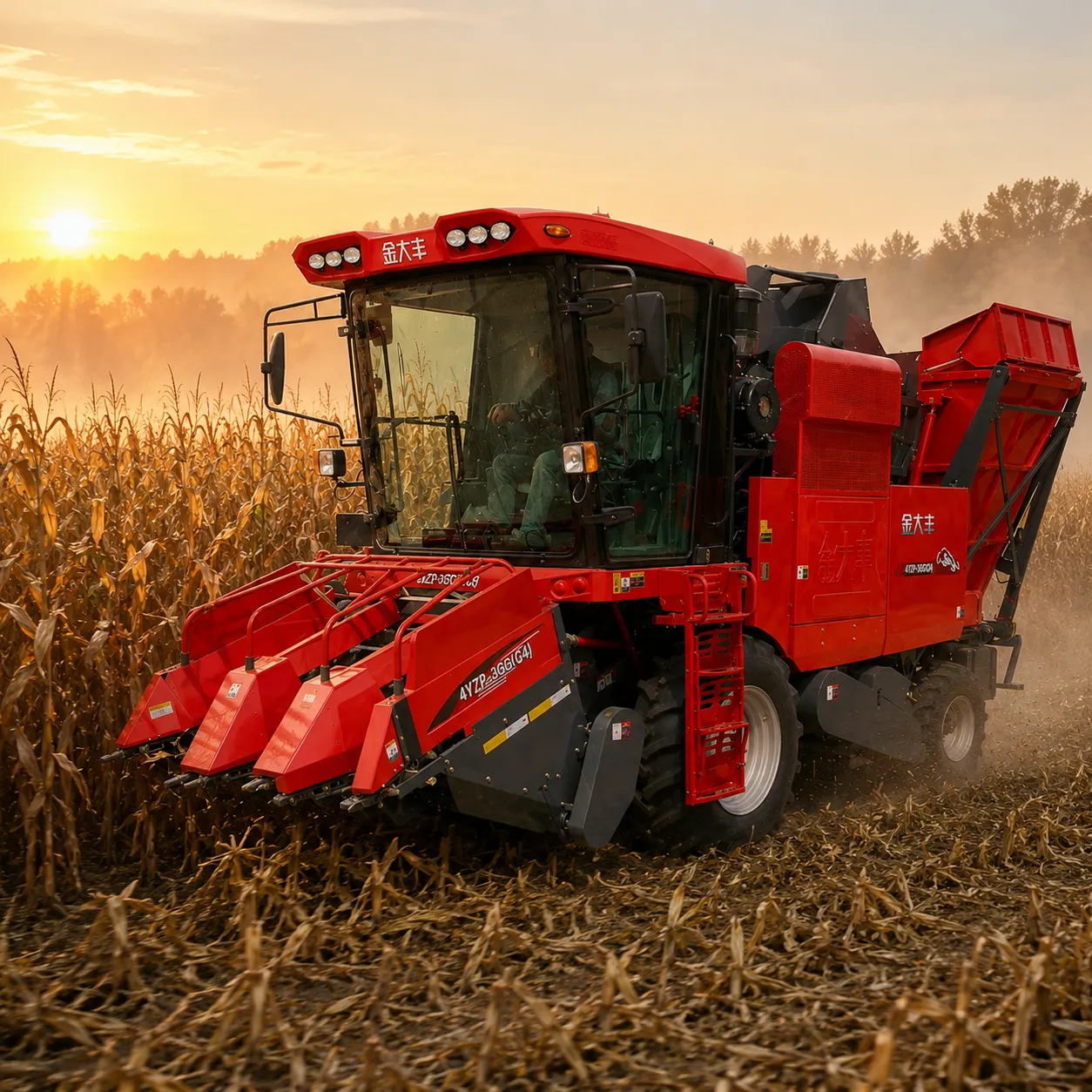
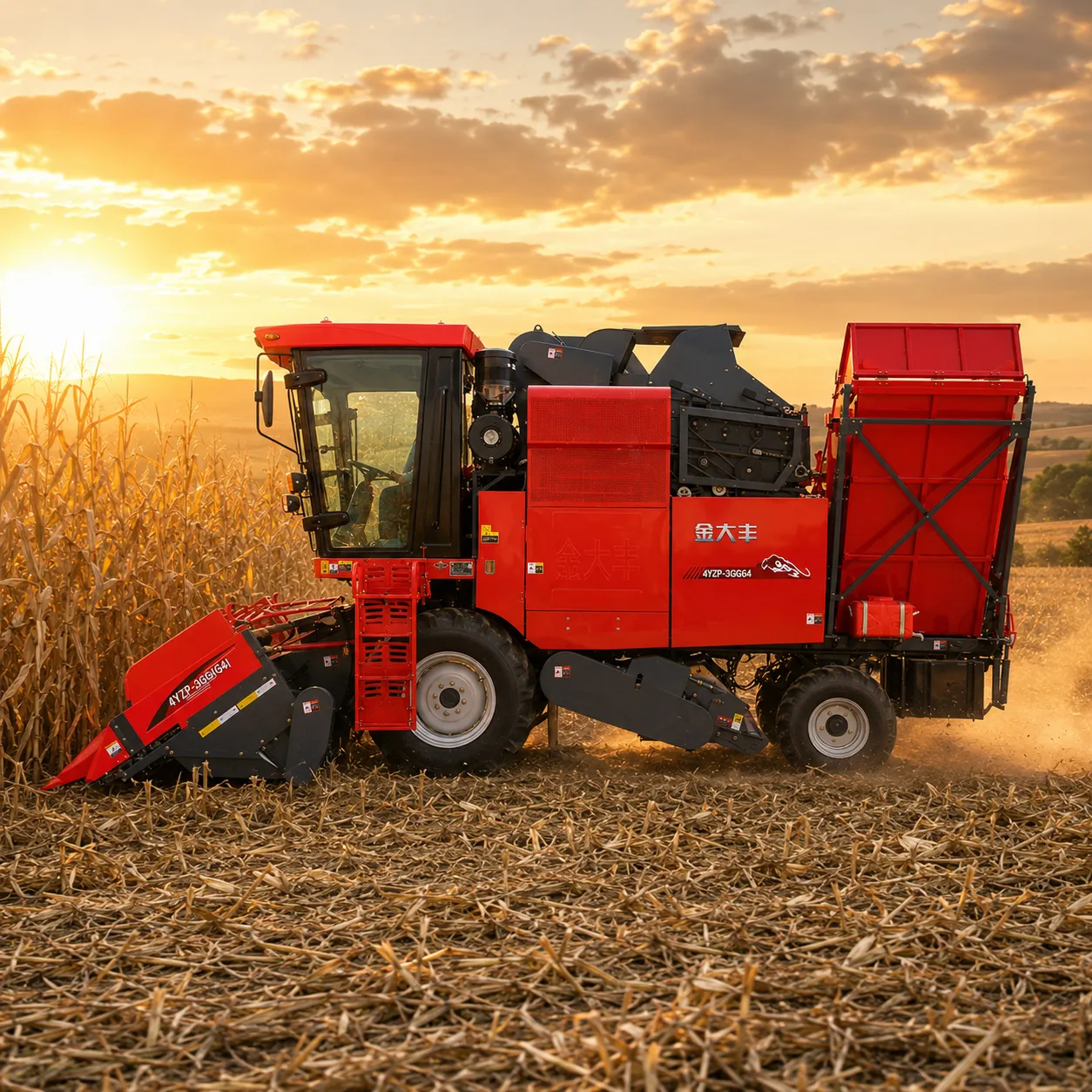
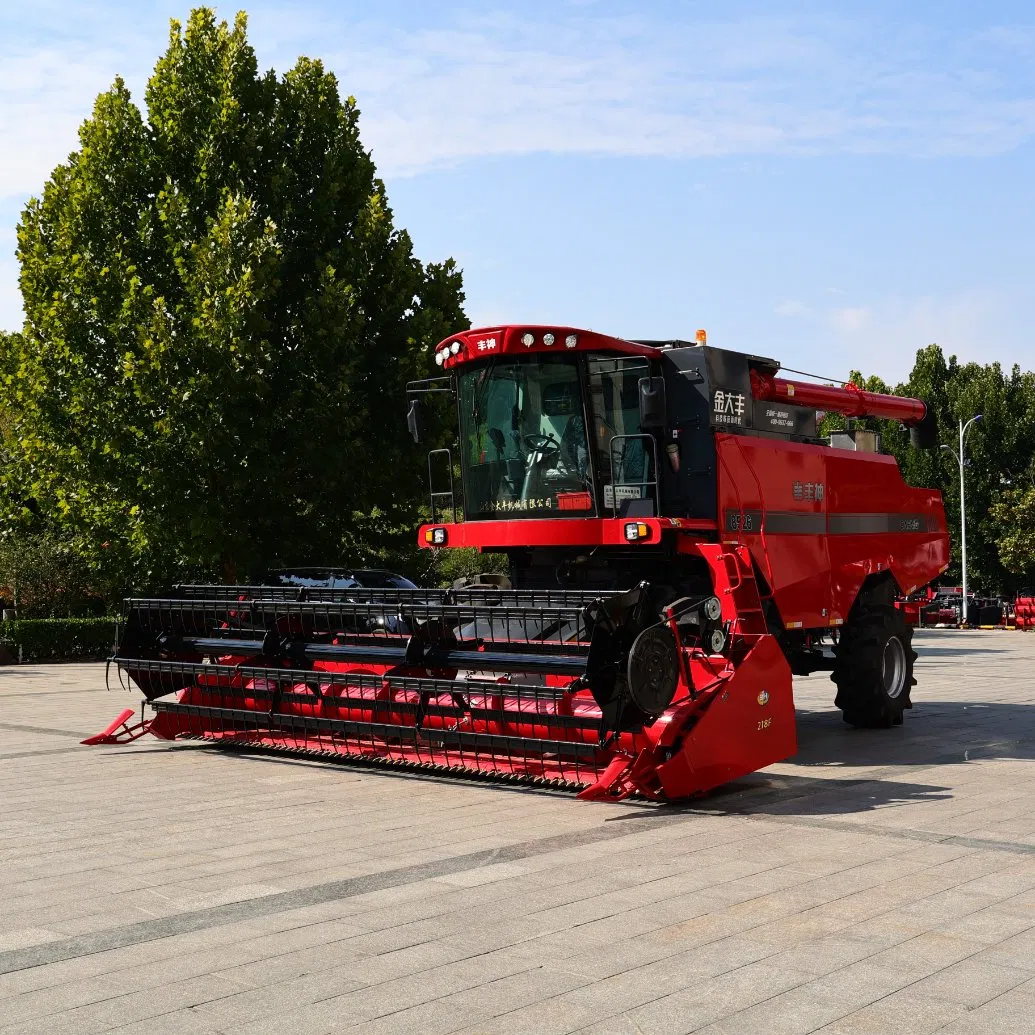
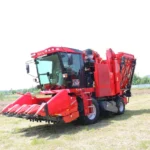
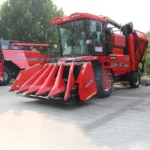
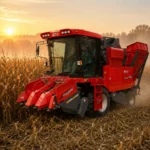
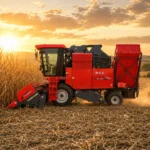
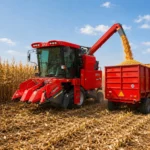
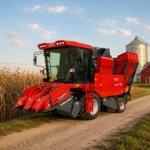
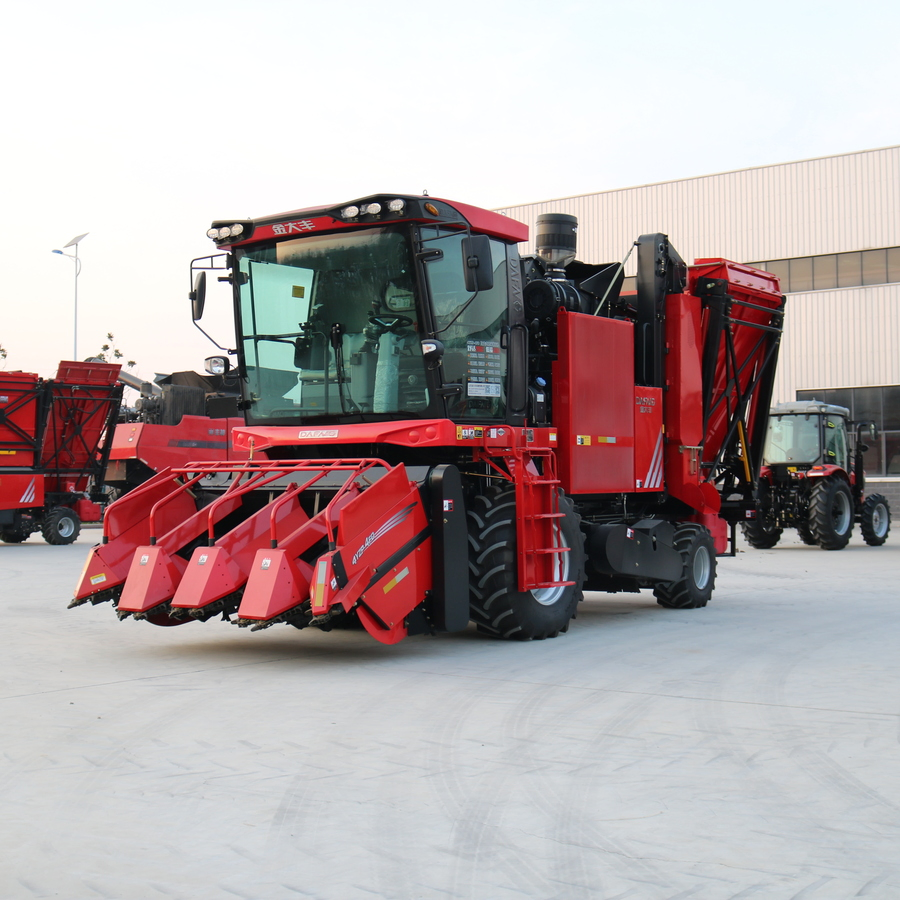
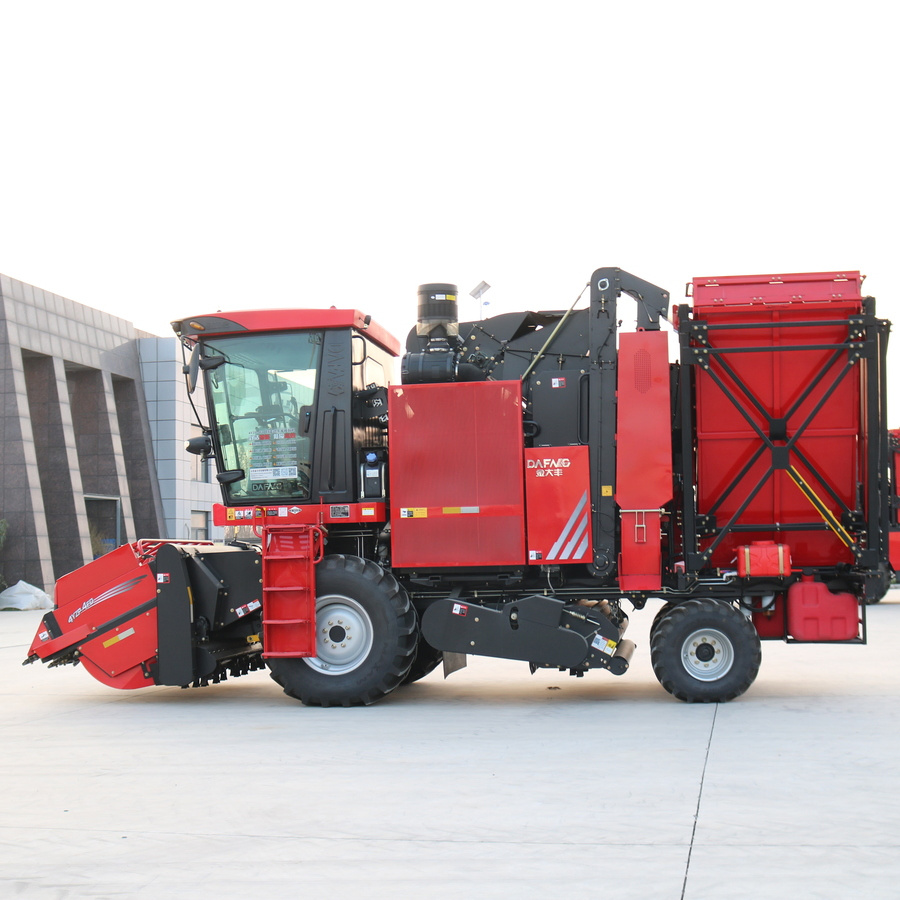
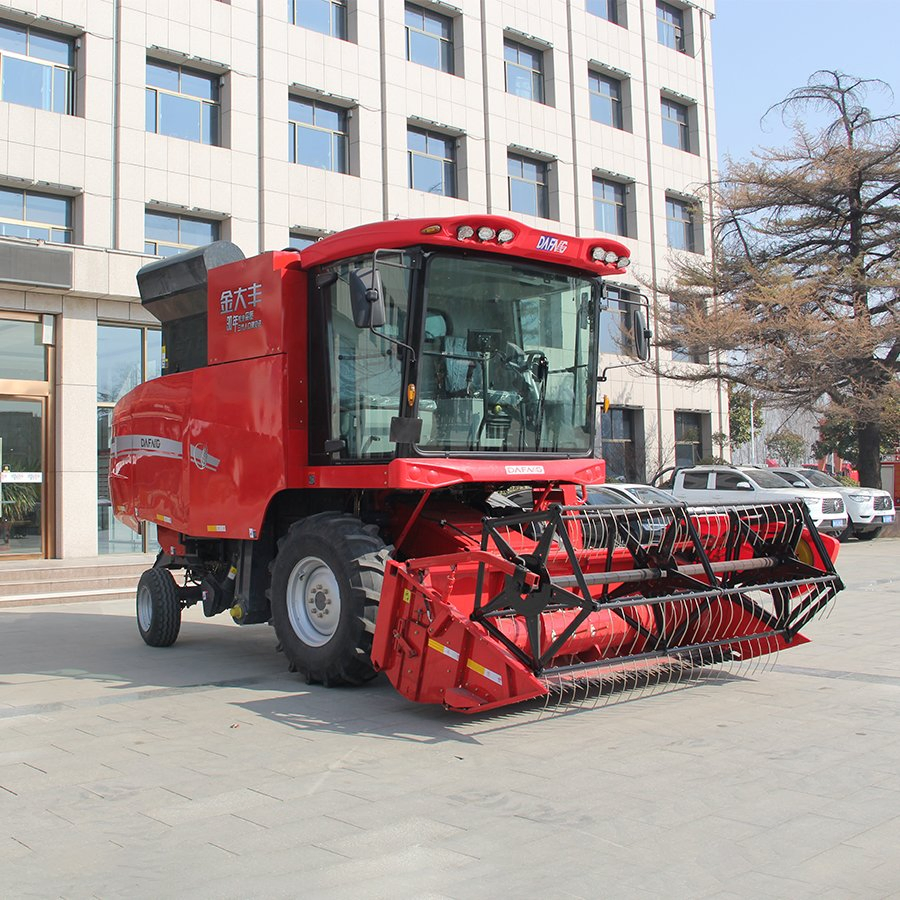
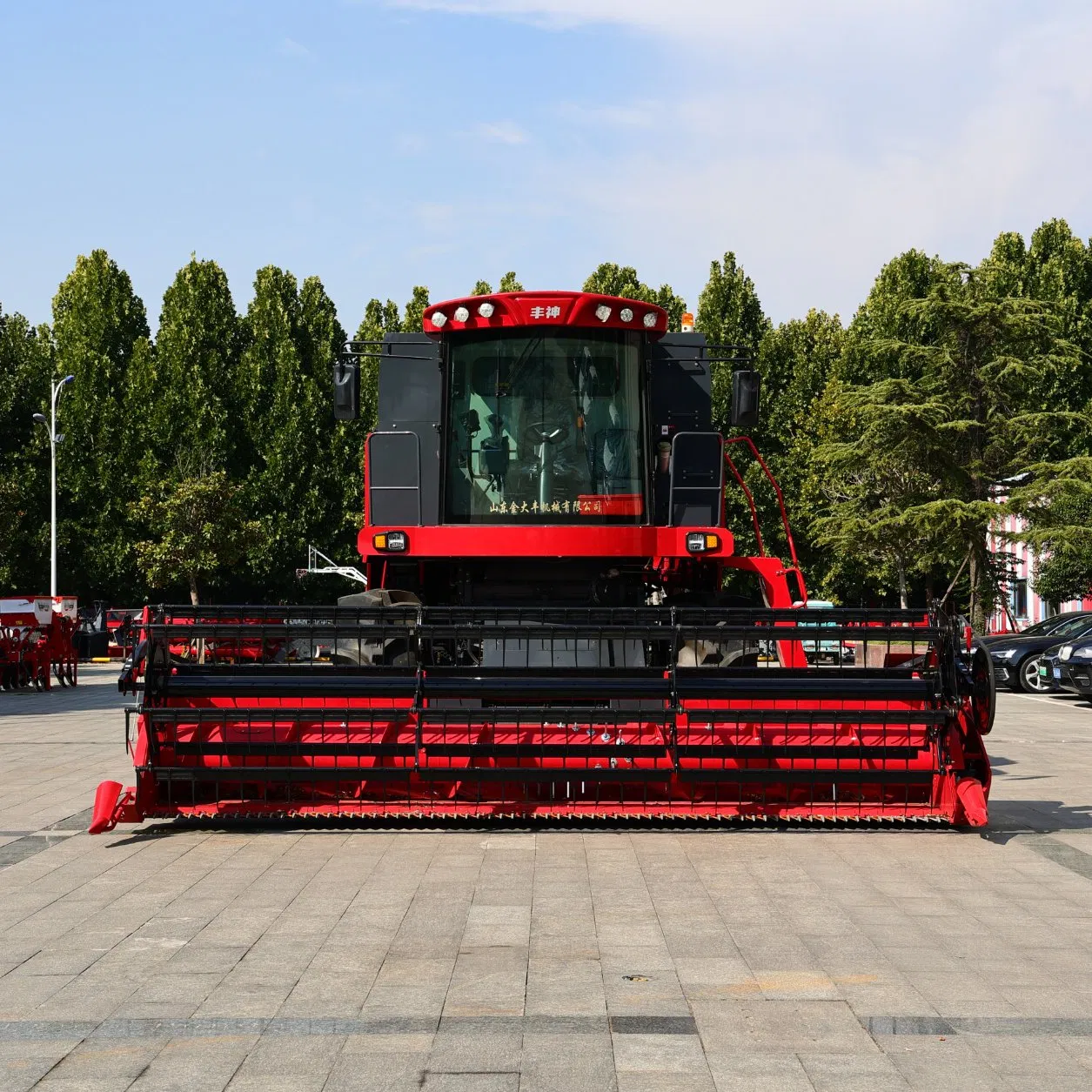
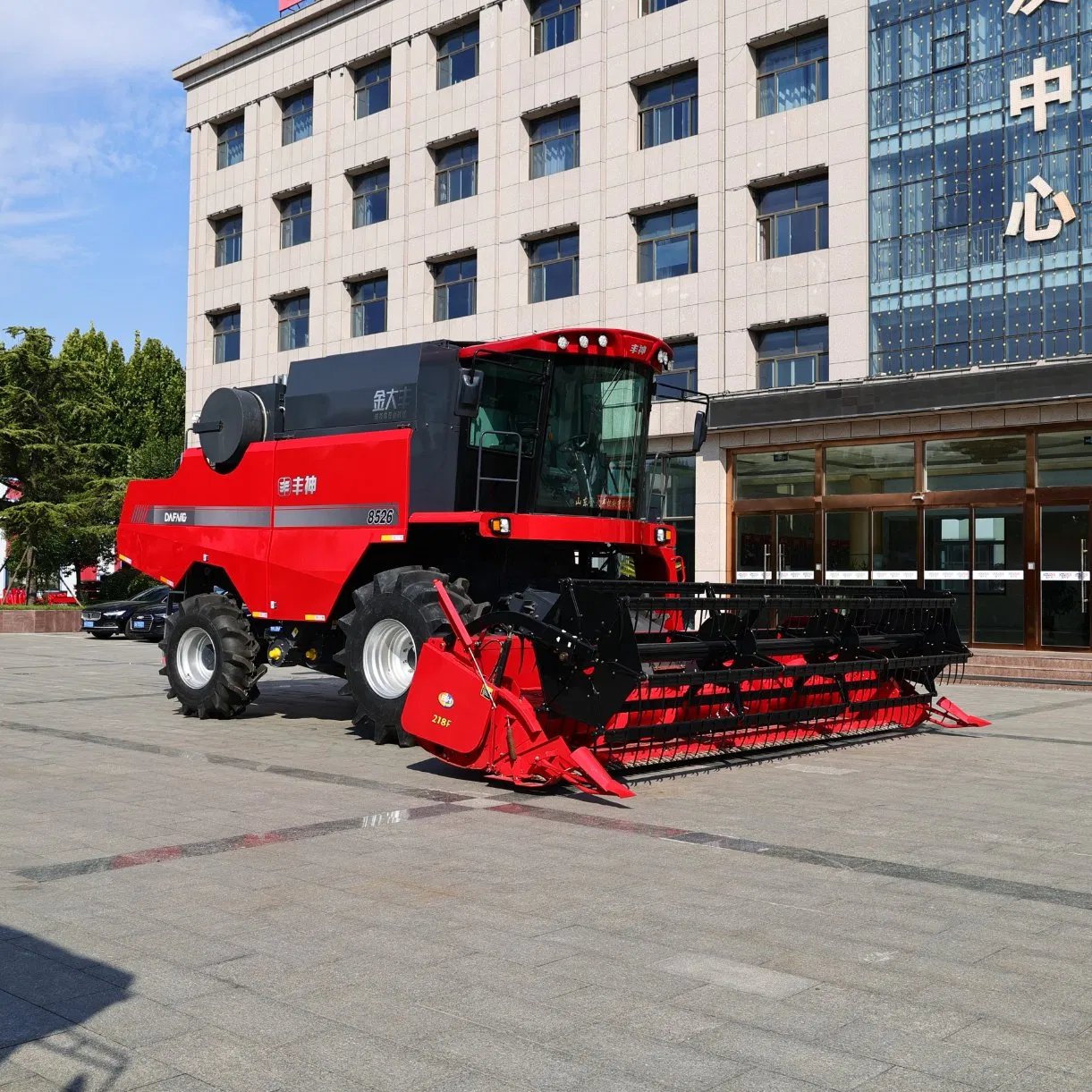
For many medium-sized farms and fragmented field systems, a four-row self-propelled corn harvester offers a useful balance between harvesting output and maneuverability.
Its advantage is not that four rows are always better. The advantage is that a narrower working configuration can make several daily operations easier.
Turning can be easier
A narrower machine generally requires less field width when changing direction. This can be valuable where headlands are limited.
Row alignment can be simpler
In fields where planting rows are not perfectly straight, a narrower header may be easier for the operator to keep aligned with the crop.
Short fields reduce the penalty of lower width
When row lengths are short, the difference in theoretical field capacity between four and five rows may be smaller in real operation than it appears on paper.
Transport between fields may be easier
Where the harvester moves frequently through rural roads or narrow access points, overall dimensions can influence daily convenience.
This is one reason the 240HP 4-row configuration can be suitable for operators who value a balance of field efficiency, control, and flexibility rather than maximum harvesting width.
Irregular Fields Also Change How the Header Is Used
Header selection becomes particularly important when fields are not uniform.
The operator may encounter:
- Rows that gradually curve
- Sections planted at different angles
- Missed planting rows
- Variable row spacing
- Headland corn growing in a different direction
- Lodged plants near field boundaries
In these conditions, the operator may not be able to keep every row unit perfectly centered all the time.
A practical header should guide stalks smoothly and maintain stable feeding even when crop entry is not perfectly uniform.
Forward speed also becomes important. When approaching curves, lodged areas, or irregular row transitions, slowing down gives the operator more time to keep the header aligned and reduces sudden crop-flow changes.
Trying to maintain the same speed used in a straight field can increase missed plants and dropped ears.
This makes header control an important part of choosing a corn harvester for small fields.
2WD or 4WD: Terrain Can Change the Answer
Field size and traction are two separate questions.
A small field does not automatically require four-wheel drive, and a large field does not automatically require it either.
The correct drivetrain depends mainly on ground conditions and terrain.
2WD may be enough when:
- Fields are relatively flat
- Soil conditions are normally firm
- Harvesting is usually completed in dry weather
- Road transport is common
- Lower machine complexity is preferred
4WD becomes more valuable when:
- Fields are uneven or sloped
- Soil becomes soft after rain
- The machine regularly works in difficult field entrances
- Traction needs are high
- The harvester serves different farms with unpredictable ground conditions
For contractors, 4WD can provide additional flexibility because the machine may work in conditions that cannot be predicted at the beginning of the season.
For a farm with dry, flat, regular ground, however, paying for additional traction capability may not provide the same benefit.
Do Not Oversize the Machine for a Short Harvesting Route
One common purchasing mistake is selecting equipment for maximum possible capacity rather than actual annual workload.
A larger harvester may offer:
- More horsepower
- A wider header
- Higher crop intake
- Larger daily theoretical capacity
But those advantages have value only when the farm can use them.
If total annual harvesting area is moderate and fields are fragmented, the machine may spend a significant amount of time traveling, turning, waiting, or moving between plots.
The buyer should therefore consider the entire seasonal route:
- How many hectares must be harvested?
- How many separate fields are involved?
- What is the average distance between fields?
- How many productive harvesting hours are available each day?
- How narrow are the difficult plots?
- How often does the machine need to turn?
This gives a more realistic picture than comparing only hectares per hour under ideal conditions.
A smaller configuration may be the better fit when:
- Most fields are small or medium-sized
- Plots have irregular boundaries
- Headland space is limited
- Field entrances are relatively narrow
- The machine travels frequently between farms
- Total seasonal workload is moderate
- Easy handling is more important than maximum daily output
Daily Efficiency Includes More Than Harvesting Speed
The best measure of a corn harvester is not always its highest speed while moving through standing corn.
A complete working day includes many other activities:
- Entering fields
- Turning
- Aligning with rows
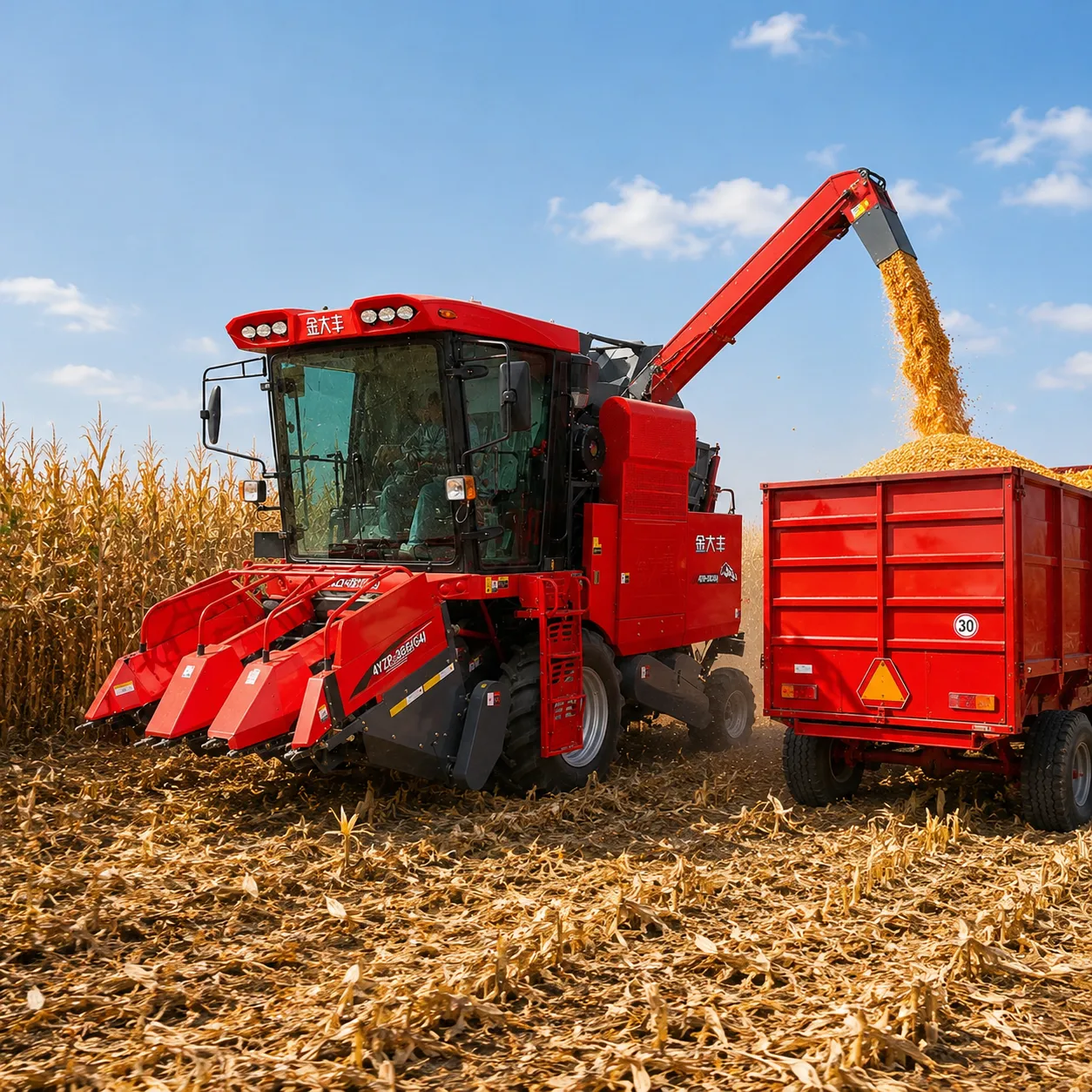
- Unloading
- Moving between plots
- Cleaning accumulated crop material
- Daily maintenance
- Refueling
On fragmented farms, these non-harvesting activities occupy a larger percentage of the day.
This is why operational simplicity matters.
A machine that is easy to control, easy to service, and well matched to local field size may achieve higher effective seasonal productivity even when another model has a higher maximum specification.
For contractors, this difference becomes even more important because several customers may need to be completed in one day. Saving time when entering, turning, and relocating the machine can improve the entire schedule.
Use a Simple Field-Fit Test Before Choosing the Machine
Before selecting a model, buyers can perform a simple practical assessment of their normal harvesting conditions.
Step 1: Look at your smallest regular field
Can the machine enter, turn, and align comfortably without excessive repositioning?
Step 2: Look at your largest field
Will the machine still provide enough daily harvesting capacity to complete the farm within the required harvest window?
Step 3: Check row spacing
Does the header match the planting system used across most fields?
Step 4: Check terrain
Do ground conditions justify 4WD, or is 2WD sufficient?
Step 5: Check transport routes
Can the machine move conveniently between fields and through local access roads?
Step 6: Check the complete crop flow
Can the engine, header, peeling system, collection system, and straw crusher operate continuously at the expected working speed?
If a machine performs well across all six questions, it is more likely to match the actual farm rather than simply look attractive on a specification sheet.
The Best Corn Harvester Is the One That Fits the Farm
Small and irregular fields do not necessarily require a low-capacity machine. They require a machine whose capacity can actually be used.
For many operations, that means placing more importance on maneuverability, header control, row compatibility, turning space, drivetrain choice, and transport convenience.
A well-matched corn harvester for small fields should move comfortably through the farm, maintain stable crop feeding, and provide enough daily capacity without becoming difficult to operate in narrow or fragmented plots.
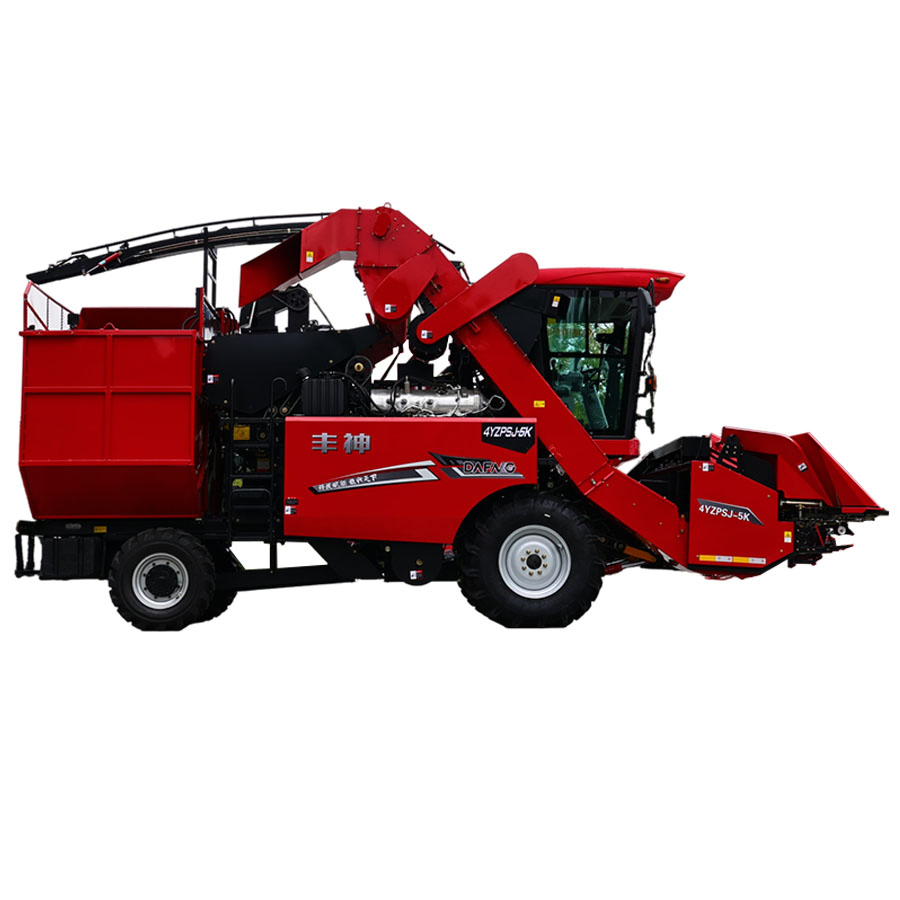
King-Gold Dafeng offers self-propelled corn harvester configurations for different field sizes and harvesting workloads, including 4-row and 5-row machines with different horsepower and drivetrain options.
For medium-sized farms, regular but relatively compact fields, or operations that prioritize maneuverability, a 4-row configuration can provide a practical balance. Larger 5-row machines are generally more suitable when field size, row length, and seasonal workload allow the additional working width to be used efficiently.
The final decision should begin with the farm itself. Measure the fields, understand the planting layout, consider the difficult plots, and then select the machine that fits those conditions consistently throughout the harvest season.
You May Also Be Interested In
Row spacing is one of the most important factors when matching a machine to fragmented fields. Read What Row Spacing Should a Corn Harvester Match? to understand how planting patterns influence header selection and field performance.
If irregular fields also include wind-damaged or flattened crops, continue with How to Harvest Lodged Corn with Less Loss for practical guidance on working speed, crop pickup, and header control.