Choosing the right farm tractor size can make a major difference in daily productivity, operating cost, and long-term equipment value. Many buyers begin with a simple question: what size farm tractor do you really need? However, the right answer depends on much more than horsepower alone.
Farm size, soil condition, crop type, implements, terrain, and daily workload all influence tractor selection. A tractor that feels powerful on paper may still be inefficient if it does not match the real job. At the same time, an undersized tractor may work too hard, consume more fuel, and wear out faster.
This guide explains how to choose the right tractor size for small farms, mixed farming, larger fields, and commercial agricultural operations. It also helps buyers understand when a compact machine is enough and when a higher-horsepower tractor becomes the more practical investment.
Why Tractor Size Matters
Tractor size affects nearly every part of farm work. It determines which implements the machine can handle, how much land it can cover in a day, how much fuel it consumes, and how well it performs in difficult field conditions.
A tractor that is too small may struggle with plowing, hauling, or PTO-driven equipment. It may require repeated passes, work at higher engine load, and deliver lower daily productivity. On the other hand, a tractor that is much larger than necessary may increase purchase cost, fuel use, and maintenance without creating meaningful benefits.
The goal is not to buy the biggest tractor possible. The goal is to choose the machine size that matches your actual farming needs.
Start with Farm Size and Main Applications
The first step is to understand how the tractor will be used. A small orchard, a medium mixed farm, and a large commercial grain operation all require different tractor capabilities.
Small Farms and Orchards
Small farms often need tractors for mowing, spraying, light tillage, trailer transport, and simple utility work. In these cases, compact tractors and utility tractors usually offer enough performance while remaining easy to maneuver in tighter spaces.
For many small agricultural operations, tractors in the 50HP to 80HP range provide a practical balance between power and efficiency. They can handle common tasks without creating unnecessary operating costs.
Mixed Farming Operations
Mixed farms often require one tractor to perform several different jobs throughout the year. These tasks may include plowing, rotary tillage, seeding support, PTO work, hauling, and field transport. Because of this broader workload, farmers usually need more versatility and stronger lifting ability.
Tractors between 90HP and 120HP often fit this type of farming well. They provide enough power for everyday fieldwork while still remaining flexible and cost-efficient.
Large Farms and Heavy-Duty Work
Larger farms usually demand wider implements, deeper tillage, longer daily operating hours, and higher field productivity. These applications require stronger tractors with better traction, more hydraulic capacity, and more robust driveline systems.
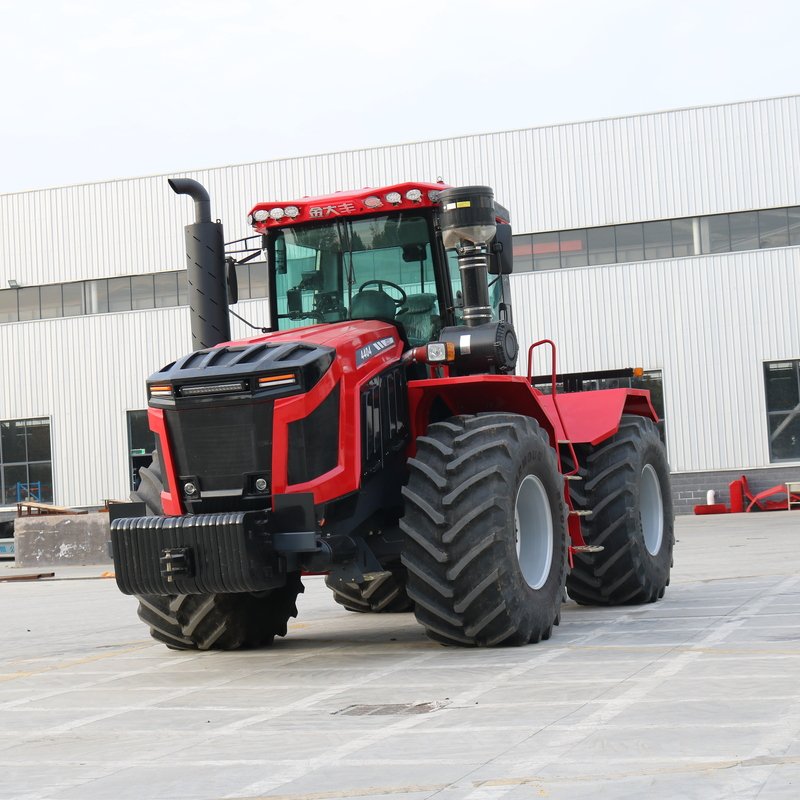
For this category, 150HP to 240HP tractors are commonly used for large-scale land preparation, heavier plowing, and broad field coverage. When field sizes become very large or implements become significantly wider, high-horsepower machines above 300HP may become necessary.
Recommended Tractor Size by Farming Need
| Farming Need | Recommended Tractor Size | Typical Work |
|---|---|---|
| Small farm or orchard | 50HP–80HP | Spraying, mowing, light tillage, transport |
| General mixed farming | 90HP–120HP | Plowing, seeding support, PTO work, hauling |
| Medium to large fields | 150HP–240HP | Heavy tillage, larger implements, wider field work |
| Commercial large-scale agriculture | 300HP–440HP | Deep tillage, wide implements, heavy soil operations |
This table gives a practical overview, but the final tractor size should also reflect soil resistance, terrain, and the implements you plan to use.
Soil Type Changes the Tractor Size You Need
Soil conditions have a strong impact on tractor selection. Light sandy soil requires less pulling power than heavy clay soil or compacted black soil. If your tractor frequently works in difficult ground conditions, you may need more horsepower and better traction than your field size alone suggests.
Light Soil
Light soil usually requires less pulling force during plowing and tillage. In these fields, a moderate-sized tractor can often complete the work efficiently without excessive power.
Heavy Clay or Compacted Soil
Heavy soil creates greater resistance against plows, subsoilers, and cultivators. Farmers working in these conditions often need a stronger tractor with better torque, 4WD capability, and appropriate tire configuration.
Wet or Soft Ground
Wet fields increase the risk of wheel slip. Even if horsepower is adequate, poor traction can reduce productivity. Wider tires, 4WD systems, and proper machine weight become more important in these environments.
Choose Tractor Size Based on Implements
One of the most practical ways to select tractor size is to begin with the implements. Plows, seeders, rotary tillers, sprayers, trailers, and balers all place different demands on the tractor.
If the implement is too large for the tractor, the machine may work inefficiently or fail to perform correctly. If the tractor is far larger than the implement requires, you may spend more than necessary without gaining much benefit.
Common Matching Considerations
- Plow width and working depth
- Seeder size and hydraulic requirements
- PTO power demand
- Trailer weight
- Rear linkage capacity
A practical tractor buying decision always considers the tractor and the implement as one working system.
Why 4WD Can Change the Size You Need
Many buyers ask whether a smaller 4WD tractor can replace a larger 2WD model. In some situations, the answer is yes. A 4WD farm tractor often performs better in pulling tasks because it transfers power more effectively to the ground.
For example, a 100HP 4WD tractor may deliver stronger usable field performance than a similarly powered 2WD model in difficult soil. This does not mean horsepower becomes irrelevant, but it shows that traction and power delivery matter just as much as engine output.
For heavy-duty plowing, deeper tillage, and uneven fields, 4WD is often the more practical choice.
How PTO and Hydraulic Capacity Affect Tractor Choice
The tractor size you need also depends on the implements powered by PTO and hydraulics. A machine used only for transport may require less equipment compatibility than a tractor running advanced seeders, rotary equipment, or other PTO-driven tools.
Buyers should review:
- PTO speed options
- Hydraulic lifting capacity
- Number of hydraulic outputs
- Rear linkage strength
A tractor with proper PTO and hydraulic performance may work across more farming applications, improving overall equipment value.
Small Tractor or Bigger Tractor: Which One Saves More Money?
Some buyers assume a smaller tractor always saves money. That is true only when the machine can complete the required work efficiently. If a tractor is too small, it may consume more fuel per hectare because it spends longer in the field and works under heavier strain.
A correctly sized tractor can finish tasks faster, reduce repeated passes, and improve daily productivity. Therefore, the most economical tractor is not automatically the lowest-priced one. It is the model that gives the best performance for the work it must handle.
Tractor Size Guide for Different Buyer Types
| Buyer Type | Likely Tractor Need | Recommended Focus |
|---|---|---|
| Small farm owner | 50HP–80HP | Maneuverability, low operating cost, easy maintenance |
| Mixed farming operator | 90HP–120HP | Versatility, PTO use, 4WD options |
| Large farm | 150HP–240HP | Field efficiency, pulling power, hydraulic strength |
| Contractor or project buyer | 300HP–440HP | Wide implements, long working hours, commercial productivity |
Common Mistakes Buyers Should Avoid
One common mistake is choosing tractor size only by price. Another is buying based on horsepower without considering implements, traction, and field conditions. Some buyers also overlook maintenance and spare parts support, which can create long-term problems after the tractor enters service.
It is also risky to copy another farmer’s tractor choice without comparing real working conditions. Two farms with similar land area may still need different tractor sizes because of differences in soil, crops, and daily tasks.
Where Supplier Advice Becomes Important
A capable supplier can help buyers match tractor size with real applications. This is especially useful for dealers and overseas buyers who serve different local markets. A manufacturer with a wide product range can recommend several options instead of pushing one fixed configuration.
King-Gold Dafeng agricultural machinery offers tractors across multiple horsepower segments, helping buyers select suitable models for utility work, mixed farming, and large-scale agricultural operations.
Final Thoughts
So, what size farm tractor do you really need? The answer depends on your farm size, soil condition, implements, terrain, and productivity goals. Small farms may work best with 50HP to 80HP tractors. Mixed farming operations often benefit from 90HP to 120HP machines. Larger farms may need 150HP to 240HP tractors, while major agricultural projects may require high-horsepower options above 300HP.
The right tractor size should make daily work easier, more efficient, and more cost-effective. When buyers evaluate horsepower together with 4WD traction, PTO requirements, hydraulic capacity, and long-term service support, they make stronger equipment decisions and gain better value from their investment.