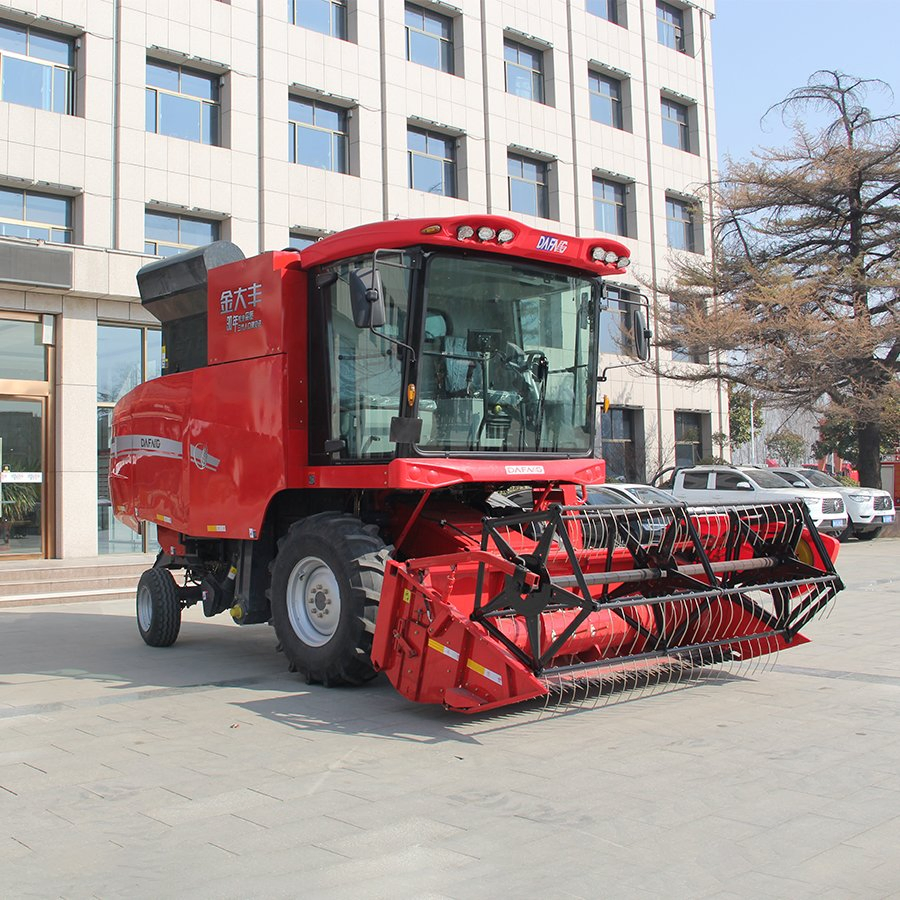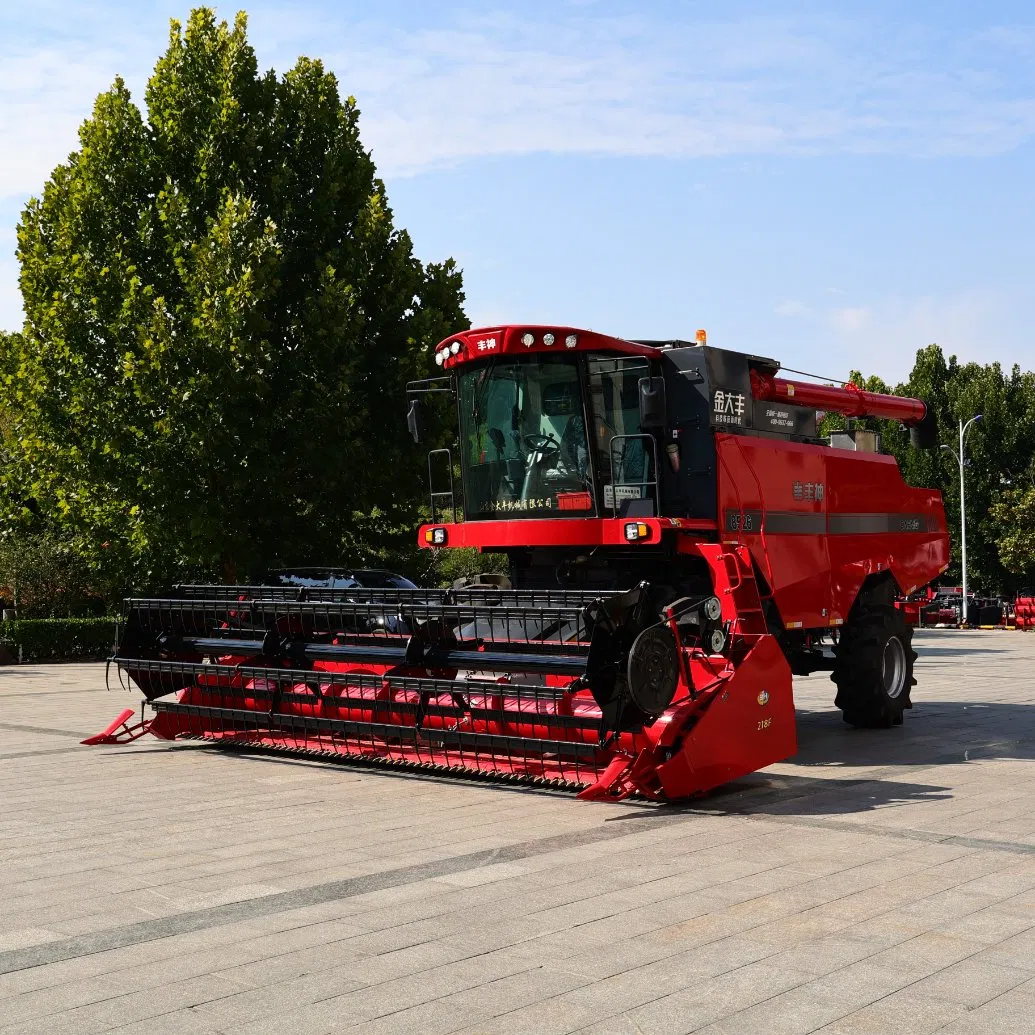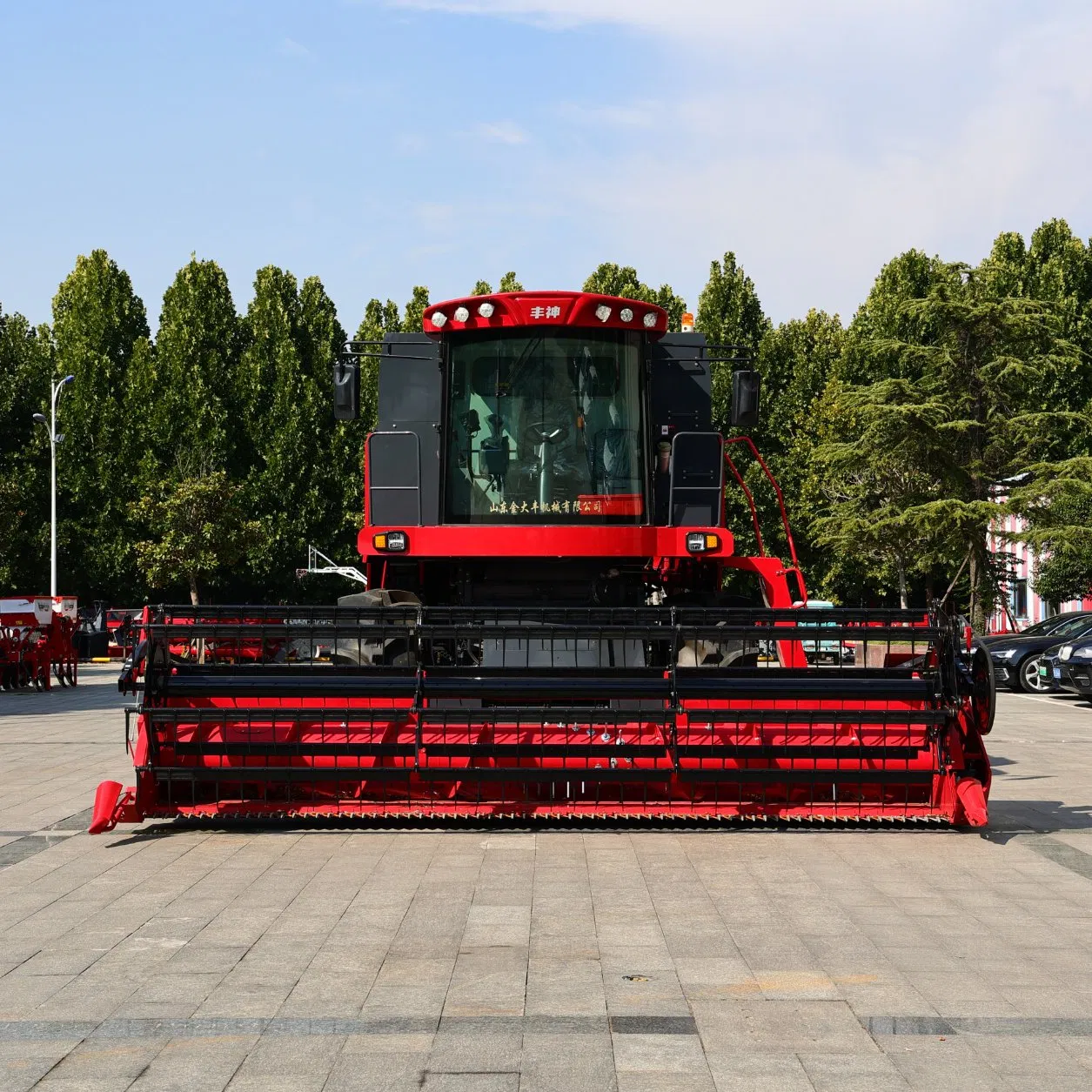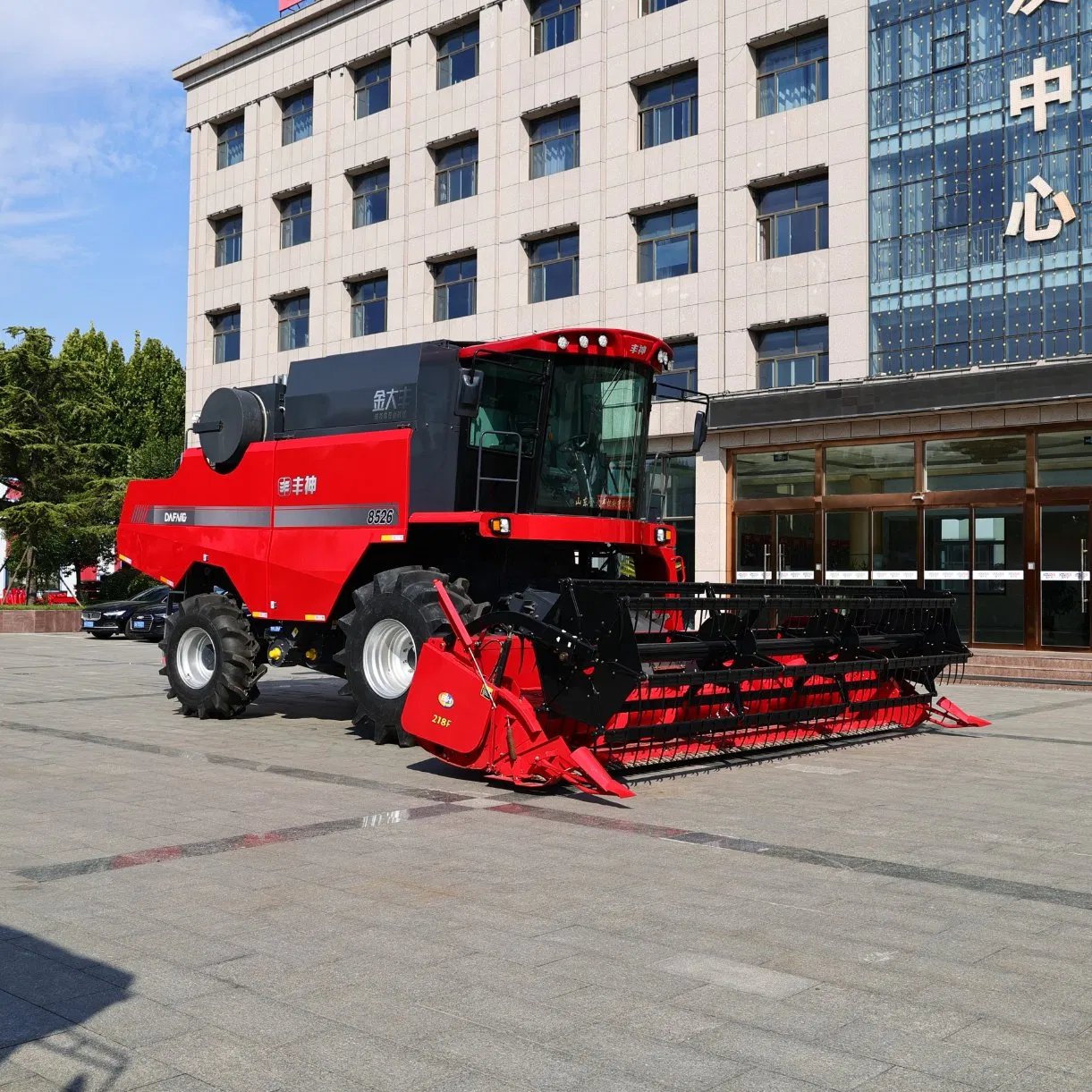
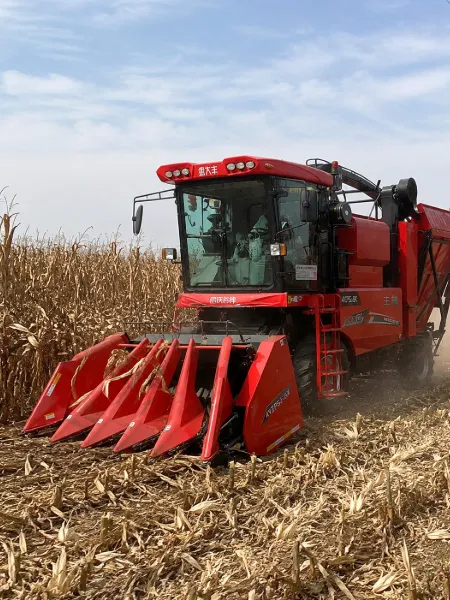
When a corn harvester removes an ear from the stalk, harvesting is not necessarily finished. In many ear-corn harvesting operations, the husk still surrounds the cob and must be removed before the harvested crop can move efficiently into collection, transport, drying, or later processing.
This job is handled by the corn harvester peeling system. Although it may appear to be only one section of the machine, peeling performance is closely connected with header feeding, conveying speed, crop moisture, roller condition, forward speed, and the amount of material entering the machine.
A good peeling system is therefore not simply a group of rotating rollers. It is part of a continuous crop-flow process. Understanding how that process works helps farmers and machinery buyers evaluate peeling quality more realistically instead of judging a machine only by engine horsepower or row number.
What Does a Corn Harvester Peeling System Actually Do?
The main purpose of a peeling system is straightforward: remove as much husk as practical from harvested corn ears while keeping the ears moving continuously toward the collection system.
But this creates two competing requirements.
The machine needs enough contact and friction to pull the husk away from the cob. At the same time, it should avoid excessive impact, compression, or repeated aggressive contact that may increase ear damage or kernel loss.
In practical harvesting, the peeling system must accomplish several tasks at once:
- Receive ears continuously from the conveying system
- Distribute crop material across the peeling area
- Grip and pull husks away from the ears
- Allow separated husk material to fall away
- Move cleaned ears toward the collection area
- Maintain stable throughput as crop volume changes
This means peeling quality depends not only on the rollers themselves but also on how evenly ears enter and leave the system.
The Peeling Process Starts Before the Ear Reaches the Rollers
A common mistake is to evaluate peeling as an isolated process. In reality, problems that appear at the peeling section may begin much earlier in the crop path.
Corn Header → Ear Picking → Conveying → Peeling Rollers → Collection Tank
After the header guides stalks into the picking units, the ears are separated and transferred through the machine. Ideally, they reach the peeling system in a relatively even flow.
If crop material arrives in large groups rather than continuously, the rollers may temporarily receive more ears than they can process effectively. Some ears may pass through without enough peeling contact, even though the peeling mechanism itself is working normally.
Stable feeding is the foundation
Several factors can influence how evenly ears reach the peeling section:
- Forward harvesting speed
- Plant population
- Crop yield
- Header row alignment
- Lodged or tangled stalks
- Conveyor speed
- Accumulation of stalks or leaves
A strong corn harvester peeling system still needs a stable supply of crop material. If the upstream crop flow is irregular, peeling consistency may also become irregular.
How Do the Peeling Rollers Remove Corn Husks?
The peeling section normally uses multiple rotating rollers arranged so harvested ears travel across them while the husk contacts the roller surfaces.
As the rollers rotate, friction between the roller material and the husk creates a pulling action. The husk is caught and drawn downward or away while the corn ear continues moving through the machine.
The exact roller design can vary between machines, but the basic principle is similar.
Friction creates the peeling action
The roller surface must provide enough grip to engage the husk. If grip is insufficient, the ear may travel across the system with significant husk still attached.
If contact is excessively aggressive, however, there may be a greater risk of:
- Kernel rubbing
- Cob damage
- Ear breakage
- Higher mechanical wear
The peeling system therefore works best when roller grip, spacing, speed, and crop condition are reasonably matched.
The ear must remain in contact long enough
Peeling efficiency also depends on how long the ear remains within the active peeling area.
If crop throughput is too high, ears may move through the system before enough husk has been removed. This is one reason increasing forward speed does not always increase useful harvesting capacity.
Technical point: Field capacity and peeling capacity must remain balanced. A harvester may be able to enter the crop faster than the peeling system can process the resulting volume of ears.
Why Corn Moisture Has Such a Large Effect on Peeling
Crop moisture is one of the most important variables affecting peeling performance.
As corn matures, both the ear and surrounding husk change physically. A dry, loose husk behaves very differently from a green or high-moisture husk.
| Crop Condition | Typical Husk Behavior | Possible Effect on Peeling |
|---|---|---|
| Dry mature corn | Husk is generally drier and separates more easily | Peeling may be easier, but ears can be more sensitive to aggressive handling |
| Moderate moisture | Husk retains some flexibility | Often provides workable peeling conditions when machine settings are suitable |
| High-moisture corn | Husk may be tighter, stronger, and more flexible | More roller contact may be required and throughput may need to be reduced |
| Very uneven maturity | Different ears behave differently inside the same field | Peeling quality may vary even when machine settings remain unchanged |
This explains why a machine that produces excellent peeling results in one field may show a different result several days earlier in another field.
For commercial buyers, asking for a single “peeling percentage” without knowing crop moisture and field conditions can therefore be misleading.
What Determines Peeling Quality in Real Field Conditions?
Peeling performance is the result of several variables acting together rather than one fixed machine specification.
Roller condition
Peeling rollers gradually wear during operation. As the contact surface changes, gripping ability may decrease. Worn rollers can leave more husk on the ear even when the machine is operating at the same speed as before.
Roller spacing and adjustment
Incorrect spacing can reduce effective husk engagement. Adjustment requirements may vary according to ear size, crop variety, moisture level, and machine design.
Crop feeding rate
A heavy crop produces more ears per unit of travel. If the operator keeps the same ground speed used in a lighter field, the peeling section may receive substantially more material.
Foreign material
Leaves, broken stalk sections, and other crop residue entering the peeling area can interfere with contact between the rollers and ears.
Machine inclination
Uneven terrain can influence crop distribution across some internal systems. If material concentrates on one side, effective working area may not be used evenly.
Operator speed
Forward speed should reflect the crop entering the machine, not simply the maximum travel speed available.
The best operating speed is the speed at which the complete harvesting system remains stable.
Higher Peeling Rate Is Not the Only Goal
It may seem logical that the best machine is simply the one that removes the most husk. In commercial harvesting, the situation is more complicated.
Peeling must be balanced against crop damage and throughput.
For example, increasing mechanical contact may improve husk removal under certain conditions, but overly aggressive peeling can increase the chance of damaging the harvested ear.
Similarly, slowing the machine dramatically may improve peeling quality but reduce daily field capacity to an unacceptable level.
The practical objective is therefore:
- Acceptable husk removal
- Low ear and kernel damage
- Stable crop flow
- Reasonable field speed
- Consistent performance throughout the working day
This balance is more important than achieving the highest possible peeling result in a short demonstration.
For commercial farms: Evaluate peeling quality together with field capacity. A machine that produces slightly cleaner ears but operates much more slowly may not necessarily deliver better overall harvesting economics.
What Common Peeling Problems Can Tell You
The condition of harvested ears can provide useful clues about what is happening inside the machine.
Instead of immediately assuming a component has failed, operators can look at the symptom and consider several possible causes.
| Observed Problem | Possible Causes | What to Check |
|---|---|---|
| Too much husk remains | High moisture, worn rollers, excessive crop flow, unsuitable adjustment | Crop moisture, roller condition, working speed and adjustment |
| Peeling quality varies continuously | Uneven crop feeding or mixed crop maturity | Header feeding, conveyor flow and field uniformity |
| Good peeling at low speed but poor peeling at high speed | Peeling section is reaching its throughput limit | Reduce ground speed and evaluate crop volume |
| Excessive ear damage | Aggressive contact, unsuitable adjustment or very dry crop | Roller setting and crop condition |
| Material accumulation | Irregular feeding, foreign material or blockage | Crop flow path and cleaning condition |
This diagnostic approach is especially useful during harvest because crop conditions can change between fields without any mechanical change to the harvester itself.
How Should Buyers Evaluate a Corn Harvester Peeling System?
For buyers selecting a self-propelled corn harvester, peeling should be evaluated as a working system rather than as a line on the specification sheet.
Before ordering, consider asking the manufacturer about the following points:
- How many peeling rollers are used?
- What materials are used on the rollers?
- How is roller spacing adjusted?
- How accessible is the peeling section for maintenance?
- Which components are expected to wear during a harvest season?
- Are replacement rollers and related spare parts readily available?
- How does the machine perform in higher-moisture corn?
- What working speed is recommended under heavy crop conditions?
- How is crop material distributed across the peeling area?
Field-operation videos are also valuable because they show the entire process from crop entry to collected ears.
When reviewing a video, buyers should pay attention not only to the harvested sample shown at the end but also to how continuously the machine operates.
Frequent stops, repeated blockage, unusually slow travel speed, or selective harvesting of ideal field sections can make a demonstration appear better than typical commercial operation.
The Peeling System Is Part of the Whole Harvesting Machine
A reliable corn harvester peeling system can reduce post-harvest handling and provide cleaner ears directly from the field, but its performance depends on much more than the peeling rollers alone.
Header feeding determines how the crop enters the machine. Conveyors determine how evenly ears reach the peeling section. Roller design and adjustment influence husk removal. Crop moisture changes how easily the husk separates. Forward speed determines how much material the entire system must process.
For this reason, the best way to evaluate a corn harvester is to look at the complete crop path rather than one individual component.
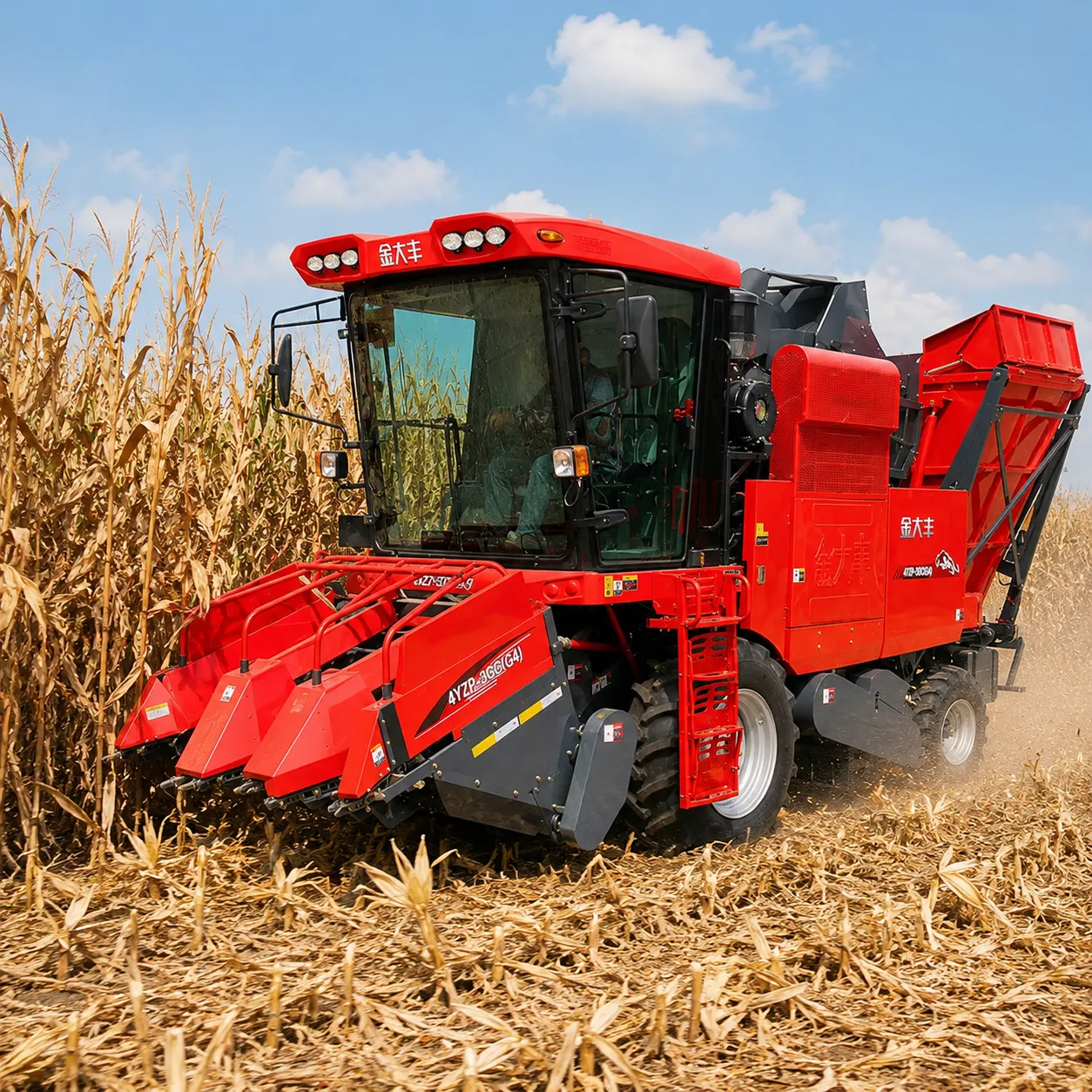
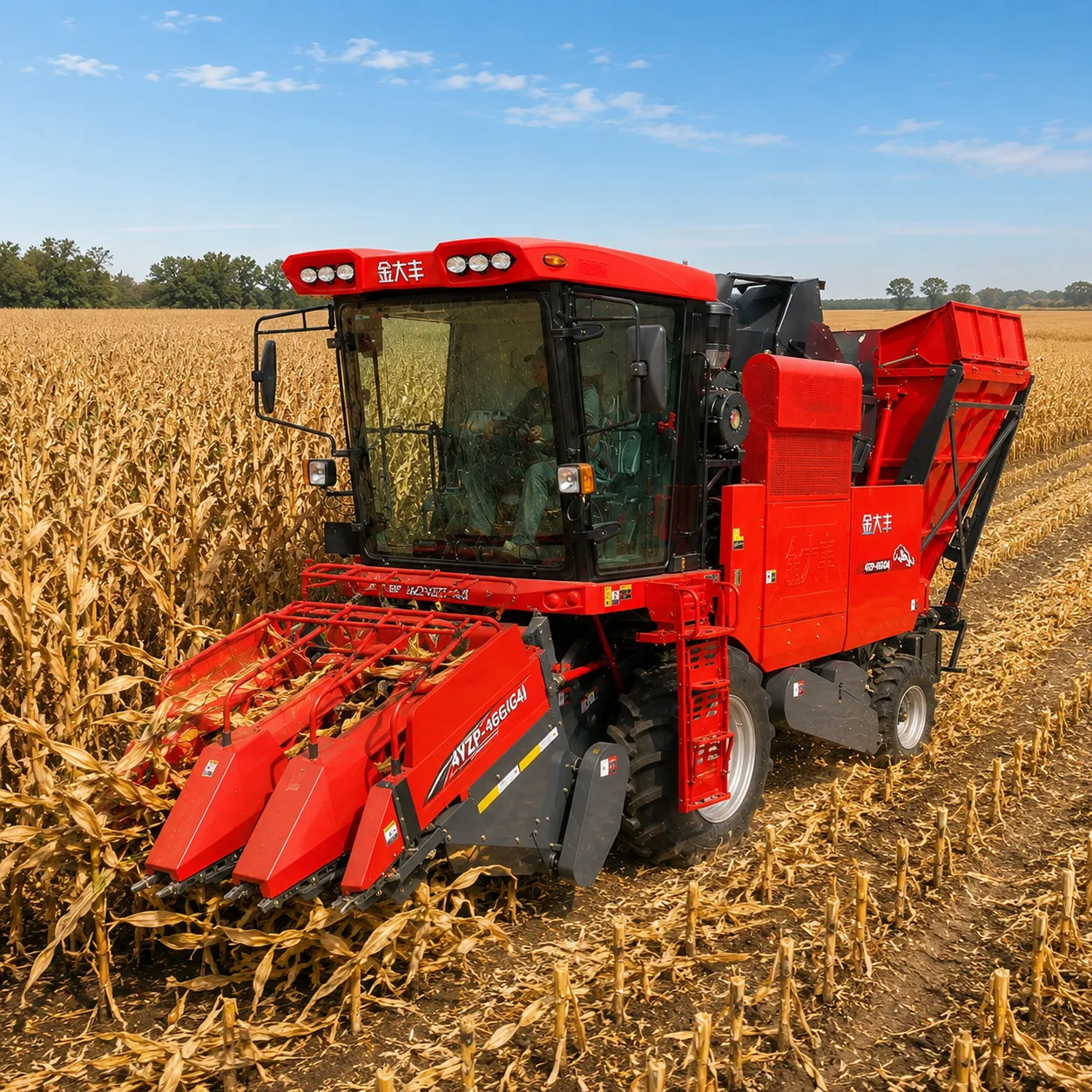
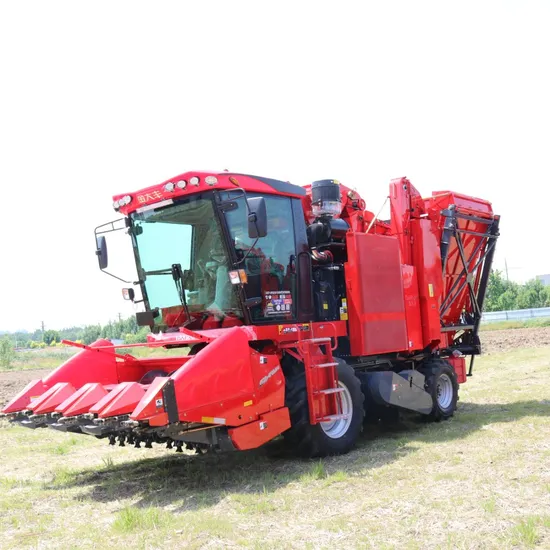
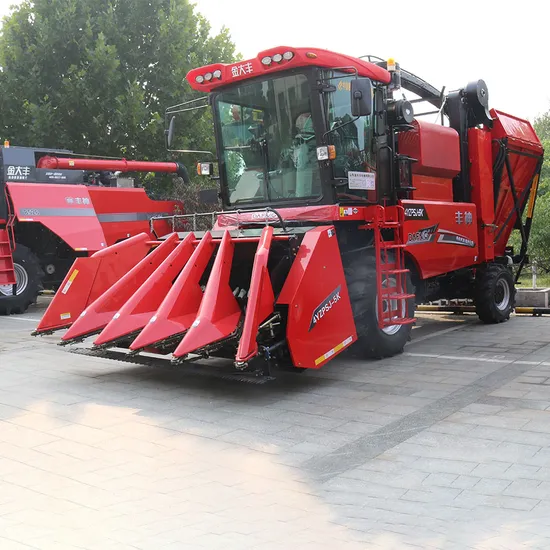
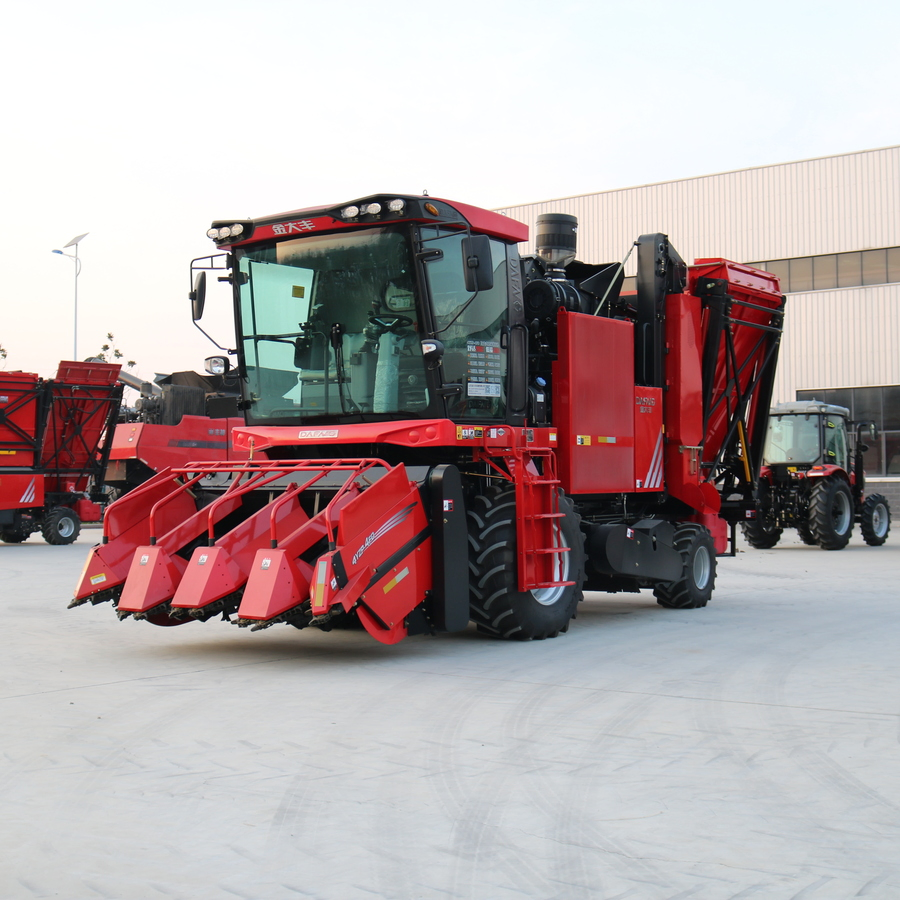
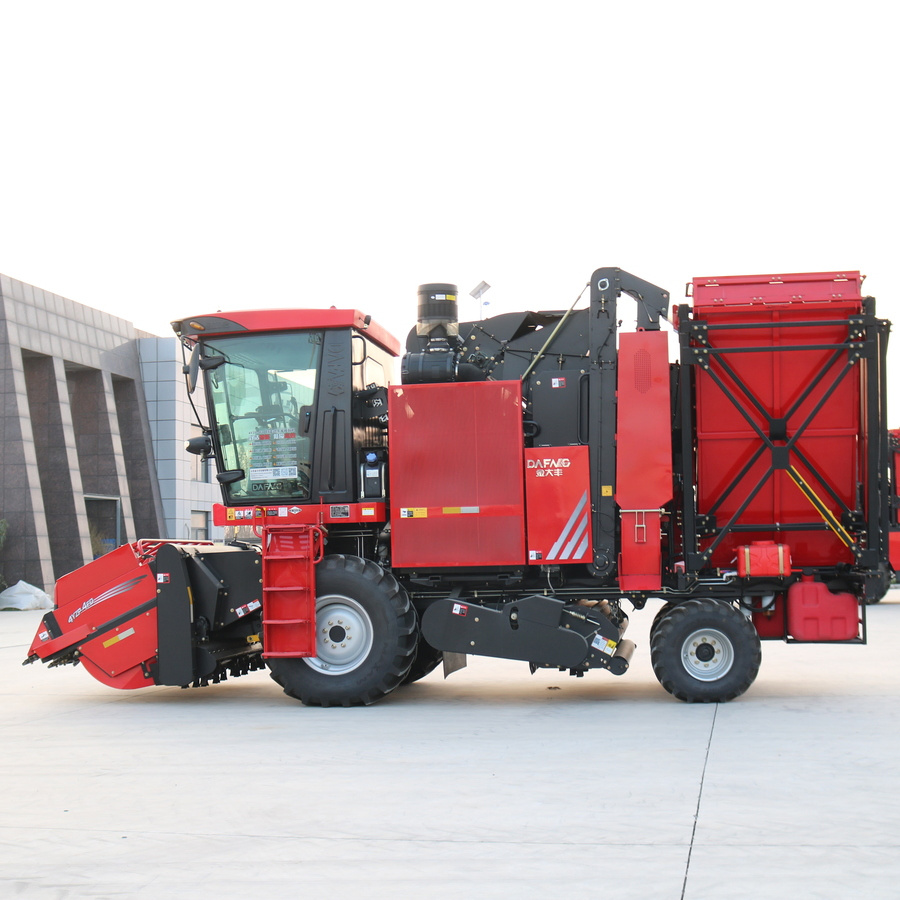
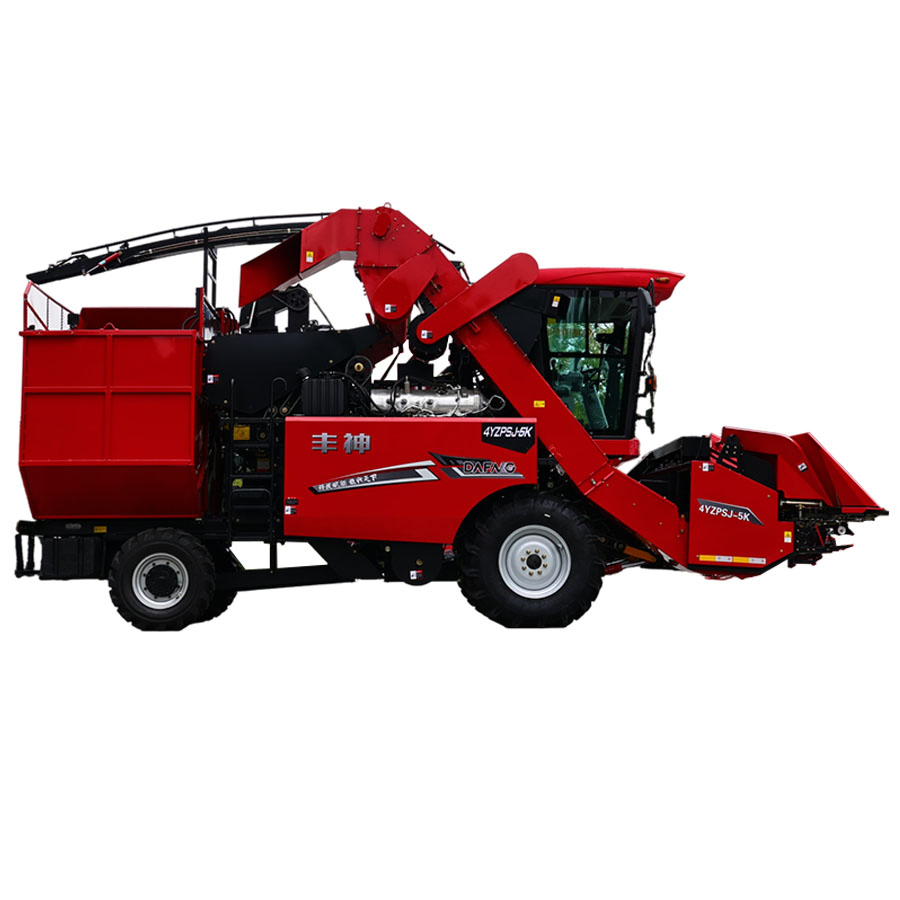
King-Gold Dafeng self-propelled corn harvesters integrate corn picking, conveying, peeling, collection, and straw management into a continuous harvesting process. Different machine configurations can be selected according to row number, field size, crop conditions, and expected harvesting workload.
Buyers comparing machines can view the available corn harvester models and harvesting configurations to determine which system better matches their local corn production conditions.
You May Also Be Interested In
For a complete explanation of how the different harvesting systems work together from the header to crop collection, read How Does a Corn Harvester Work in Real Field Conditions?
Peeling quality is also closely related to crop condition and harvesting losses. You can continue with How to Reduce Corn Loss During Harvest to understand the main sources of field loss and how machine adjustment affects harvesting results.