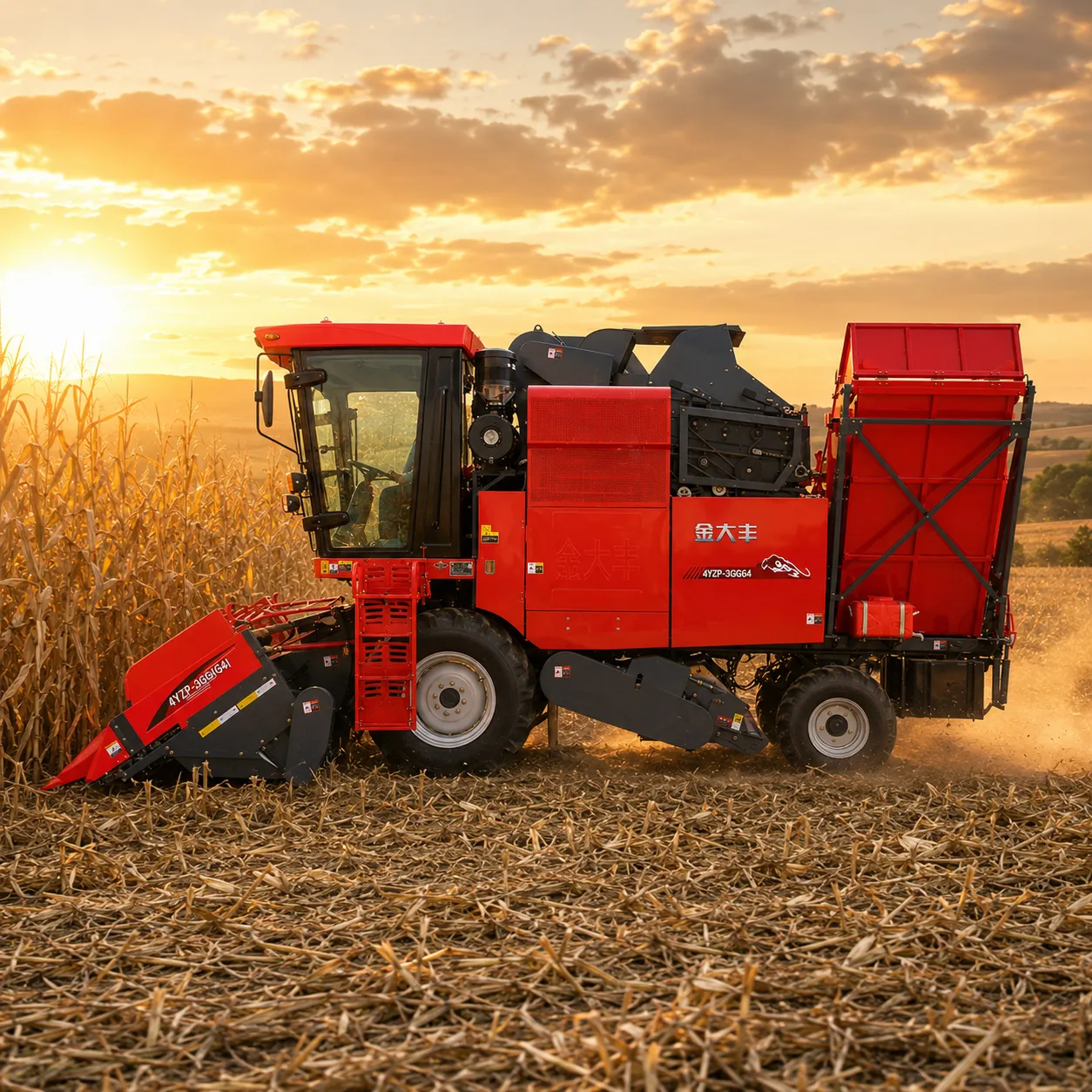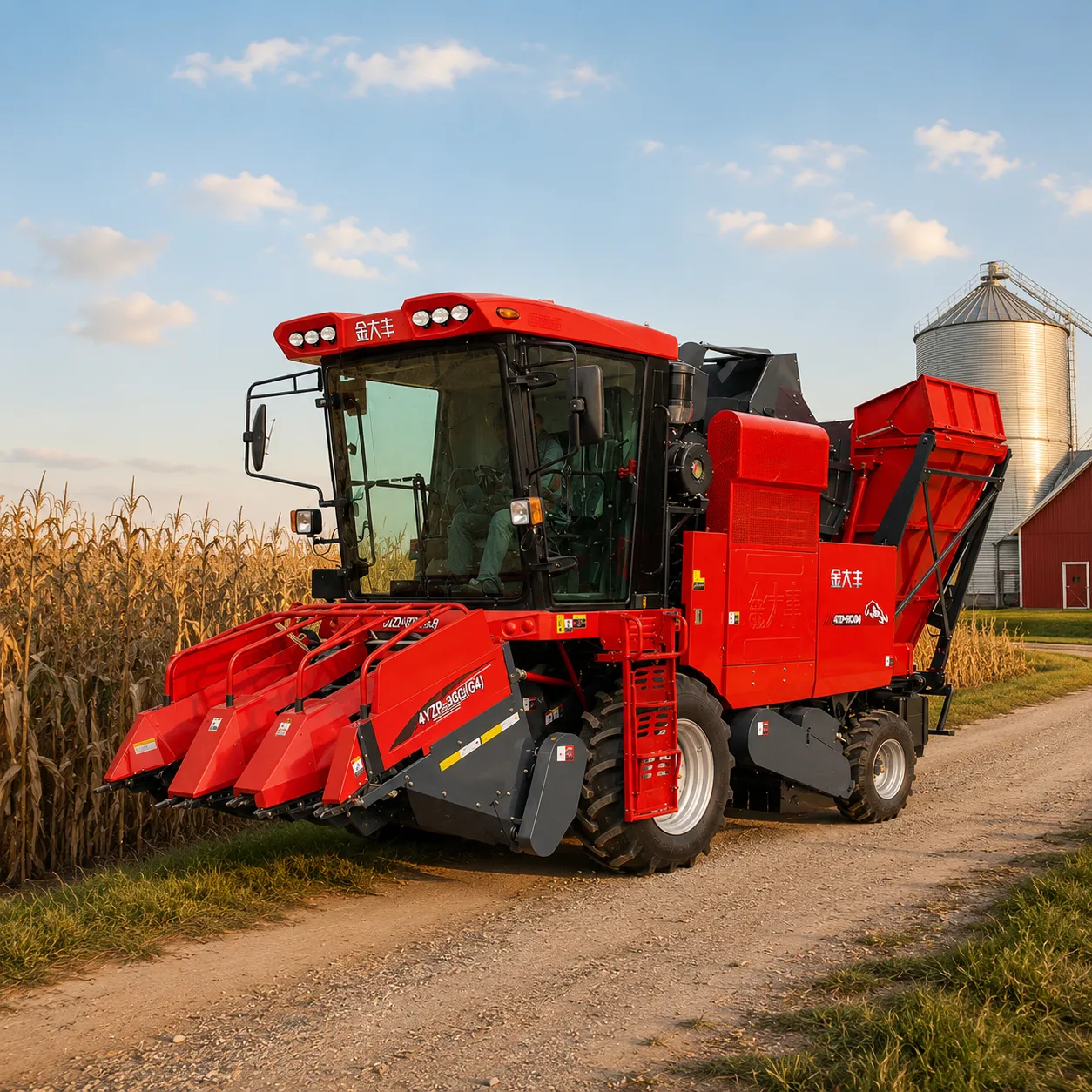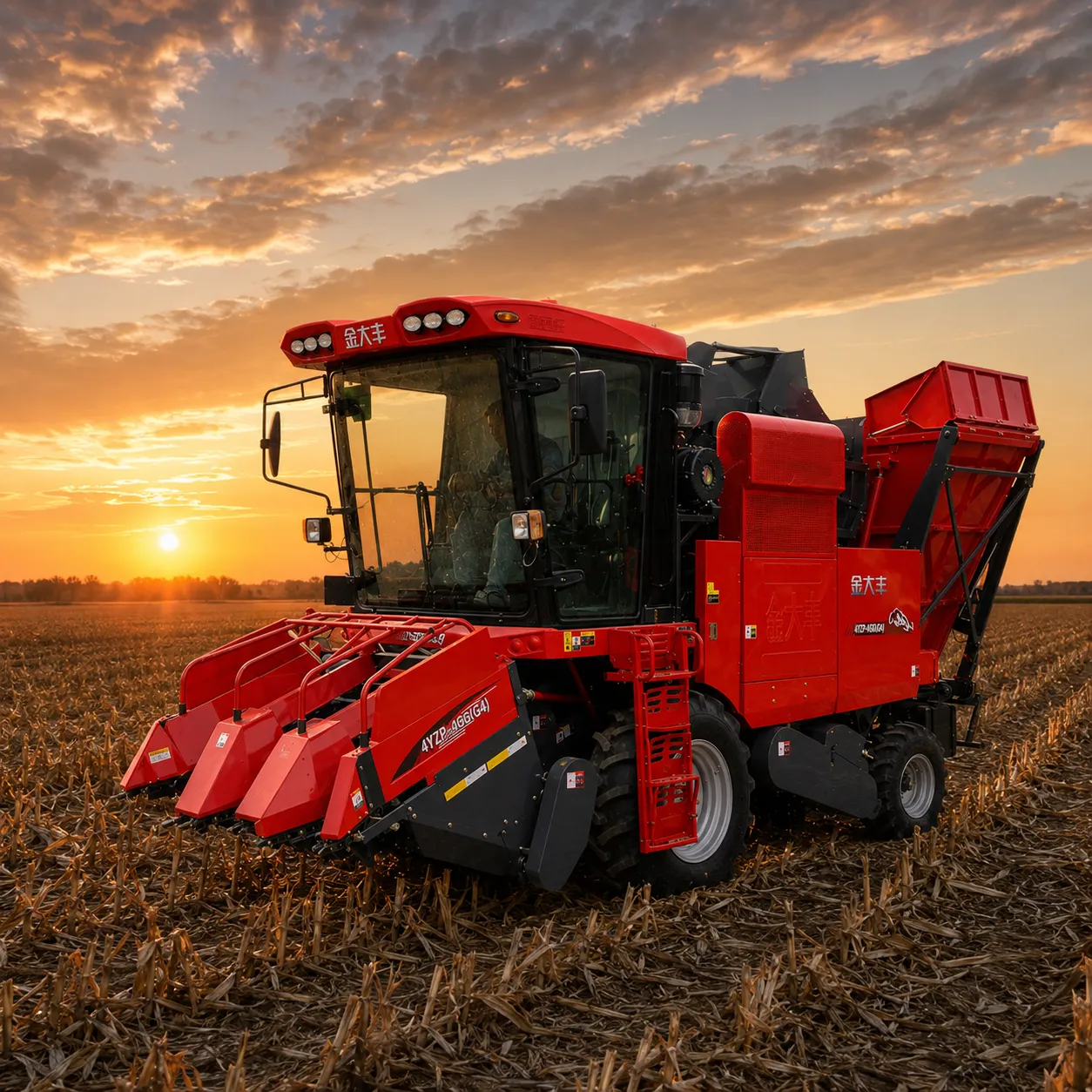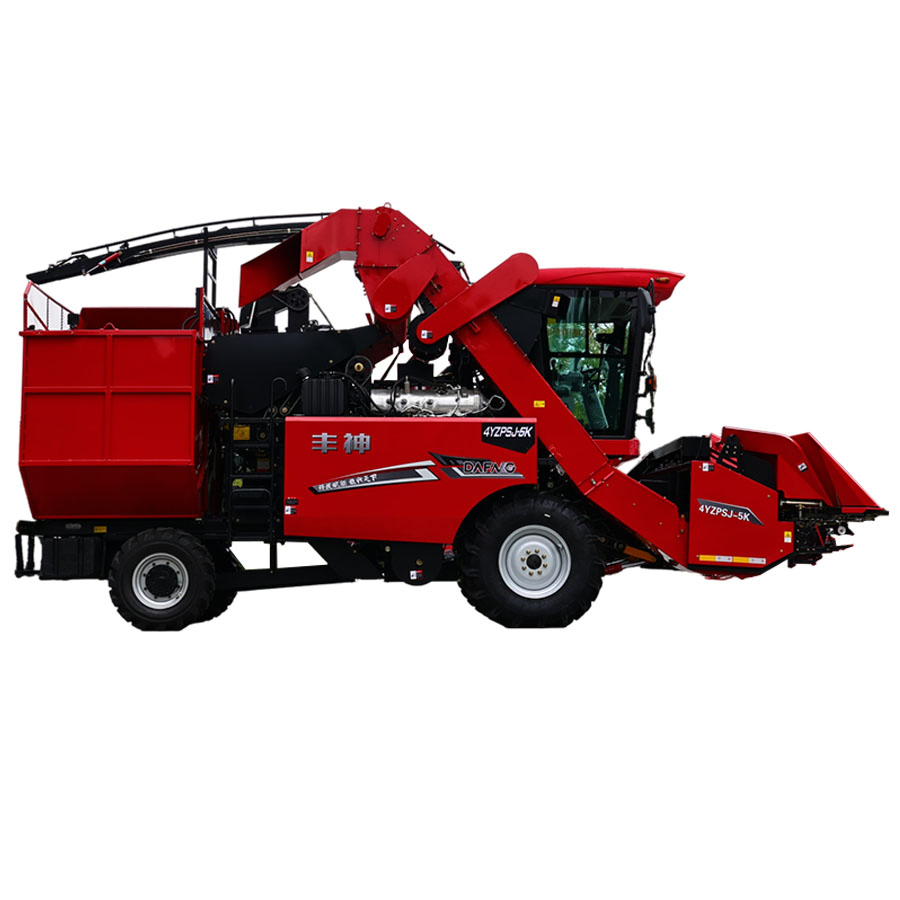
Horsepower is one of the first specifications buyers compare when choosing a corn harvester. A higher figure may suggest greater capacity, but engine power alone does not determine how effectively a machine performs in the field.
The correct corn harvester horsepower depends on the number of harvesting rows, crop density, stalk moisture, field slope, peeling system, conveying capacity, straw-crushing load, machine weight, and expected working speed.
A three-row machine working in dry, upright corn may require less power than a four-row machine harvesting dense crops with green stalks. Two harvesters with similar engine power may also produce different results because their headers, transmissions, conveyors, peeling rollers, and straw systems are designed differently.
Buyers should therefore select horsepower as part of a complete machine configuration rather than treating it as an independent specification.
Horsepower Must Support the Complete Harvesting Process
A self-propelled corn harvester uses engine power for much more than moving across the field. The engine must operate several mechanical and hydraulic systems at the same time.
Power may be required for:
- Driving the machine through the field
- Operating gathering chains and picking rolls
- Pulling stalks through the row units
- Moving ears through augers and conveyors
- Operating the peeling rollers
- Driving the collection and unloading system
- Crushing or chopping corn stalks
- Powering hydraulic steering and header controls
- Operating the cooling system and air-conditioning unit
When crop volume increases, several of these systems experience a heavier load simultaneously. A dense section of green corn may require more traction, greater picking force, faster conveying, stronger peeling action, and more power for straw crushing.
Practical rule: Engine power should provide enough reserve for difficult crop conditions. A machine that only has enough power for ideal dry fields may lose speed or become overloaded when stalks are green, fields are soft, or crop density increases.
However, adding horsepower without improving the header and crop-processing systems will not automatically increase harvesting capacity.
Row Number Is the Starting Point for Power Selection
The number of harvesting rows affects how much crop enters the machine during each pass. A wider header usually places a greater load on the picking, conveying, peeling, and straw-management systems.
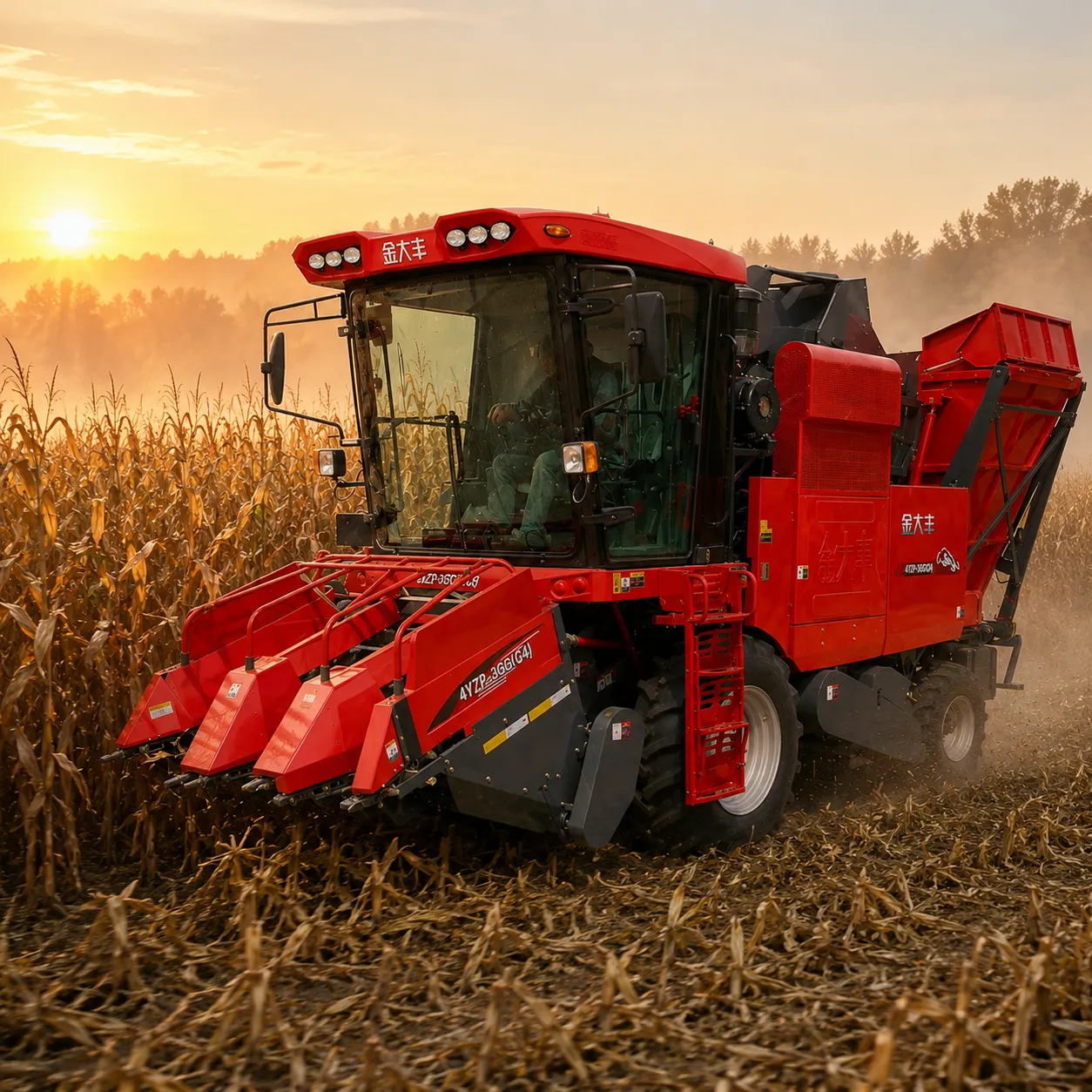
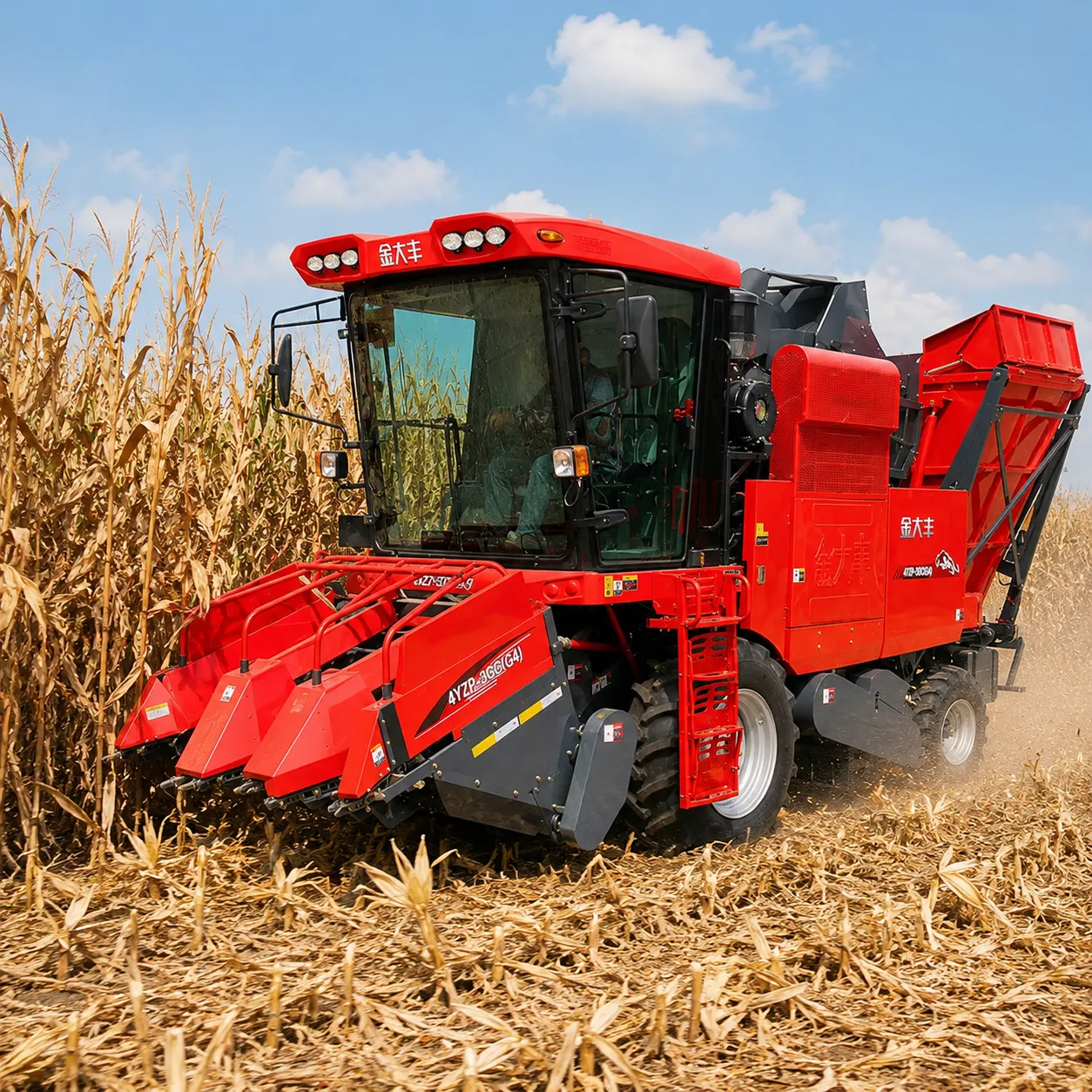
A three-row machine may offer a practical balance between capacity, manoeuvrability, fuel use, and investment. A four-row machine can cover more area per pass, but it needs enough power and internal processing capacity to handle the additional crop flow.
| Machine Configuration | Typical Operating Direction | Power Considerations |
|---|---|---|
| Compact two-row machine | Small fields and moderate seasonal workload | Power demand is lower, but capacity is also limited |
| Three-row corn harvester | Small and medium farms or contract harvesting | Must balance field mobility with peeling and straw-crushing load |
| Four-row corn harvester | Medium and large fields with higher daily targets | Requires stronger crop flow, traction, cooling and power reserve |
| High-capacity multi-row machine | Large commercial farms and long regular fields | Engine, transmission, header and support logistics must all match |
These categories should be treated as general planning directions rather than fixed horsepower standards. Machine design varies, and one manufacturer may use a different transmission, header, peeling system, or straw crusher from another.
More rows do not always mean higher daily output
A four-row machine may have greater theoretical capacity, but this advantage can disappear in short or irregular fields. Frequent turning, narrow entrances, poor row alignment, and limited trailer support can reduce actual output.
In some conditions, a well-matched three-row harvester operating continuously can complete more useful work than a larger machine that repeatedly slows down or waits for transport.
Crop Conditions Can Change Power Demand Quickly
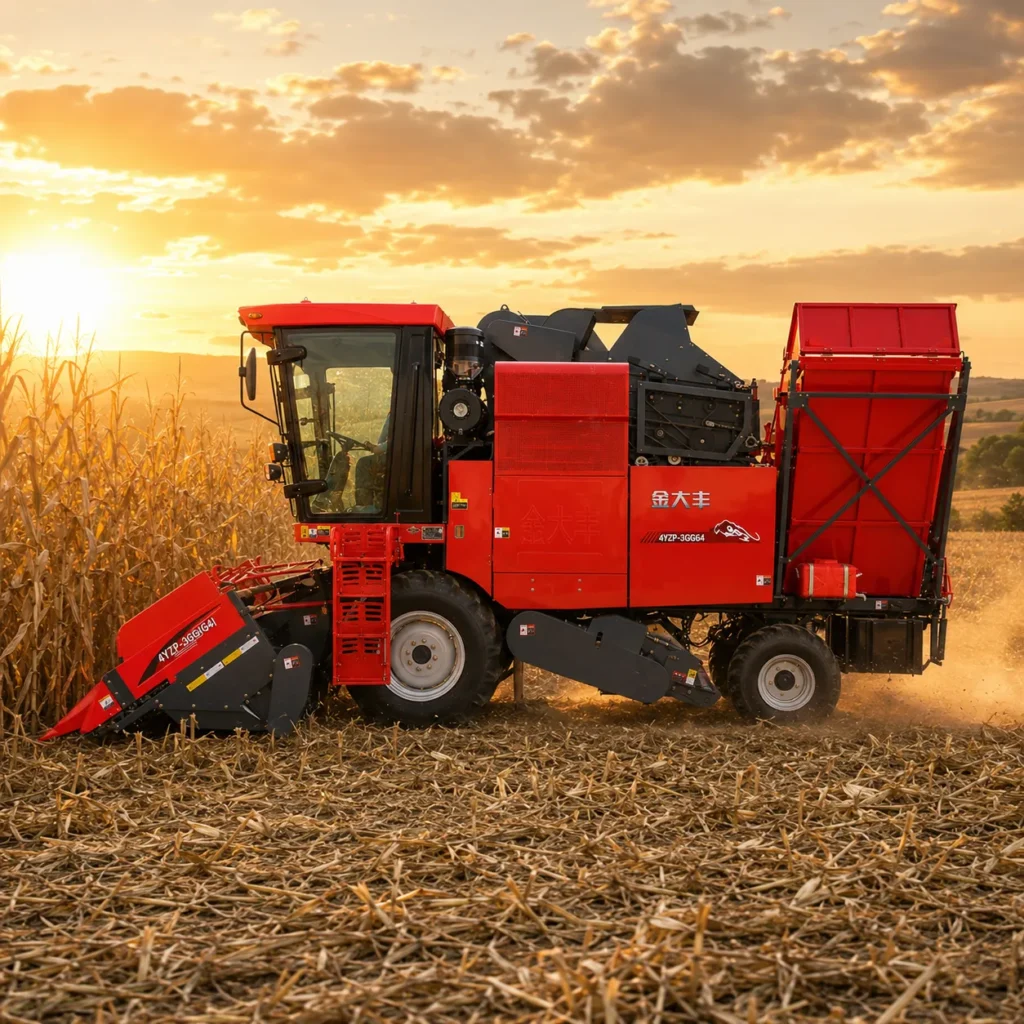
The same harvester may operate comfortably in one field and experience a much heavier load in another. Crop maturity and stalk condition are major reasons for these changes.
Dry and mature corn
Dry stalks are generally easier to break and crush. Husks may also separate more easily during peeling. This can reduce the load on several machine systems.
However, excessively dry ears may be more sensitive to impact. Higher forward speed or aggressive gathering chains can increase loose-kernel loss even when the engine has enough power.
Green stalks and wet husks
Green plant material is heavier, tougher, and more likely to wrap around moving components. Wet husks can reduce peeling efficiency and increase the amount of material moving through the machine.
These conditions increase demand on:
- Picking rolls
- Gathering chains
- Central conveyors
- Peeling rollers
- Straw-crushing components
- Engine cooling system
A suitable corn harvester horsepower level should allow the operator to maintain stable engine speed without forcing the machine through heavy crop too quickly.
Lodged corn
Lodged crops often require slower travel and lower header operation. The machine may collect more leaves, stalk sections, and residue along with the ears.
Although forward speed is lower, the processing load can remain high because crop feeding becomes uneven. Power reserve helps the machine handle these changing loads without repeated blockages.
Field Conditions Affect Traction and Available Power
Not all engine power reaches the harvesting components. Part of it is used to move the machine, overcome rolling resistance, climb slopes, and maintain traction.
Soft and wet ground
Soft soil increases rolling resistance and wheel slip. A heavy machine may need additional power simply to maintain forward movement.
Buyers working in soft fields should consider:
- Tyre width and tread design
- Machine weight distribution
- Drive configuration
- Ground clearance
- Turning performance
- Transmission efficiency
More engine power cannot fully compensate for unsuitable tyres or poor weight distribution. Traction and power must be considered together.
Sloping fields
Working uphill increases the power needed for propulsion. If the crop is also dense, less reserve may remain for picking, peeling, conveying, and residue processing.
A machine intended for hilly regions should provide stable braking, suitable transmission ratios, reliable cooling, and enough engine reserve for continuous work.
Flat, dry field:
A correctly matched machine may operate near its expected capacity because propulsion requires relatively little additional power.
Wet or sloping field:
More power is consumed by traction and movement, reducing the reserve available for harvesting components.
Peeling and Straw Crushing Increase the Required Power
Not every corn harvester completes the same work. A basic picker that only removes ears may have a lower power requirement than a machine that also peels husks, stores ears, unloads automatically, and crushes stalks.
Peeling-system load
Peeling rollers must grip and remove husks while allowing ears to move continuously through the machine. The load increases when:
- Husks are wet or tightly attached
- Crop flow is uneven
- Too many ears enter at the same time
- Rollers are worn or incorrectly adjusted
- Leaves and stalk material enter the peeling section
Increasing engine power will not correct worn rollers or poor crop flow, but adequate power helps the system maintain stable operating speed under normal load changes.
Straw-crushing load
Crushing corn stalks can require a significant amount of power, especially when the stalks are thick, green, or wet. Dull blades and damaged components increase resistance further.
Buyers should confirm whether the stated engine power is sufficient for simultaneous harvesting and straw crushing under local crop conditions.
Important comparison point: A machine without straw crushing and a machine with integrated picking, peeling, collection, and stalk crushing should not be judged by horsepower alone. Their engines are supporting different workloads.
Too Little and Too Much Power Can Both Create Problems
An underpowered harvester may appear economical at the time of purchase, but it can lose productivity when crop conditions become difficult.
Signs that engine power may be insufficient
- Engine speed drops frequently under normal crop load
- Forward speed must be reduced excessively
- Peeling or conveying performance becomes unstable
- Straw crushing becomes uneven
- Engine temperature rises during continuous work
- Fuel consumption increases because the engine remains heavily loaded
- Blockages occur when crop density changes
These symptoms can also result from worn components, poor adjustment, restricted crop flow, or insufficient maintenance. The complete machine should be inspected before assuming the engine is the only problem.
More horsepower is not always better
An unnecessarily large engine can increase purchase cost, machine weight, fuel use, cooling requirements, and maintenance expense without improving actual output.
The header and processing system create a practical capacity limit. Once those systems reach their maximum crop flow, additional engine power cannot force more material through them safely.
A balanced machine generally performs better than one with a large engine attached to a header or conveying system that cannot use the available power.
Estimate Horsepower from Real Working Requirements
Rather than selecting a machine from one horsepower number, buyers should work through their actual harvesting requirements.
- Measure the total corn area that must be harvested.
- Estimate the realistic number of available working days.
- Determine the required daily harvesting capacity.
- Confirm whether a three-row or four-row header fits the fields.
- Record local row spacing and average crop density.
- Identify whether crops are usually dry, green, standing, or lodged.
- Confirm whether peeling and straw crushing are required.
- Evaluate soil conditions, slopes, field entrances, and transport roads.
- Compare engine power with header and processing capacity.
- Ask for field videos under conditions similar to the local farm.
Do not use rated horsepower as the only comparison
When comparing machines, also request information about:
- Rated engine speed
- Maximum torque characteristics
- Transmission type
- Cooling-system capacity
- Header drive design
- Hydraulic-system capacity
- Peeling-roller configuration
- Conveyor dimensions
- Straw-crusher design
- Recommended working speed
Two engines with the same rated horsepower may behave differently depending on torque delivery, cooling performance, transmission efficiency, and how the machine distributes power.
Choose a Balanced Machine with Enough Power Reserve
The correct corn harvester horsepower is the level that allows the complete machine to operate steadily under realistic crop and field conditions.
A smaller farm with narrow fields may benefit more from a manoeuvrable three-row harvester than from a higher-powered machine that is difficult to turn. A commercial contractor working long hours across several farms may need greater capacity and additional power reserve.
Before making a final choice, buyers should confirm:
- Number of harvesting rows
- Header row spacing
- Expected field capacity
- Crop moisture and stalk condition
- Peeling requirements
- Straw-management requirements
- Field slope and soil conditions
- Machine weight and traction
- Cooling performance
- Availability of service and spare parts
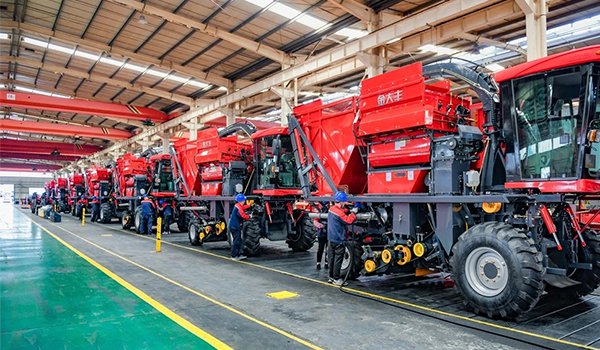
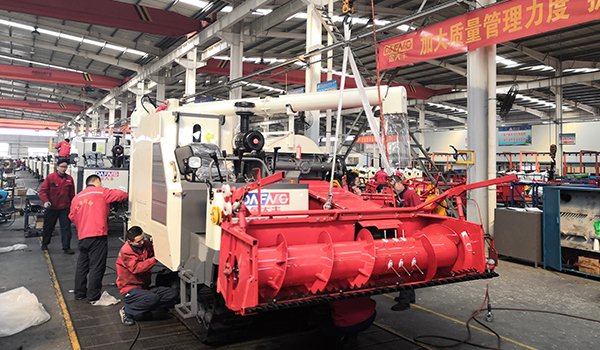
King-Gold Dafeng provides self-propelled corn harvesting equipment for different field sizes, row configurations, crop conditions, and capacity requirements. Buyers can review the available corn harvester models and power configurations before selecting a machine.
The best engine is not automatically the one with the highest horsepower. It is the one matched to a capable header, stable conveying system, effective peeling section, reliable straw crusher, suitable transmission, and realistic daily workload.
Evaluating corn harvester horsepower as part of the complete harvesting system helps buyers avoid both underpowered equipment and unnecessary engine capacity.
You May Also Be Interested In
To compare how row number affects machine capacity, manoeuvrability and power demand, read 3 Row vs 4 Row Corn Harvester: Which One Fits Your Harvesting Needs?
Buyers matching horsepower and machine size to a moderate seasonal workload may also find Best Corn Harvester for Small and Medium Farms useful before selecting a configuration.