When buyers begin searching for a new tractor, one of the first questions they ask is about farm tractor price. Price matters because a tractor is a long-term investment, especially for farmers, dealers, contractors, and agricultural machinery importers. However, comparing tractor prices only by the quotation number can easily lead to the wrong decision.
A lower price may look attractive at first, but the real value of a tractor depends on engine quality, horsepower, drive type, hydraulic capacity, PTO performance, tire configuration, spare parts support, and long-term durability. For overseas buyers, shipping cost, import duty, after-sales service, and supplier reliability also affect the final cost.
This guide explains what buyers should compare before ordering a farm tractor. It helps farmers and dealers understand why tractor prices vary, how to evaluate different configurations, and how to choose a machine that offers better long-term value instead of simply choosing the cheapest option.
Why Farm Tractor Prices Vary So Much
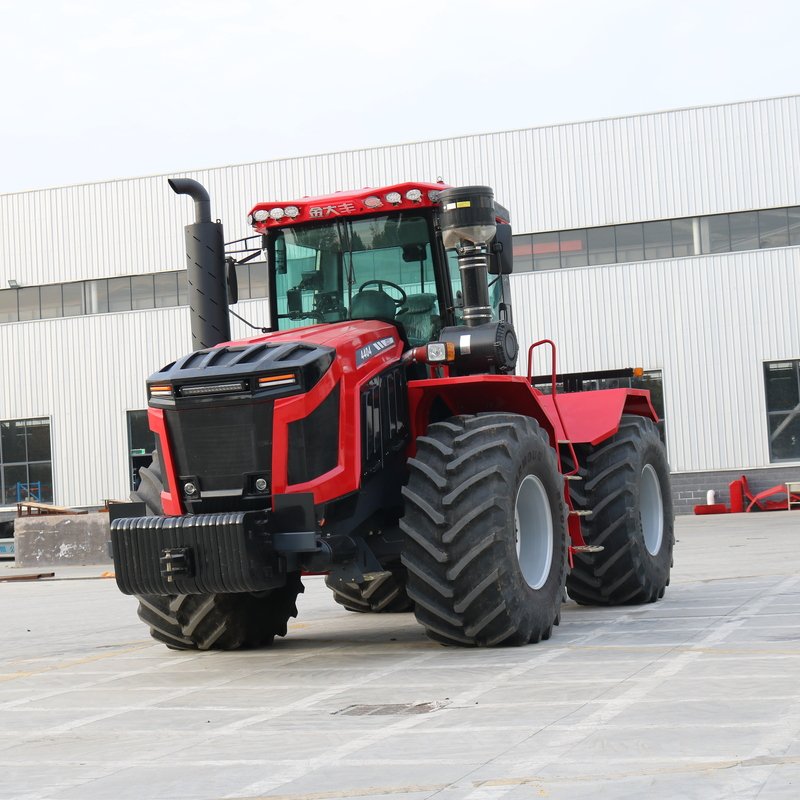
Farm tractor prices can vary widely because tractors are built for different applications. A compact 70HP tractor for small farms cannot be compared directly with a 240HP heavy-duty tractor for large-scale field work. A 440HP high-horsepower tractor designed for deep tillage and wide implements belongs to a completely different category.
Even tractors with similar horsepower may have different prices because of engine brand, transmission system, hydraulic outputs, cabin design, tire size, 4WD configuration, and optional equipment. This is why professional buyers do not only compare horsepower. They compare the full machine configuration.
In many cases, two tractors may look similar from the outside, but one may use stronger components, better hydraulics, heavier structure, and more reliable power systems. These differences affect performance, maintenance cost, and machine lifespan.
Horsepower Is One of the Biggest Price Factors
Horsepower strongly affects tractor price because it influences engine size, machine weight, drivetrain strength, hydraulic capacity, tire configuration, and overall structure. Higher horsepower tractors require stronger components to handle heavier workloads.
For small farms, a 50HP to 80HP tractor can handle light tillage, transport, spraying, and orchard work. For mixed farming, 90HP to 120HP tractors often provide better versatility. For large farms and heavy soil, 150HP to 240HP tractors provide stronger pulling power. For commercial-scale farms, 300HP to 440HP tractors support wide implements and long working hours.
| Horsepower Range | Typical Price Level | Main Applications | Best Buyer Type |
|---|---|---|---|
| 50HP–80HP | Lower | Small farms, orchards, transport, light tillage | Small farm owners, local dealers |
| 90HP–120HP | Medium | Mixed farming, PTO work, seeding, plowing | Medium farms, distributors |
| 150HP–240HP | Medium to High | Heavy tillage, wide implements, field preparation | Large farms, contractors |
| 300HP–440HP | High | Large-scale farming, deep tillage, heavy soil work | Commercial farms, project buyers |
Engine Brand and Configuration Affect Price
The engine is one of the most important parts of a farm tractor. A reliable diesel engine provides stable power, better torque, and longer service life. Different engine brands and configurations can create noticeable price differences.
Buyers should compare engine horsepower, cylinder number, fuel consumption, torque performance, emission requirements, and local service availability. If the engine brand has better local support, maintenance becomes easier and long-term ownership cost decreases.
For dealers, engine choice also affects market confidence. Farmers often ask about engine reliability before buying a tractor. A tractor with a stable engine system is easier to promote and support in local markets.
2WD and 4WD Price Differences
Drive type also affects tractor price. A 2WD tractor usually costs less because the drivetrain structure is simpler. It can work well for light-duty tasks, dry fields, road transport, and basic farm operations.
A 4WD tractor costs more, but it provides better traction and field stability. For plowing, heavy soil, wet land, slopes, and larger implements, 4WD usually offers better long-term value. It reduces wheel slip and helps the tractor use engine power more effectively.
Buyers should not decide between 2WD and 4WD only by price. They should consider soil type, field conditions, main implements, and daily workload. In many markets, 4WD tractors sell better because they offer more practical performance.
Transmission and Gear System Influence Long-Term Value
The transmission system affects how smoothly the tractor operates under different working conditions. A tractor used for plowing needs strong low-speed pulling ability, while a tractor used for transport needs suitable road speeds.
Different transmission structures can affect both price and operator experience. A stronger transmission system may increase the initial cost, but it can reduce mechanical stress and improve long-term durability.
For high-horsepower tractors, transmission quality becomes even more important because heavy field work places continuous pressure on the drivetrain. Buyers should compare gear range, shifting control, load capacity, and maintenance requirements before ordering.
Hydraulic System and PTO Options Add Practical Value
Many buyers compare tractor prices without checking hydraulic and PTO details. This can be a serious mistake because these systems determine how well the tractor works with implements.
A strong hydraulic lifting system allows the tractor to operate plows, seeders, trailers, sprayers, and other agricultural equipment more efficiently. Multiple hydraulic outputs give farmers more flexibility when using advanced implements.
PTO speed also matters. Different regions may require 540 rpm, 720 rpm, 760 rpm, or 850 rpm PTO options. If the PTO does not match local implements, the tractor may not work efficiently.
| Feature | Lower-Cost Option | Higher-Value Option | Why It Matters |
|---|---|---|---|
| Drive Type | 2WD | 4WD / 4×4 | Improves traction in field work |
| Hydraulic System | Basic lifting | Higher lifting capacity with multiple outputs | Supports more implements |
| PTO | Single speed | Multiple PTO speed options | Improves implement compatibility |
| Cabin | ROPS or open station | Enclosed cab with air conditioning | Improves operator comfort |
| Tires | Standard tires | Wider, radial, or dual tire options | Improves traction and field adaptability |
Cabin, Comfort, and Safety Features Affect Pricing
Tractor cabins can create a major price difference. A basic ROPS structure costs less and works well in markets where buyers care more about price and simple maintenance. An enclosed cabin with air conditioning costs more, but it improves operator comfort and safety.
For hot climates, dusty environments, or long working hours, cabin comfort becomes very important. Operators who work for many hours each day need good visibility, comfortable seating, logical controls, and protection from weather.
Dealers should choose cabin options based on local market demand. In some regions, a cabin can increase product appeal and justify a higher price. In other regions, a simpler configuration may sell faster.
Tire Options and Field Conditions
Tires affect both tractor price and field performance. Standard tires may reduce cost, but they may not fit all field conditions. Wider tires, radial tires, dual tires, or special tread patterns can improve traction, reduce soil compaction, and increase stability.
For heavy soil, high-horsepower tractors need strong tire configurations to transfer power to the ground. Without proper tires, even a powerful engine cannot deliver full performance.
Buyers should always compare tire options with local soil type and farming applications. This is especially important for dealers who sell tractors to different regions within one country.
Customization Can Change the Final Tractor Price
Many overseas buyers need customized tractors. Common customization options include engine brand, tires, cabin, color, logo, decals, packaging, hydraulic outputs, and spare parts packages.
Customization may increase the final price, but it can also improve market fit. For dealers, OEM branding can help build local recognition and create stronger customer loyalty. For project buyers, configuration adjustment can improve machine performance in specific working conditions.
Buyers should clearly confirm all customization requirements before production. This helps avoid misunderstanding and makes the quotation more accurate.
Shipping and Import Costs Must Be Included
The tractor price quoted by the factory is only one part of the total cost. International buyers also need to consider inland transport, export packaging, sea freight, insurance, port fees, import duty, VAT, customs clearance, local delivery, and assembly costs.
For smaller tractors, container loading may be possible after partial disassembly. Larger tractors may require different shipping arrangements. The shipping method can affect the final landed cost significantly.
Before ordering, buyers should ask whether the quotation is FOB, CIF, EXW, or another trade term. Understanding trade terms helps buyers compare quotations more accurately.
Spare Parts and After-Sales Support Affect Real Cost
A tractor with a low price but weak spare parts support can become expensive over time. All tractors need maintenance parts such as filters, belts, seals, hydraulic parts, clutch components, electrical parts, and wear items.
Buyers should confirm whether the supplier can provide spare parts lists, operation manuals, technical guidance, and recommended spare parts packages. Dealers should especially pay attention to parts supply because it affects local customer satisfaction.
A reliable tractor supplier helps buyers reduce downtime and protect long-term machine value.
How to Compare Farm Tractor Quotations Correctly
When comparing quotations from different suppliers, buyers should compare the same configuration. It is not fair to compare a basic 2WD tractor with a fully equipped 4WD tractor and judge only by price.
Buyers should request clear quotation details, including horsepower, engine brand, drive type, transmission, PTO speed, hydraulic outputs, tire size, cabin type, warranty, spare parts package, and shipping terms.
A transparent quotation helps buyers understand what is included and prevents hidden costs later.
Why Factory-Direct Supply Can Improve Price Value
Factory-direct supply can help buyers get better value because it reduces unnecessary trading layers and improves communication efficiency. Buyers can discuss configuration, customization, and technical requirements directly with the manufacturer.
King-Gold Dafeng tractor products cover multiple horsepower ranges, from compact tractors to high-horsepower machines. With factory-direct manufacturing and export support, buyers can compare configurations more clearly and choose suitable tractor solutions for different farming needs.
For dealers and importers, this type of direct cooperation can support long-term product planning and market development.
Price Comparison Checklist Before Ordering
| Checklist Item | What to Compare | Why It Matters |
|---|---|---|
| Horsepower | Rated power and suitable applications | Ensures tractor matches workload |
| Engine | Brand, cylinders, torque, fuel consumption | Affects reliability and service cost |
| Drive Type | 2WD, 4WD, 4×4 | Controls traction and field performance |
| Hydraulics | Lifting capacity and output quantity | Determines implement compatibility |
| PTO | Speed options and output stability | Supports powered implements |
| Tires | Size, type, tread, dual option | Improves traction and soil adaptability |
| Support | Warranty, spare parts, manuals, technical service | Protects long-term value |
Common Mistakes When Comparing Tractor Prices
One common mistake is comparing only horsepower and price. A 120HP tractor from one supplier may have a very different engine, hydraulic system, tire configuration, or transmission compared with another 120HP tractor.
Another mistake is ignoring shipping and import costs. A cheaper factory price may not remain cheaper after freight, customs, and local handling costs are added.
Some buyers also forget to calculate downtime cost. If a tractor breaks down during peak farming season and spare parts are not available, the real cost becomes much higher than the purchase price.
Finally, dealers sometimes choose overly cheap models to enter the market quickly. This may create short-term sales, but poor reliability can damage the dealer’s reputation later.
Final Thoughts
A practical farm tractor price guide should help buyers look beyond the first quotation. Price depends on horsepower, engine brand, drive type, transmission, hydraulics, PTO, tires, cabin, customization, shipping, and after-sales support.
The best tractor is not always the cheapest one. It is the machine that matches real farming conditions, supports local implements, reduces downtime, and delivers reliable long-term performance.
Before ordering, buyers should compare complete configurations and total ownership cost. This approach helps farmers, dealers, and importers choose tractors with better value and stronger long-term return.
Articles that might interest you