Deep tillage is one of the most demanding field operations in modern farming. It requires strong pulling power, stable traction, enough engine torque, and reliable implement control. For this reason, many farmers and equipment buyers ask an important question: how much horsepower does a tractor need for deep tillage?
The answer depends on soil type, tillage depth, implement size, field area, and working efficiency requirements. A tractor that works well for shallow cultivation may not perform well when pulling deep tillage equipment through compacted or heavy soil. If the tractor lacks enough power, the operator may face wheel slip, higher fuel consumption, unstable working depth, and lower daily productivity.
This guide explains how to match tractor horsepower with deep tillage work. It also helps farmers, contractors, and dealers understand when medium-power tractors are enough and when high-horsepower machines become necessary.
Why Deep Tillage Requires More Tractor Power
Deep tillage works below the surface layer of the soil. Unlike shallow cultivation, it breaks compacted soil layers, improves water infiltration, supports root development, and prepares the field for better crop growth. However, this deeper working depth creates much higher draft resistance.
The deeper the implement works, the more pulling force the tractor needs. Heavy clay soil, dry compacted soil, and black soil usually increase resistance even further. In these conditions, tractor horsepower becomes only one part of the equation. The machine also needs enough weight, traction, hydraulic capacity, and proper tire configuration.
When the tractor size does not match the tillage task, the machine may slow down frequently or fail to keep the implement at the required depth. This reduces field quality and wastes fuel. Therefore, deep tillage requires a tractor that can maintain stable performance under continuous load.
What Is Deep Tillage in Farming?
Deep tillage refers to soil preparation work that goes deeper than normal surface cultivation. Farmers use it to loosen compacted layers, improve soil structure, and prepare land for crops that need stronger root development.
Common deep tillage tools include subsoilers, chisel plows, heavy-duty plows, deep rippers, and large cultivators. These implements need strong pulling force because they work deep into the soil and create significant resistance.
In many large farming regions, deep tillage happens before planting seasons or during land improvement projects. It is especially common in areas with compacted soil caused by repeated machinery traffic, poor drainage, or long-term shallow cultivation.
Recommended Tractor Horsepower for Deep Tillage
There is no single horsepower number that fits every farm. However, buyers can use the following reference table as a practical starting point.
| Working Condition | Recommended Horsepower | Suitable Implements | Best Tractor Type |
|---|---|---|---|
| Light deep tillage in smaller fields | 120–150HP | Small chisel plow, light subsoiler | 4WD medium-power tractor |
| Regular deep tillage in medium fields | 150–200HP | Medium chisel plow, multi-furrow plow | Heavy-duty 4WD tractor |
| Heavy soil and larger implements | 200–240HP | Heavy plow, deep ripper, large cultivator | High-power 4WD tractor |
| Commercial large-scale deep tillage | 300–440HP | Wide deep tillage implements | High-horsepower 4WD or articulated tractor |
For most medium farms, a tractor between 150HP and 240HP can handle many deep tillage tasks. For very large farms, contractors, or heavy soil regions, tractors above 300HP provide better efficiency and allow wider implements.
Why Horsepower Alone Is Not Enough
Many buyers focus only on horsepower, but deep tillage performance depends on more than engine power. A 240HP tractor with poor traction may perform worse than a properly configured 200HP tractor with better tires, weight balance, and 4WD performance.
Horsepower creates power, but traction transfers that power to the ground. If the tires slip too much, the tractor wastes fuel and loses efficiency. This is why buyers should evaluate the whole tractor system rather than only comparing horsepower numbers.
Important factors include drive type, tire size, machine weight, transmission strength, hydraulic lifting capacity, and implement compatibility. When these elements work together, the tractor can maintain stable speed and consistent working depth.
Why 4WD Is Usually Better for Deep Tillage
Deep tillage creates high resistance, so 4WD tractors usually perform better than 2WD tractors. A 4WD system allows the front and rear wheels to share pulling force, improving traction and reducing wheel slip.
This advantage becomes especially important in heavy soil, uneven fields, and wet conditions. With better traction, the tractor can pull deeper implements more smoothly and maintain better control.
For tractors above 150HP, 4WD is strongly recommended for deep tillage. For 200HP, 240HP, and 440HP tractors, 4WD or articulated drive systems are usually essential for serious field work.
Matching Tractor Horsepower with Implement Size
The size of the tillage implement directly affects horsepower requirements. A larger implement covers more ground in one pass, but it also requires more pulling power. If the implement is too large for the tractor, the machine may overload, slip, or fail to maintain working depth.
Farmers should match implement width and working depth with tractor power. For example, a medium chisel plow may work well with a 150HP to 200HP tractor, while a wide deep ripper may require 240HP or more. Large-scale farms using wide implements may need 400HP to 440HP tractors to maintain productivity.
Dealers should always ask customers about implement type before recommending a tractor. This avoids mismatched equipment and improves customer satisfaction.
Soil Type and Its Effect on Horsepower Needs
Soil condition plays a major role in deep tillage performance. The same implement may require different horsepower levels in different regions.
Clay Soil
Clay soil creates strong resistance, especially when moisture is high. It often requires higher horsepower and better traction. For deep tillage in clay-heavy areas, tractors from 200HP upward usually perform better.
Dry Compacted Soil
Dry compacted soil can be difficult to break. Subsoilers and deep rippers need strong pulling force to penetrate the hard layer. In this condition, high torque and machine stability become very important.
Black Soil
Black soil is fertile but can be heavy. Large farms working in black soil regions often prefer high-horsepower tractors for deeper and wider tillage operations.
Wet Heavy Soil
Wet soil increases slip risk. In this case, 4WD, tire selection, and ballast may matter as much as horsepower. Without proper traction, the tractor cannot use its power effectively.
Recommended Tractor Size by Farm Scale
Farm size also affects tractor selection. A small farm may not need a 400HP machine, while a large farm may lose efficiency if it relies on a lower-horsepower tractor.
| Farm Scale | Recommended Tractor Range | Deep Tillage Purpose | Suggested Product Direction |
|---|---|---|---|
| Small to medium farm | 120–150HP | Basic deep cultivation and soil loosening | 120HP 4WD tractor |
| Medium farm | 150–200HP | Regular deep tillage and field preparation | 150HP / 200HP tractor |
| Large farm | 200–240HP | Heavy tillage and larger implements | 200HP / 240HP tractor |
| Commercial farming operation | 300–440HP | Wide implements and high daily productivity | 440HP high-horsepower tractor |
This structure helps buyers understand how to move from basic horsepower selection to a more practical product decision.
Fuel Efficiency in Deep Tillage Work
Deep tillage consumes more fuel than light field work because the tractor operates under heavy load. However, choosing a larger tractor does not always mean wasting fuel. If the tractor matches the implement correctly, it may complete the work faster and with less wheel slip.
An underpowered tractor may run at high load for longer periods, slip more often, and consume more fuel per hectare. A properly sized tractor can maintain better speed, reduce repeated passes, and improve fuel efficiency.
Therefore, buyers should compare fuel efficiency based on productivity, not only hourly fuel consumption. The key question is: how much land can the tractor prepare efficiently within a working day?
Hydraulic and Transmission Requirements
Deep tillage equipment can place strong pressure on the tractor’s rear linkage and hydraulic system. A reliable hydraulic lifting system helps control heavy implements and maintain stable working depth.
Transmission strength also matters. Deep tillage creates continuous resistance, so the tractor needs a transmission system that can handle heavy load without frequent failure. Smooth gear selection helps operators maintain the right speed and reduce engine stress.
For large tractors, buyers should check hydraulic output, rear linkage strength, transmission type, and service accessibility before placing an order.
Why High-Horsepower Tractors Matter for Contractors
Agricultural contractors often work across different farms and soil conditions. Their tractors must handle varied tasks, large implements, and long working hours. For this reason, high-horsepower tractors can bring strong business value.
With more power, contractors can finish more land in less time. This improves service capacity and helps them accept more seasonal work. In markets where harvest and planting windows are short, field preparation speed becomes a major advantage.
This is why many contractors prefer 240HP, 300HP, or even 440HP tractors for heavy-duty tillage services.
Where King-Gold Dafeng Fits in Deep Tillage Applications
King-Gold Dafeng agricultural machinery includes tractor models across multiple horsepower ranges, from medium-power farm tractors to high-horsepower machines for demanding field operations. This allows buyers to select tractors based on field size, soil resistance, and implement requirements.
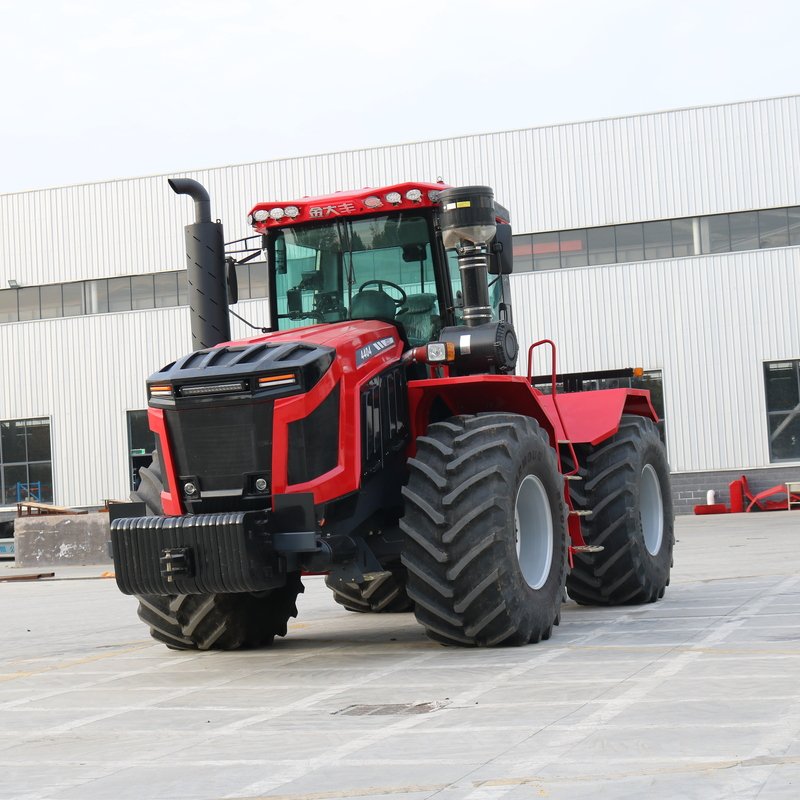
For large-scale deep tillage, the King-Gold Dafeng 440HP tractor is positioned for heavy soil, wide implements, and long working hours. It helps commercial farms and contractors improve productivity when smaller tractors cannot provide enough pulling capacity.
Common Mistakes When Choosing Tractor Horsepower for Deep Tillage
One common mistake is choosing a tractor based only on price. A cheaper tractor may look attractive, but if it cannot handle the implement, the buyer may face higher fuel use, slower work, and more maintenance problems.
Another mistake is choosing horsepower without considering soil type. Light soil and heavy clay soil require different power levels, even with the same implement.
Some buyers also ignore tire configuration and ballast. Deep tillage requires traction, and tires play a major role in field performance. The wrong tires can reduce efficiency even when horsepower is sufficient.
Finally, buyers sometimes underestimate the value of supplier support. Large tractors and deep tillage implements require technical guidance, spare parts, and reliable after-sales service.
Practical Buying Checklist
Before choosing a tractor for deep tillage, buyers should prepare key information for the supplier. This makes model selection more accurate and avoids unnecessary mistakes.
| Item | What to Confirm | Why It Matters |
|---|---|---|
| Soil Type | Clay, black soil, dry compacted soil, wet soil | Determines traction and horsepower needs |
| Working Depth | Shallow, medium, or deep tillage | Affects pulling resistance |
| Implement Width | Small, medium, or wide tillage equipment | Must match tractor power |
| Field Area | Daily or seasonal working area | Controls productivity requirement |
| Drive Type | 2WD, 4WD, 4×4, articulated | Influences traction and stability |
| Support Needs | Spare parts, customization, technical guidance | Improves long-term operating value |
Final Thoughts
So, how much horsepower does a tractor need for deep tillage? For lighter deep cultivation, 120HP to 150HP may be enough. For regular deep tillage on medium farms, 150HP to 200HP is often more practical. For heavy soil, larger implements, and large farms, 200HP to 240HP provides better working efficiency. For commercial-scale operations, 300HP to 440HP tractors offer the strongest productivity advantage.
The best choice depends on soil type, working depth, implement size, field area, and traction requirements. Buyers should evaluate horsepower together with 4WD performance, hydraulic capacity, tire configuration, machine weight, and supplier support.
When selected correctly, a deep tillage tractor can improve soil preparation quality, reduce working time, and support long-term farming efficiency.
Articles You May Be Interested In