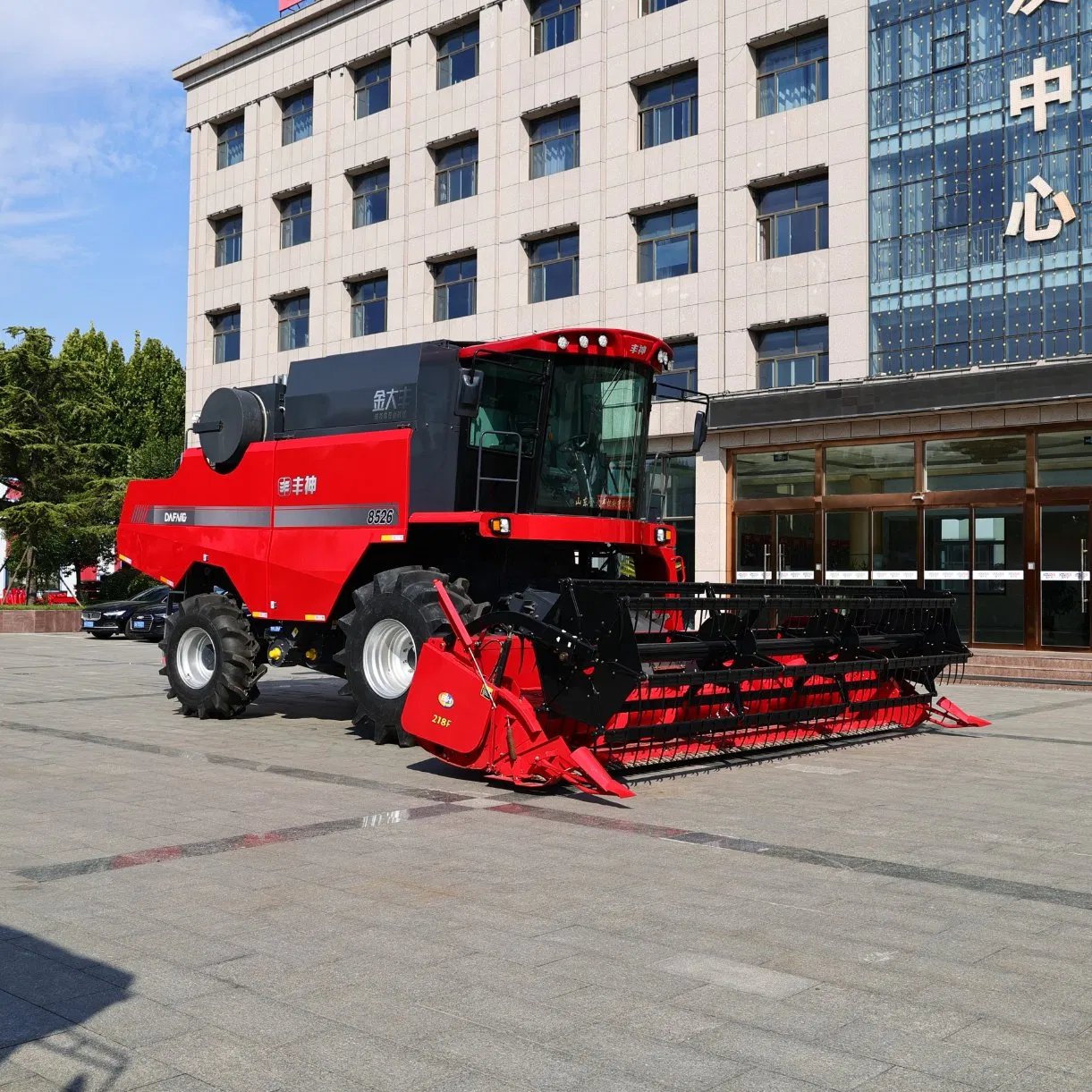
When buyers compare different farm tractors, one of the most common questions is whether they should choose a 4WD tractor or a 2WD tractor. This decision directly affects field performance, fuel efficiency, traction, implement compatibility, and long-term operating cost.
For light-duty work, a 2WD tractor may be enough. However, for heavy soil, deep tillage, large fields, wet land, and modern farming operations, many farmers prefer 4WD tractors because they provide better traction and more stable power delivery.
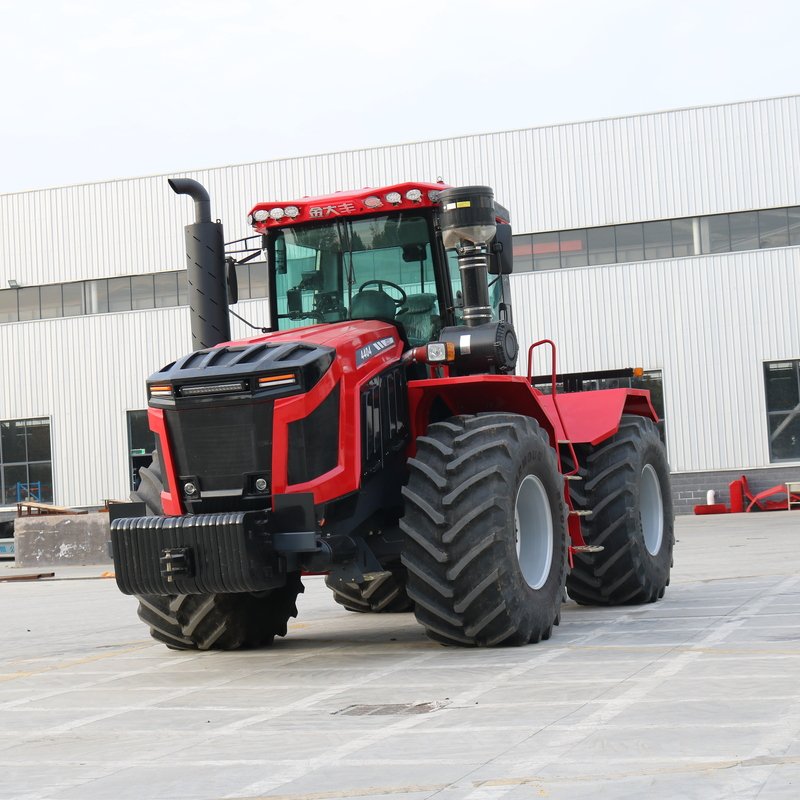
In this guide, we will compare 4WD and 2WD tractors from a practical farming perspective. We will also explain why high-power models such as the King-Gold Dafeng 440HP tractor are designed with strong traction, heavy-duty structure, and large-scale farming needs in mind.
What Is a 2WD Tractor?
A 2WD tractor sends engine power mainly to the rear wheels. This structure is simple, cost-effective, and easy to maintain. Many small farms still use 2WD tractors for basic agricultural work because they are affordable and suitable for lighter field conditions.
Farmers commonly use 2WD tractors for transport, spraying, light tillage, orchard work, and daily farm tasks. If the field is flat, dry, and not too demanding, a 2WD tractor can perform efficiently without unnecessary fuel consumption or higher purchase cost.
However, 2WD tractors have clear limitations. When soil resistance increases, or when the tractor needs to pull heavier implements, rear-wheel traction may not be enough. Wheel slip becomes more common, and the tractor may lose working efficiency.
What Is a 4WD Tractor?
A 4WD tractor sends power to both the front and rear wheels. This improves traction, pulling ability, and field stability. For demanding agricultural work, 4WD tractors usually perform better because they transfer engine power to the ground more effectively.
In real farming conditions, 4WD tractors are widely used for plowing, deep tillage, heavy soil preparation, large implement operation, and wet field work. The additional traction helps the machine maintain stable speed and reduce wheel slip.
For buyers who need strong performance across different field conditions, a 4WD farm tractor offers more flexibility and long-term value. This is one reason why many King-Gold Dafeng tractor models are available with 4WD configurations for export markets.
Key Differences Between 4WD and 2WD Tractors
The difference between 4WD and 2WD tractors is not only about drive structure. It affects how the machine works in the field, how much fuel it uses, what implements it can pull, and how stable it remains under load.
| Comparison Item | 2WD Tractor | 4WD Tractor |
|---|---|---|
| Traction | Moderate traction, mainly rear-wheel drive | Stronger traction with front and rear wheel power |
| Best Use | Light-duty farming, transport, spraying | Plowing, tillage, heavy field work, large implements |
| Field Adaptability | Better for dry and flat fields | Better for wet, uneven, and heavy soil fields |
| Fuel Efficiency | Lower fuel use in light tasks | Better fuel efficiency under heavy load due to reduced slip |
| Purchase Cost | Usually lower | Usually higher |
| Long-Term Value | Good for simple operations | Better for multi-purpose and demanding operations |
When Should Farmers Choose a 2WD Tractor?
A 2WD tractor is a practical choice for farms that mainly handle light or medium-duty work. If the farm has dry soil, flat terrain, and smaller implements, 2WD can offer good value at a lower cost.
For example, farmers may choose 2WD tractors for trailer transport, light field preparation, mowing, spraying, or simple PTO work. These tasks do not always require strong front-wheel traction.
Small farms with limited budgets may also prefer 2WD tractors because they are easier to purchase and maintain. However, buyers should avoid using underpowered 2WD tractors for deep plowing or heavy soil work, because this can increase fuel consumption and reduce working efficiency.
When Should Farmers Choose a 4WD Tractor?
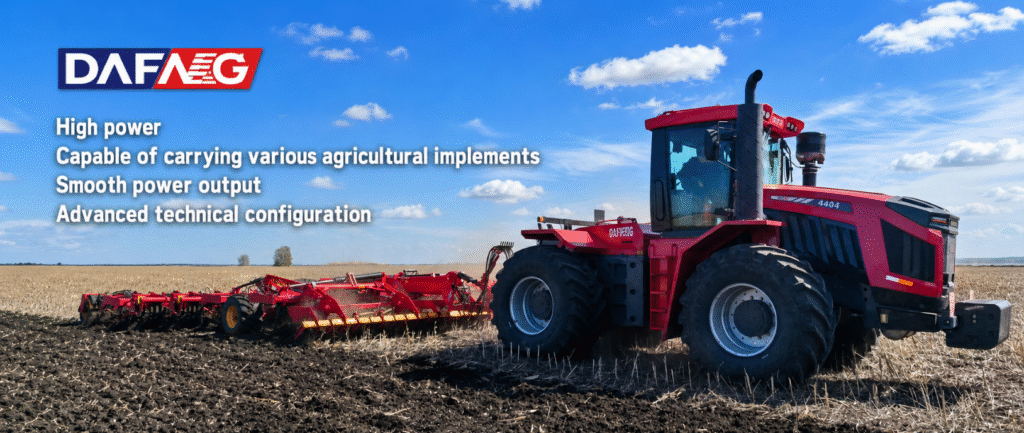
A 4WD tractor is a better choice when the farm requires stronger pulling power and better field stability. This includes plowing heavy soil, working on slopes, operating in wet conditions, and pulling wide implements.
Farmers who use plows, seeders, rotary tillers, cultivators, trailers, and other heavy implements often benefit from 4WD tractors. The machine can maintain better grip, reduce wheel slip, and complete work more efficiently.
For medium and large farms, 4WD also supports longer working hours and more demanding seasonal operations. Many buyers view 4WD as an investment in productivity, especially when the tractor must handle multiple tasks throughout the year.
Why 4WD Tractors Perform Better in Heavy Soil
Heavy soil creates strong resistance against the plow or tillage implement. When a tractor works in clay soil, black soil, or compacted land, the engine must provide enough power while the tires must maintain firm ground contact.
In this situation, 4WD tractors have a clear advantage. Because both front and rear wheels contribute to pulling force, the tractor can transfer power more evenly. This reduces wheel slip and helps maintain consistent plowing depth.
For large farms that require deep tillage, high-power 4WD tractors become especially valuable. A machine such as the King-Gold Dafeng 440HP tractor is designed for heavy-duty field work, wide implements, and demanding soil conditions where smaller machines may struggle.
How Horsepower Affects the Choice Between 4WD and 2WD
Horsepower and drive type should work together. A low-horsepower 2WD tractor may be enough for basic work, but as horsepower increases, 4WD becomes more important because the machine must transfer more power to the ground.
For 50HP to 80HP tractors, both 2WD and 4WD may be suitable depending on the farm. For 90HP to 120HP tractors, many buyers prefer 4WD because the machine often handles more field tasks and larger implements.
For 150HP and above, 4WD becomes much more important. Large tractors need stable traction to use their power effectively. For 200HP, 240HP, and 440HP tractors, 4WD or articulated drive systems are usually essential for heavy-duty agricultural work.
| Horsepower Range | Recommended Drive Type | Typical Application |
|---|---|---|
| 50HP–80HP | 2WD or 4WD | Small farms, orchard work, transport, spraying |
| 90HP–120HP | 4WD preferred | Mixed farming, tillage, seeding, PTO work |
| 150HP–240HP | 4WD | Heavy tillage, larger implements, commercial farming |
| 300HP–440HP | 4WD / articulated | Large-scale farming, deep tillage, heavy soil work |
Fuel Efficiency: 2WD vs 4WD Tractor
Some buyers assume that 2WD tractors always save more fuel. This can be true in light-duty applications. For transport or simple tasks on flat fields, a 2WD tractor may consume less fuel because the drive system is simpler.
However, in heavy field work, 4WD tractors may actually deliver better fuel efficiency. This happens because 4WD reduces wheel slip and allows the tractor to use engine power more effectively. A tractor that slips constantly wastes fuel without increasing productivity.
Therefore, buyers should compare fuel efficiency based on working conditions. Light work may favor 2WD, while heavy tillage, plowing, and large implement work often favor 4WD.
Hydraulic System and PTO Compatibility
Drive type is only one part of tractor performance. Farmers also need to evaluate hydraulic system and PTO capacity. These systems decide whether the tractor can operate different implements efficiently.
A strong hydraulic lifting system helps control plows, seeders, sprayers, and other rear-mounted equipment. PTO output supports rotary tillers, mowers, spreaders, and other powered implements.
Many King-Gold Dafeng agricultural machinery solutions focus on practical field compatibility. For tractor buyers, this means selecting a machine that not only moves well but also works efficiently with the implements required in local farming.
How Dealers Should Recommend 4WD or 2WD Tractors
Dealers should not recommend the same tractor configuration to every customer. Instead, they should ask about land size, soil condition, main crop, implement type, and daily workload.
If the buyer mainly needs a tractor for light transport and basic farm work, a 2WD model may be enough. If the buyer needs stronger field performance, 4WD should be recommended.
For high-horsepower tractors, dealers should explain that 4WD is not only a feature but a performance requirement. A large tractor without proper traction cannot fully use its engine power.
Why King-Gold Dafeng Offers Multiple Tractor Configurations
King-Gold Dafeng tractor products cover different horsepower ranges and farming applications. This allows buyers to choose suitable configurations based on real field conditions rather than forcing one solution for every market.
For small and medium farms, King-Gold Dafeng provides practical tractor options for daily agricultural work. For larger farms and contractors, the company offers high-power models designed for heavy field operations, deep tillage, and wide implements.
The King-Gold Dafeng 440HP tractor represents the company’s high-horsepower capability. It fits large-scale farming environments where buyers need strong traction, high torque, hydraulic capacity, and long working-hour reliability.
Common Mistakes When Choosing Between 4WD and 2WD
One common mistake is choosing 2WD only because the price is lower. If the tractor later struggles in field work, the buyer may spend more on fuel, time, and maintenance.
Another mistake is choosing 4WD without considering actual workload. If the farm only needs simple transport and light work, the buyer may not fully use the advantages of 4WD.
Some buyers also overlook tire configuration. Even with 4WD, poor tire selection can reduce field performance. For heavy soil, large tires, proper tire pressure, and suitable ballast can improve traction significantly.
Finally, buyers sometimes ignore after-sales support. A good tractor should come with spare parts availability, technical documentation, and supplier support. This matters especially for export markets.
Buying Checklist for 4WD and 2WD Tractor Selection
| Question | If Yes | Recommended Choice |
|---|---|---|
| Do you work in heavy soil? | Higher pulling resistance requires better traction | 4WD tractor |
| Do you mainly use the tractor for transport? | Light-duty work may not require full traction | 2WD or 4WD depending on terrain |
| Do you use heavy implements? | Large implements need stable pulling force | 4WD tractor |
| Is your land wet or uneven? | Better field grip improves safety and efficiency | 4WD tractor |
| Is your tractor above 150HP? | High power needs better ground transfer | 4WD strongly recommended |
Final Thoughts
So, when comparing 4WD vs 2WD tractor, which one should farmers choose? The answer depends on the farm’s real working conditions. For simple tasks, dry fields, and lower budgets, 2WD may be a practical choice. For heavy soil, plowing, wet land, large implements, and high-horsepower applications, 4WD usually provides better performance and long-term value.
Buyers should evaluate more than purchase price. They should compare traction, horsepower, implement compatibility, hydraulic performance, tire configuration, and supplier support.
With a broad product range and export-oriented manufacturing support, King-Gold Dafeng agricultural machinery helps global buyers choose suitable tractor solutions for different farming conditions. From medium-power models to the King-Gold Dafeng 440HP tractor, the company provides practical options for farmers, dealers, and large-scale agricultural projects.