The threshing system is one of the most important parts of a rice combine harvester. After the header cuts the crop and the feeding system moves it into the machine, the harvester still needs to separate the rice grain from the panicles before cleaning and collection can begin.
This is the job of the rice harvester threshing system.
A good threshing process must separate grain efficiently while avoiding excessive grain damage, unnecessary straw breakage, blockage, and overload. The correct balance changes with crop moisture, rice variety, maturity, field yield, forward speed, and the amount of straw entering the machine.
Understanding how the threshing system works is therefore useful not only for operators. It can also help farmers, contractors, and machinery buyers compare rice harvesters more realistically.

Where Does Threshing Fit in the Harvesting Process?
Threshing is only one stage in a complete rice harvesting process.
Cutting → Feeding → Threshing → Separation → Cleaning → Grain Collection
The header first cuts and gathers the rice plants. The feeding mechanism then transfers the crop into the internal processing system.
Once the crop reaches the threshing area, the machine must remove grain from the panicles while allowing straw and other plant material to continue through the harvester.
After threshing, separated grain still contains chaff, short straw, leaves, and other impurities. These materials are handled by the separation and cleaning systems before the grain reaches the tank.
This means threshing performance affects everything that comes after it.
If threshing is incomplete, unthreshed grain may leave the machine with the straw. If threshing is too aggressive, excessive straw fragmentation can increase the load on the cleaning system.
What Happens Inside a Rice Harvester Threshing System?
The basic objective of a rice harvester threshing system is to apply controlled mechanical action to the harvested crop.
As rice moves through the threshing area, rotating components interact with the crop and gradually separate grain from the panicles.
The process typically involves a combination of:
- Impact
- Rubbing
- Compression
- Repeated crop movement
- Controlled clearance between threshing components
The crop does not simply enter the machine and receive one strong impact. Effective threshing usually depends on continuous and controlled contact as the material moves through the system.
Grain begins separating during crop movement
Once the crop enters the threshing section, mechanical action loosens grain from the panicles.
Separated grain can then pass through openings toward the cleaning system, while larger straw continues through the machine.
The objective is to complete this process before the crop residue reaches the discharge area.
Why Axial-Flow Threshing Is Used in Rice Harvesters
Many modern self-propelled rice harvesters use an axial-flow or longitudinal axial-flow threshing arrangement.
In this type of system, crop material travels along the length of a rotating threshing rotor rather than passing through only a short threshing section.
This provides more time for the crop to move through repeated threshing and separation actions.
Longer crop movement can support gradual threshing
Rice straw can be relatively long and flexible, especially when moisture is high.
A longer crop path can help the machine process material progressively instead of attempting to complete the entire threshing process immediately after feeding.
Potential operational advantages include:
- More continuous crop flow
- Longer opportunity for grain separation
- Better handling of varying crop volume
- Reduced dependence on one short threshing point
However, system design alone does not determine performance. Rotor speed, crop intake, clearance, moisture, and operator settings remain important.
Important: “Axial flow” does not automatically mean low loss or high capacity. Real performance depends on the complete design of the machine and how the system is adjusted for actual crop conditions.
Rotor Speed Has a Major Effect on Threshing Quality
The rotational speed of the threshing mechanism affects how aggressively the crop is processed.
If speed is too low for the crop condition, threshing may be incomplete.
Possible signs include:
- Grain remaining on discharged panicles
- Unthreshed crop entering the rear discharge
- Reduced grain recovery
If threshing speed is unnecessarily high, other problems can appear:
- More broken grain
- Greater straw fragmentation
- Higher cleaning load
- Increased mechanical stress
The correct setting therefore depends on how easily the crop releases grain.
| Crop Condition | Possible Threshing Behavior | Operator Consideration |
|---|---|---|
| Dry and mature rice | Grain may separate relatively easily | Avoid unnecessarily aggressive threshing |
| High-moisture rice | Grain may be harder to separate | Monitor threshing quality and crop flow |
| Dense high-yield crop | More material enters the system | Adjust working speed if overload appears |
| Uneven maturity | Threshing requirement may change across the field | Inspect grain and losses regularly |
Crop Moisture Changes How the Threshing System Behaves
Moisture is one of the most important field variables affecting rice threshing.
Dry mature rice usually behaves differently from rice harvested shortly after rain or under high-moisture conditions.
Wet straw creates more resistance
Wet rice straw tends to be heavier and more flexible.
This can increase resistance as crop material moves through the feeder and threshing system.
If the operator continues at the same forward speed used in dry conditions, the amount of material inside the machine can build up.
This may lead to:
- Higher engine load
- Irregular crop flow
- Reduced threshing quality
- Higher blockage risk
- Greater separation and cleaning load
Dry crop can require less aggressive processing
Very dry, fully mature rice may release grain more easily.
Using overly aggressive threshing settings under these conditions can increase broken grain without providing a meaningful improvement in separation.
This is why fixed threshing settings should not automatically be used throughout the entire harvesting season.
Forward Speed Also Controls Threshing Load
The operator may not directly change the physical size of the threshing system, but forward speed controls how quickly crop enters it.
This makes working speed one of the easiest ways to manage machine load.
At higher travel speed:
- More crop enters the header per minute
- The feeder handles more material
- The threshing system receives higher crop flow
- The cleaning system receives more separated material
If machine capacity is exceeded, grain loss can increase even when the threshing settings themselves are correct.
High yield can create the same effect
Even without changing travel speed, moving from a low-yield section into a dense, high-yield section increases the amount of material entering the machine.
This is why experienced operators often reduce speed when crop density increases.
Practical principle: If threshing quality becomes worse only when crop volume increases, forward speed and crop intake should be checked before making major mechanical adjustments.
Threshing and Separation Must Work Together
Threshing removes grain from the panicles, but that grain still needs to be separated from the straw.
This makes threshing and separation closely connected.
If the crop moves through the system too quickly, grain may be released but still remain trapped within straw before the material reaches the discharge area.
If excessive straw is broken into small pieces, those pieces can enter the cleaning system together with grain.
Either situation can reduce overall harvesting performance.
More aggressive threshing is not always the solution
When grain is found behind the machine, operators sometimes assume threshing intensity must be increased.
But grain loss behind the harvester may come from several sources:
- Header loss
- Incomplete threshing
- Poor separation
- Cleaning fan loss
- Excessive crop flow
Before adjusting the rice harvester threshing system, operators should determine whether the grain is still attached to panicles or has already been threshed and lost later in the process.
How Can Operators Judge Threshing Performance?
Good threshing performance should be evaluated through field inspection rather than only from the operator seat.
Check discharged straw
Look for rice grains that remain attached to panicles or straw leaving the rear of the machine.
A noticeable amount of unthreshed grain may indicate insufficient threshing or excessive crop flow.
Check grain in the tank
Inspect the harvested grain for:
- Broken kernels
- Unthreshed material
- Excessive straw fragments
- Chaff and impurities
Check machine load
Changes in engine sound or operating load can indicate that more material is entering the threshing system than usual.
Check field losses
Look behind the machine and identify whether loose grain is coming from threshing, separation, or cleaning.
Change one factor at a time
If adjustment is required, changing one setting at a time makes it easier to understand which change improved or reduced performance.
This process should be repeated whenever crop maturity, moisture, density, or lodging changes significantly.
What Should Buyers Compare When Evaluating a Threshing System?
For machinery buyers, simply seeing “axial flow” on a specification sheet is not enough.
It is more useful to evaluate how the complete harvesting system works in real field conditions.
Important questions include:
- What type of threshing system does the machine use?
- How is crop flow controlled through the system?
- Can threshing parameters be adjusted for different crop conditions?
- How does the machine perform in high-moisture rice?
- How does it handle high-yield crops?
- What level of broken grain is observed in normal operation?
- How easy is the threshing area to inspect and maintain?
- Are common wear parts readily available?
Real harvesting videos can be especially useful when comparing machines.
Buyers should not only watch how quickly the harvester moves. They should also look at the crop entering the header, grain quality in the tank, crop residue behind the machine, and whether harvesting remains stable when field conditions change.
The Best Threshing System Is a Balanced System
The purpose of a rice harvester threshing system is not simply to apply maximum mechanical force to the crop.
Its purpose is to separate grain efficiently while maintaining stable crop flow, acceptable grain quality, manageable cleaning load, and low harvesting loss.
Rotor operation, crop moisture, forward speed, crop yield, straw volume, separation capacity, and cleaning performance all influence the final result.
This is why threshing should always be considered as part of the entire harvesting process.
A well-matched rice harvester allows the operator to adapt to changing conditions rather than depending on one fixed setting.
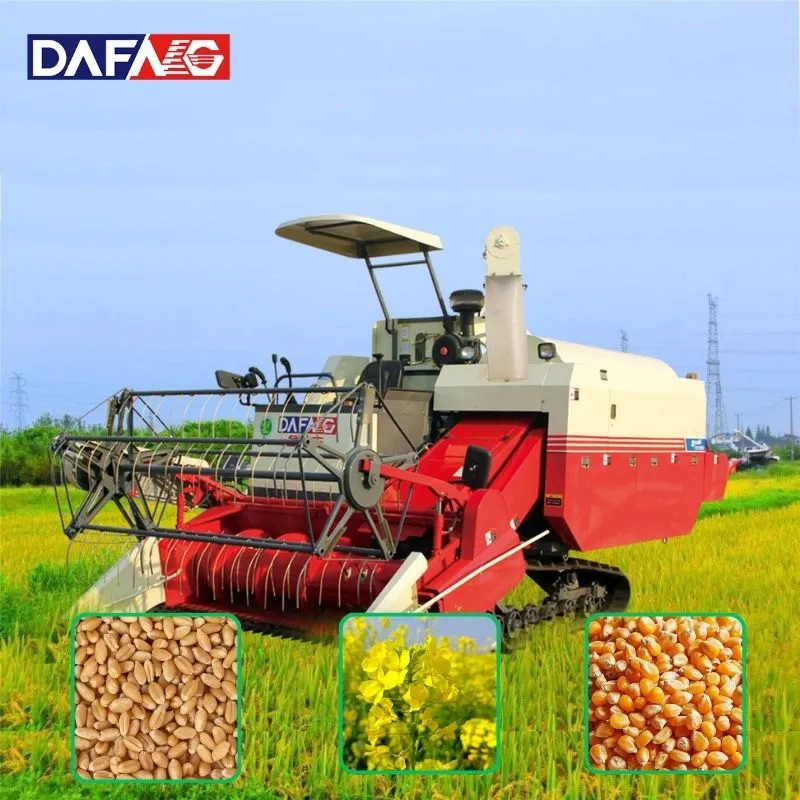
King-Gold Dafeng provides tracked self-propelled rice harvesting equipment for paddy-field operation. Buyers can explore available rice harvester models and configurations according to crop conditions, threshing requirements, cutting width, wet-field mobility, and required harvesting capacity.
When comparing machines, the most useful question is not only “What type of threshing system does it use?” but “How consistently does the complete machine separate and collect grain under the conditions where it will actually work?”
You May Also Be Interested In
To understand where harvesting losses occur before and after threshing, read How to Reduce Grain Loss During Rice Harvesting.
For a complete overview of cutting, feeding, threshing, cleaning, and grain collection, see How Does a Rice Harvester Work in Paddy Fields?.